BTE Newsletter #45: Does Private Credit Pose A Risk to the Economy?
Good morning everyone, and Happy Tuesday once again. I hope you all had as good a weekend as I did, watching my Ravens open the season with a win in Indianapolis. Last week I told two people my completely unbiased prediction for the Ravens: an undefeated season. They certainly questioned my objectivity, but there's no denying it's still possible.
There's another nice part of the fall season: lots more events. It started last week, where I had the pleasure of attending an all-day event covering alternative investments, hosted by Designed Wealth Management. This included moderating a panel with Dan Brintnell (Overbay Capital Partners), Gonen Hollander (Obsiido), and Adam Schacter (also at Designed).

There's more to come this week, including the CAASA Alternative Perspectives 2026: Private Market Focus event on Thursday. I will not be speaking, but I will be attending as a guest. For those of you who are going, I'll see you there.

In the meantime, I have a few small announcements. The first is regarding podcasting. I've appeared as a guest on a couple other podcasts, so I hope to have updates (links) soon on that front. For one of those appearances, the host has agreed to come on the Beyond The Exchange podcast as well, which I'm looking forward to sharing next month.
Secondly, the new website is coming along, and should be ready in a couple weeks. A reasonable goal is for next week's newsletter to be the last one on this platform. Then I'll have the pleasure of telling you all to check your spam folders. This does not mean anyone will need to sign up again; I'll port the email list to the new platform.
As for this week's newsletter, this is a topic I've been meaning to write about for a while, because there are a lot of scaremongers in the Private Credit space. Hope you enjoy it.
Ben
Is There Systemic Risk From Private Credit?
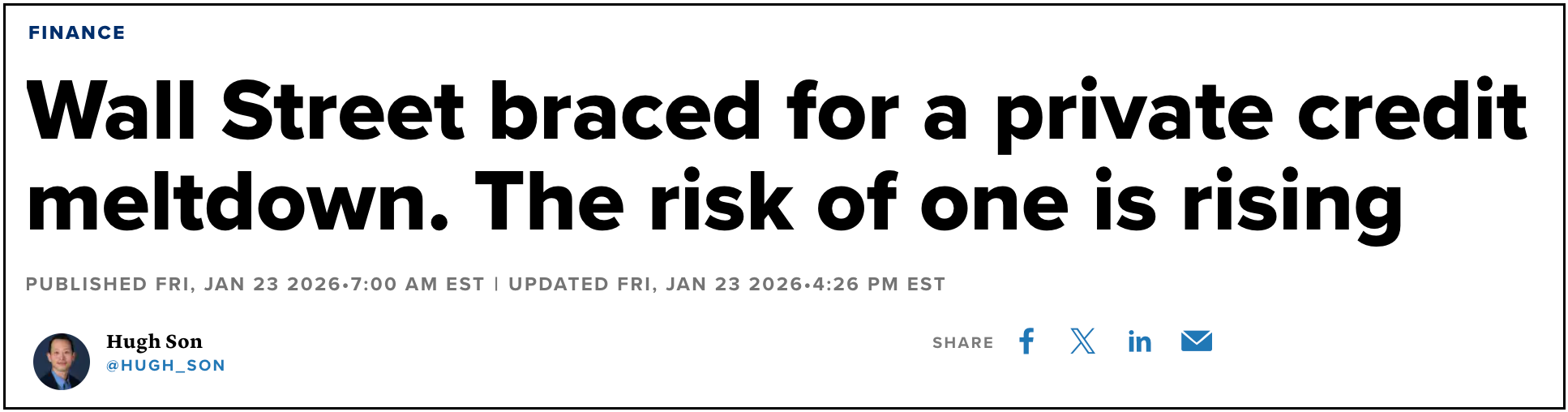
My apologies for the sensationalist headline ... it may seem like I'm making a straw man argument. But for many years, I've seen countless prognosticators compare the rise of Private Credit to rise of subprime mortgage lending prior to the Global Financial Crisis. And this hasn't just come from media companies looking for clicks. This has also come from regulatory watchdogs such as the International Monetary Fund and Federal Reserve Boards.
You'll typically hear arguments such as these:
- "Private Credit providers are shadow banking companies"
- "There is less transparency from Private Credit than from banks"
- "Private Credit is less regulated (or as some claim, unregulated)"
- "Private Credit has grown so quickly; everyone is piling in...just like subprime mortgage lending prior to 2008"
- "Private Credit loans are not rated by the rating agencies"
- "The Private Credit providers point to low defaults, but that's what the subprime mortgage lenders pointed to as well, until the music stopped"
- "Look at what happened earlier this year, when investors tried to get out of Private Credit funds but couldn't; it's proof that the bubble is popping"
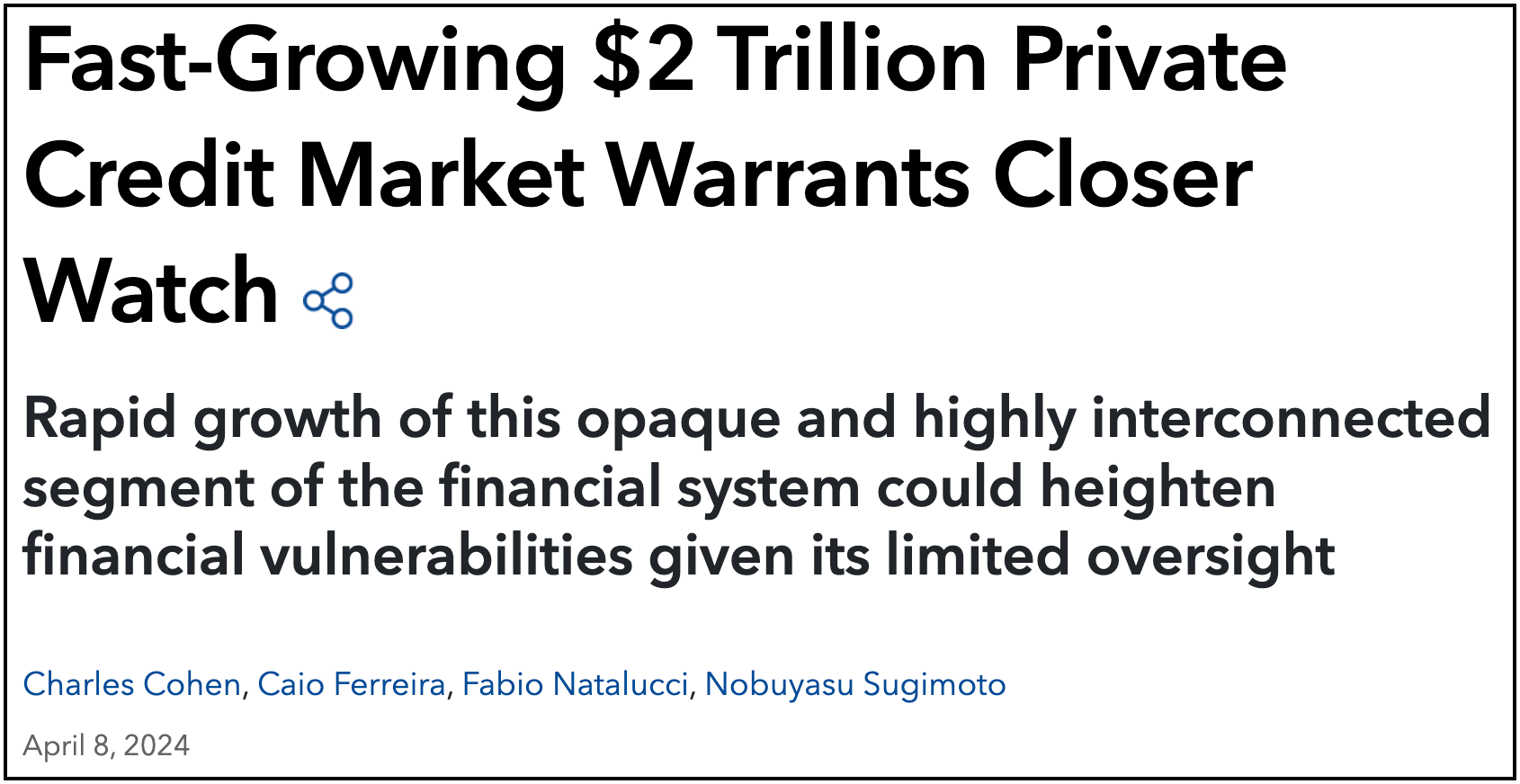
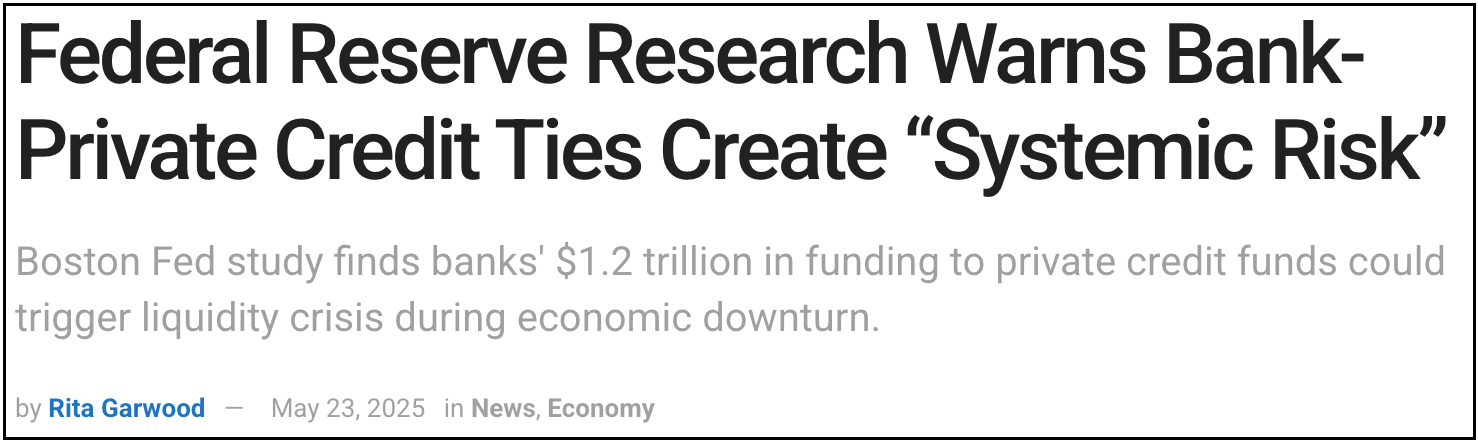
But these arguments miss some very important points related to the size of Private Credit, the (lack of) leverage used, duration matching, incentives, transparency, and underwriting standards. Below I take a look at each.
Private Credit is still a small part of the financial ecosystem
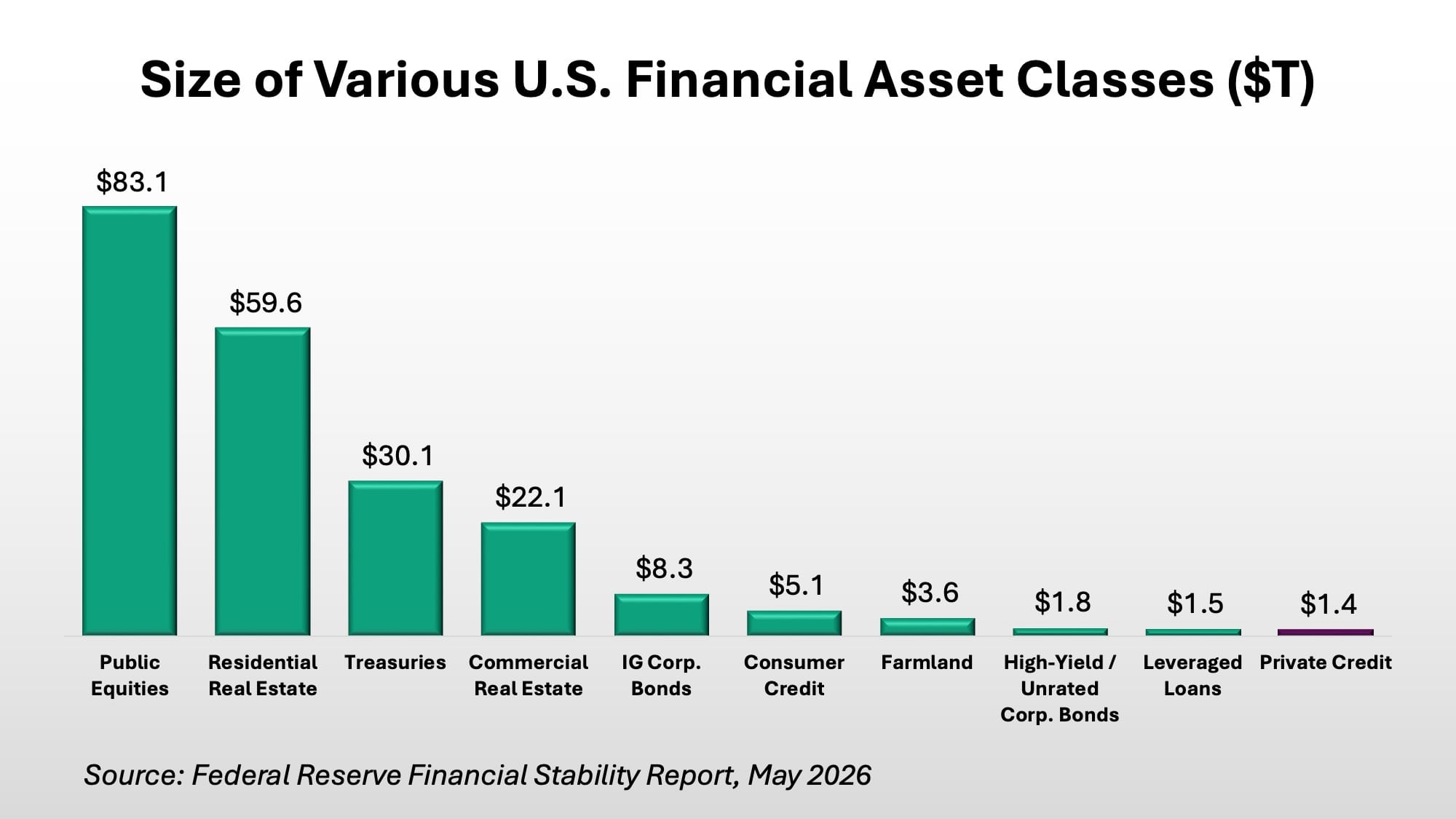
This may be the most important point. Despite its rapid growth, the size of the Private Credit market is still a drop in the bucket compared to other forms of credit, and to other asset classes more broadly.
The chart below shows numbers just from the United States, not globally. As one can see, even if the Private Credit market went through a storm, there'd be a negligible impact on the whole system. And in other countries, Private Credit plays an even smaller role.
Private Credit uses leverage much less aggressively
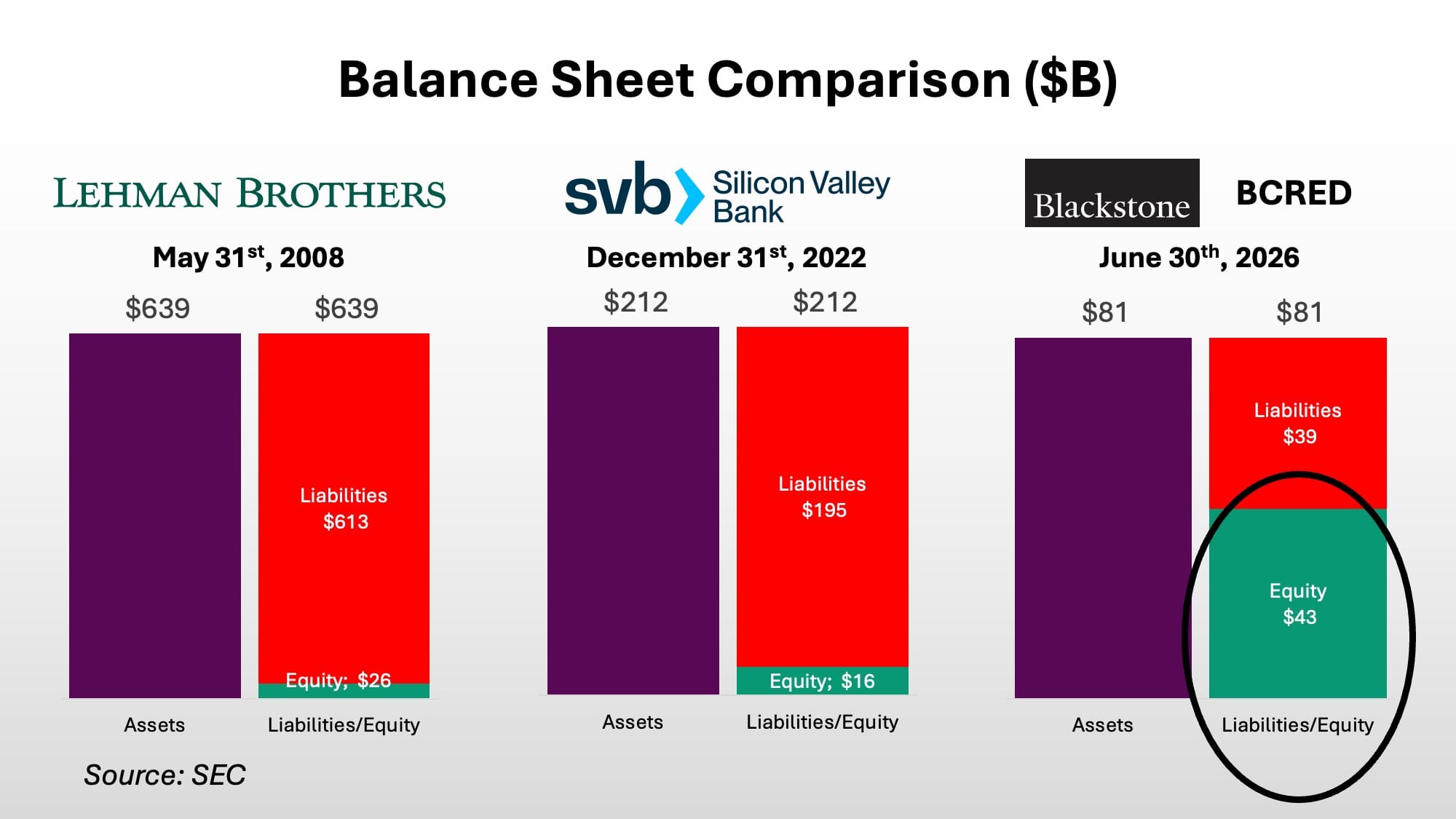
This is worth emphasizing repeatedly. If you look at how banks were financed going into the 2008 crisis, you would find some eye-watering numbers. For example, Lehman Brothers' leverage ratio exceeded 30:1 in February 2008.
Even after regulatory reforms, steep leverage is still a core part of banks' business models. And worse still, banks have an inherent problem of duration matching; short-term deposits are used to fund long-term liabilities. So if the value of a bank's assets declines by even a small amount, and the bank sees outflows on its deposit franchise, that could sink the bank entirely.
That's precisely what happened to Silicon Valley Bank in 2023, which sparked a regional banking crisis in the United States. A lack of confidence also sunk Credit Suisse a few months later. The crisis would have spread much further, were it not for government intervention (i.e. the presence of FDIC insurance).
Meanwhile Private Credit is often held in Business Development Companies (BDCs), in which debt/equity ratios are capped at 2:1, and actual ratios are much lower than that. Furthermore, the duration of BDC liabilities is quite similar to the Private Credit assets. In other cases, Private Credit assets are held without any leverage at all. So even if a few Private Credit loans turn sour, you're less likely to see an instant failure like you would at a bank.
In many cases, Private Credit has better transparency than banks
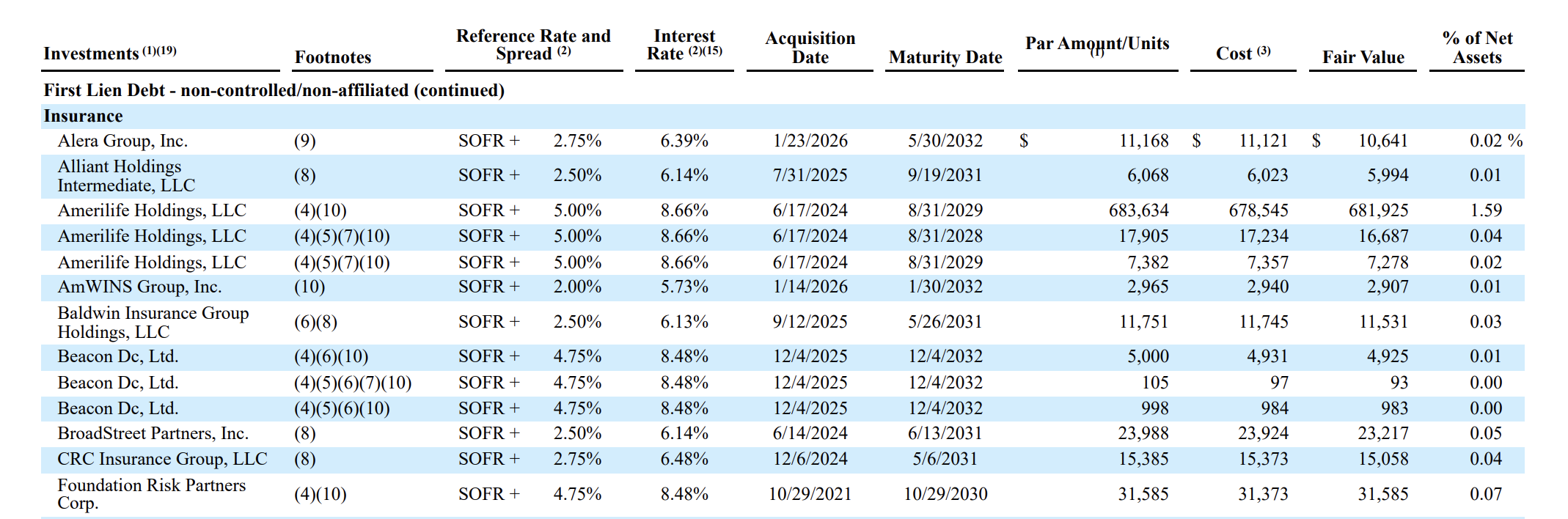
This is related to the so-called "Shadow Bank" moniker. There's an argument that we don't know what's on the books in Private Credit. But that's not entirely true.
Again looking at BDCs in particular, these vehicles are SEC-registered, meaning they file annual reports and quarterly reports just like public companies do. These reports also feature line-by-line visibility into every borrower, including the size of each loan, the rate paid, and how the loans are valued. Of course you will not see that kind of detail from the banks.
Illiquidity is a feature, not a bug
This is another area where a comparison between Lehman Brothers, Silicon Valley Bank, and Private Credit funds shows a clear distinction.
In Lehman Brothers' case, the company relied on short-term financing, which ultimately dried up when counterparties ran for the hills. In SVB's case, a similar point can be made about the bank's depositors, who withdrew their funds en masse when they sensed their money was at risk. And in both cases, a crisis in confidence spread, both of which would have been worse without public intervention.
Contrast that with what happened earlier this year in Private Credit funds. There were a bunch of redemption requests. Only a fraction were honoured. There weren't any liquidity squeezes. There wasn't any forced selling. No crisis in confidence for the financial system. No government intervention required. Just an overhang on the industry that is still being worked through.
Private Credit has better underwriting and better incentives than the subprime mortgage lenders did
One of the hallmarks of the financial crisis were so-called "liar loans", in which borrowers falsified employment or other information to gain loan approvals. And the financial institutions turned a blind eye, partly due to a belief house prices always increase, partly due to a belief that diversification would save them, partly due to a lack of proper underwriting procedures, and partly due to poor incentives as loans were passed off to third parties.
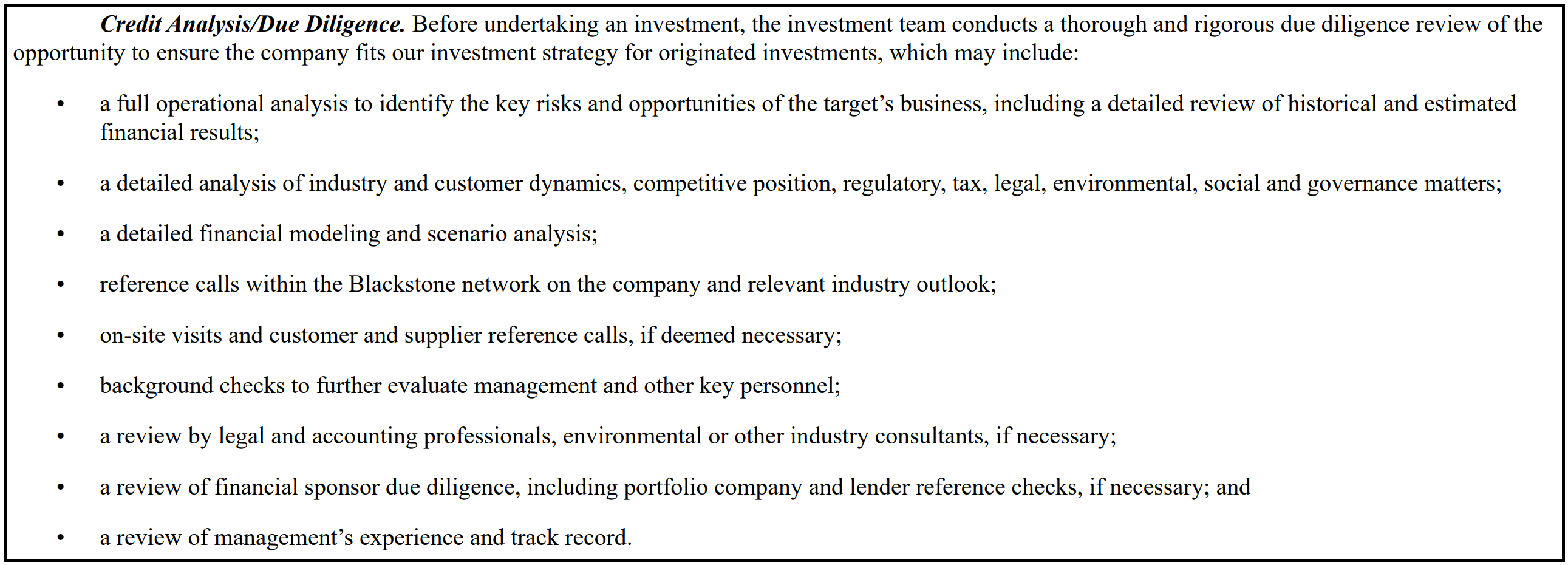
Contrast that with the Private Credit industry, where funds originate assets and then hold them for multiple years. Managers are compensated in-part by investment performance. And the underwriting process is generally quite rigorous:
Conclusion: the system is working as intended
In the aftermath of the 2008 crisis, there was a focus on fixing the "too big to fail" problem. And the solution was punctuated by the Dodd Frank Act of 2010, which constrained banks in a number of ways. This is a major reason why Private Credit has become so big, and the result is a financial system in the U.S. where investors play a much bigger role than in years past, while too-big-to-fail banks play a smaller role.
It's quite bewildering to see people frame this as a problem, because this was a key goal of the Dodd Frank Act, and this goal was successfully achieved. Contrast that with other developed economies around the world (including in Canada), where banks play a larger role, the financial system is far less dynamic, and economic growth over the past 17 years has been much slower.
Want to find out more?
Private markets are not for everyone, and come with a number of risks, such as higher illiquidity and less transparency.
However, many of the world’s leading institutions and wealthiest families put a big emphasis on private markets, and recently these strategies have become more available to individuals too. Drawing on my background as an analyst specializing in private markets, I help investors cut through the complexity and understand how to build portfolios incorporating these strategies.
To explore whether these strategies are suitable for you, please schedule a 30-minute virtual meeting below:

Email
|

Phone
|

LinkedIn
|

Apple
|

Spotify
|
Disclaimer
Benjamin Sinclair is a representative of Designed Securities Ltd. Designed Securities Ltd. is regulated by the Canadian Investment Regulatory Organization (ciro.ca) and is a Member of the Canadian Investor Protection Fund (cipf.ca). Investment products are provided by Designed Securities Ltd. and include, but are not limited to, mutual funds, stocks, and bonds. Benjamin Sinclair is registered to provide advice and solutions to clients residing in the province of Ontario. For more information, please see www.beyondtheexchange.ca/disclaimer/

|

|

|