BTE Newsletter #40: The 5 Reasons Why Investors Are Souring on Alternative Asset Managers (according to KKR)
Good morning everyone, and Happy Tuesday.
I hope you've all been having a great summer. I have as well, but I'm also really looking forward to the new NFL season. As a Baltimore Ravens fan, I'm tired of so many "experts" underestimating my team, and I look forward to the doubters being proven wrong. As far as I'm concerned, the season needs to start tomorrow.
Also in these newsletters I've been giving updates on my son Alex, who broke his leg at the end of May. Good news, he is one week away from getting his walking boot off (subject to a final x-ray). Once that happens, it will have been a 12-week process in total.
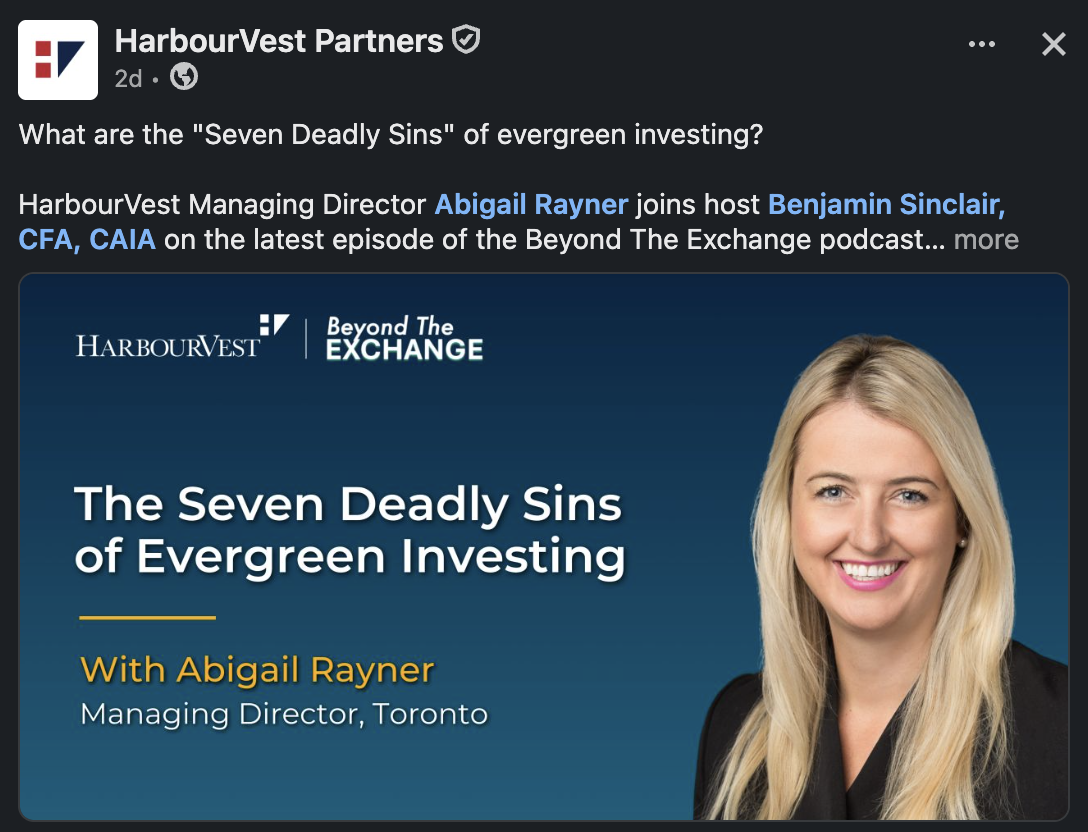
As for the podcast, episode 14 continues to make its way through the approval process, but in the meantime I've gotten some tremendous support from Boston-based HarbourVest Partners, after interviewing Managing Director Abigail Rayner for episode #13. HarbourVest even promoted the podcast on their official LinkedIn page to their 70,000+ followers. So thank you to HarbourVest ... I never would have expected such great treatment from a company with so many Patriots fans.
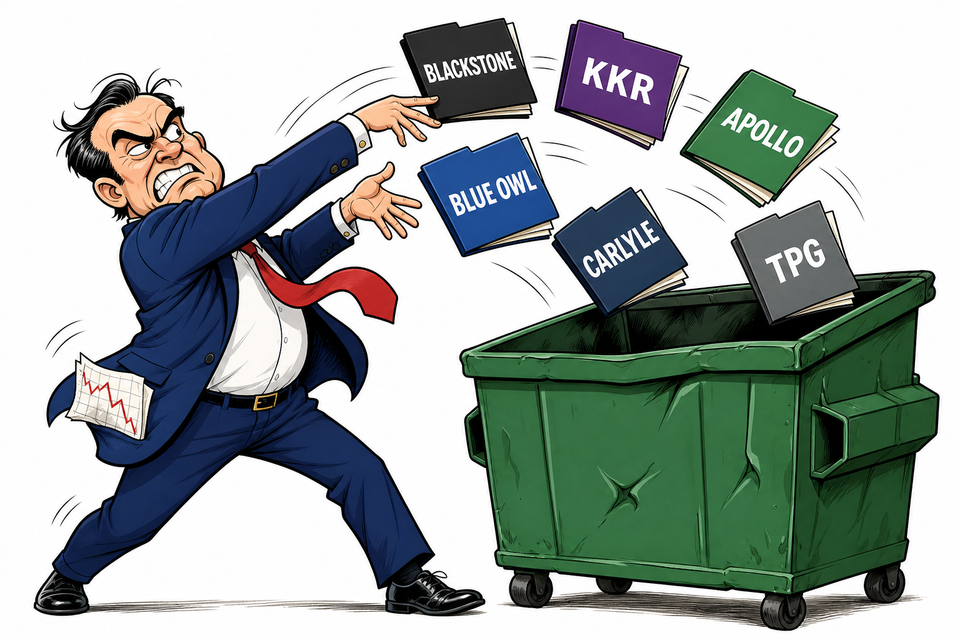
As for this week's newsletter, earnings season for the alternative asset managers has effectively come to a close, and there were some good takeaways. KKR's conference call in particular had a very interesting moment, in which co-CEO Scott Nuttall highlighted 5 reasons why there is so much pessimism towards the industry.
Here is were I'll give a quick disclaimer. I personally own multiple stocks in the space, which dates back to my previous role as an equity analyst. They are: Brookfield (BN & BAM), Onex, KKR, Apollo, and DigitalBridge. So with that said, here is why the market is far more pessimistic on these companies than I am.
Ben
5 Reasons Why Mr. Market Hates the Alternative Asset Managers
It's not uncommon for executives to complain about their company's low stock price; it's a regular feature of earnings season. This is particularly true for the alternative asset managers, who often have outspoken leaders at the helm. And this quarter was no exception:
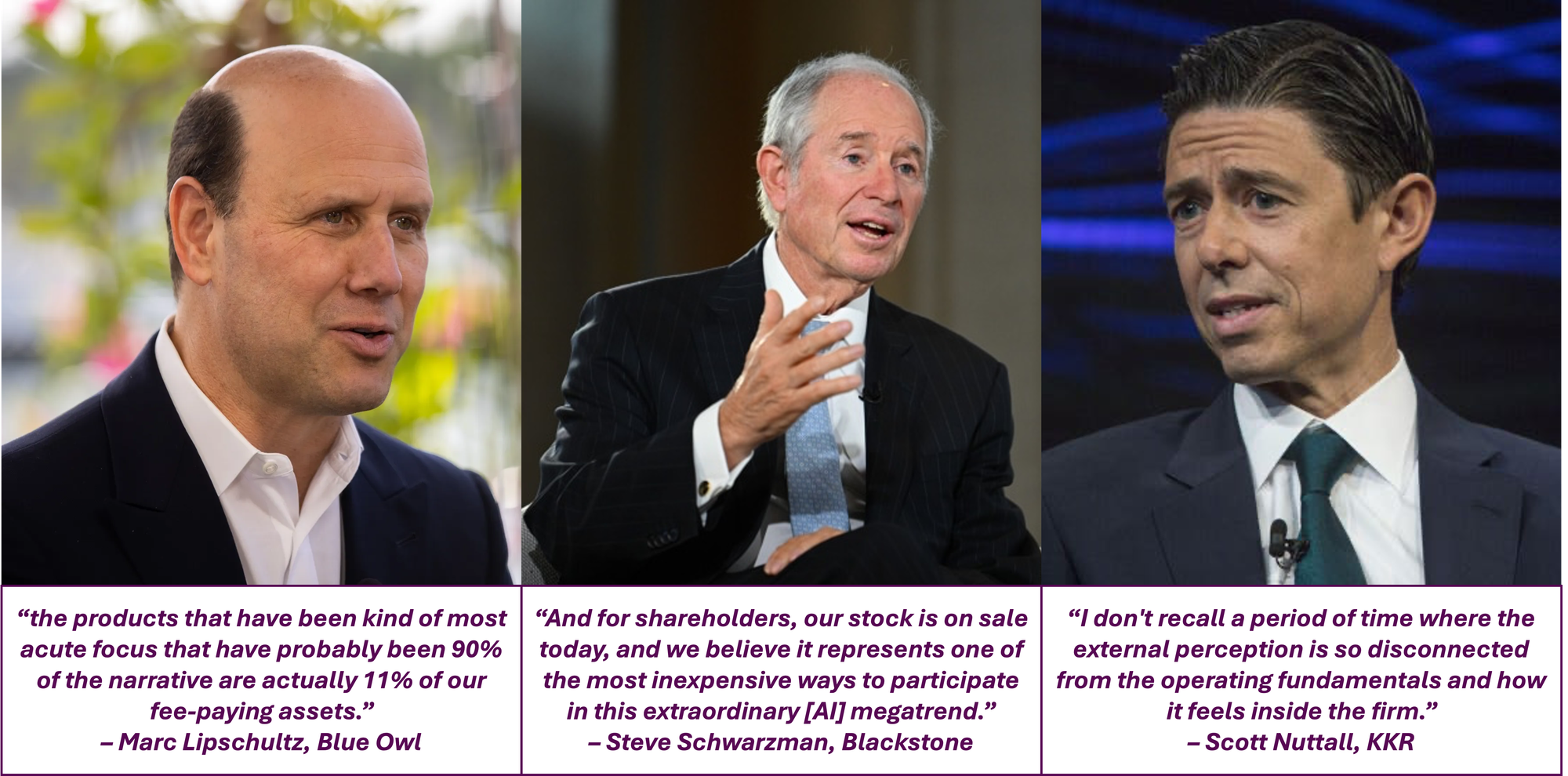
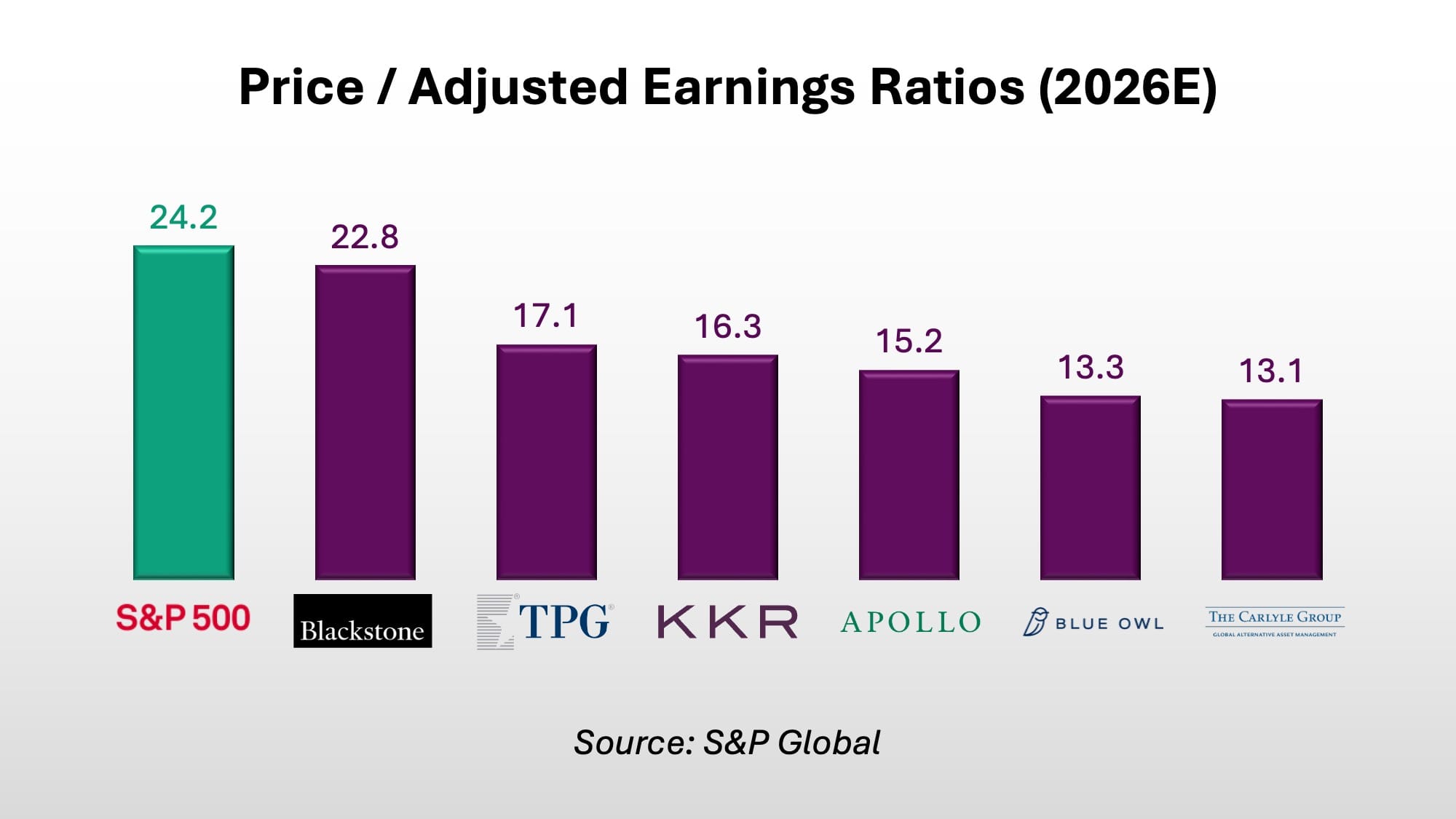
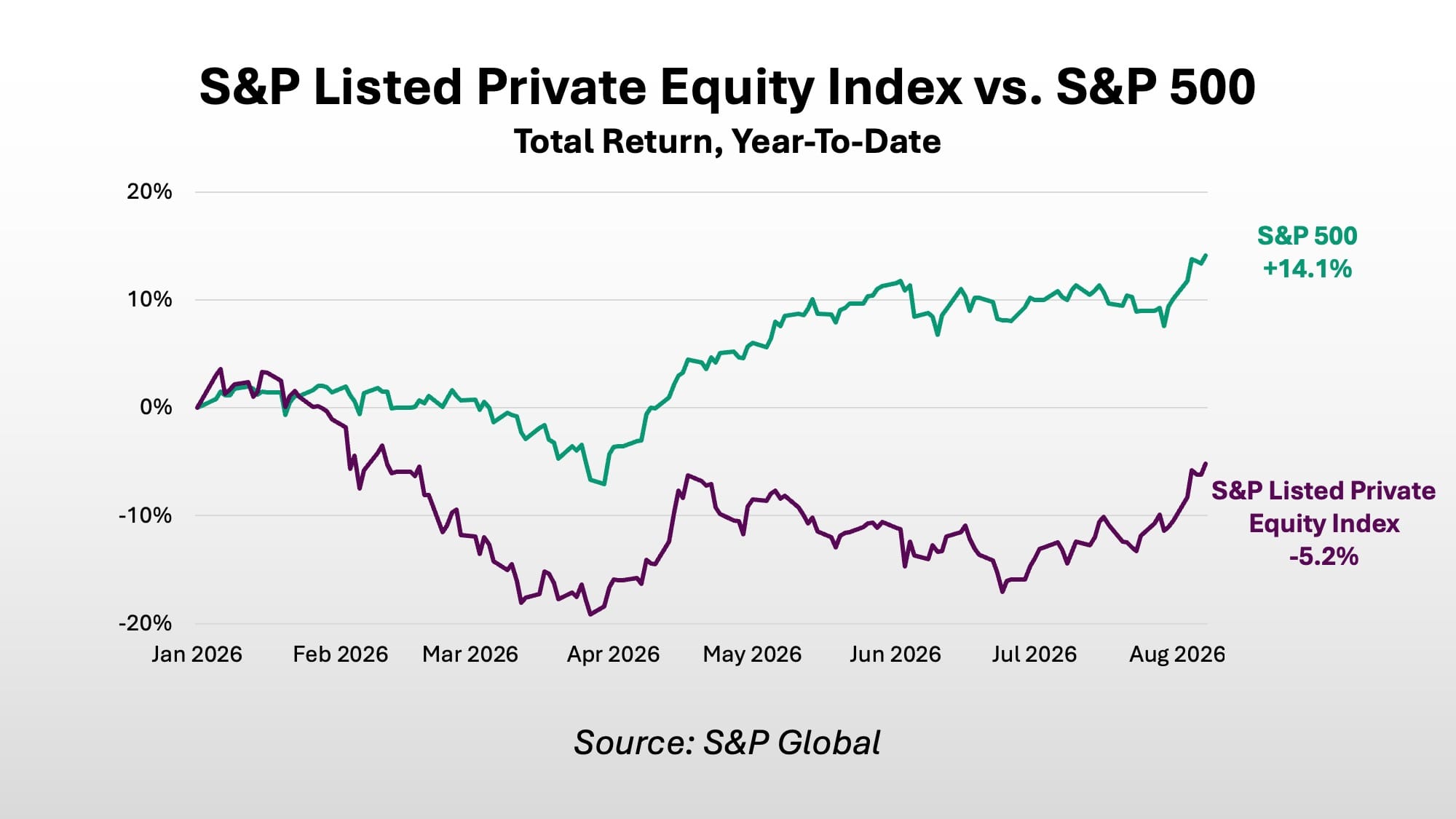
These executives certainly have lots of material to work with. Alternative asset manager stocks are generally trading at fairly low earnings multiples considering their growth rates, and they also have badly trailed the S&P 500 this year.
But it was during KKR's call where there was some especially sharp commentary, and it came during the Q&A portion. The first question came from Goldman Sachs analyst Alexander Blostein, who asked about management fee growth, and after CFO Robert Lewin gave his answer, co-CEO Scott Nuttall gave his thoughts on why the industry is so pessimistic on the sector. He classified the reasons into 5 buckets, and they are as follows:
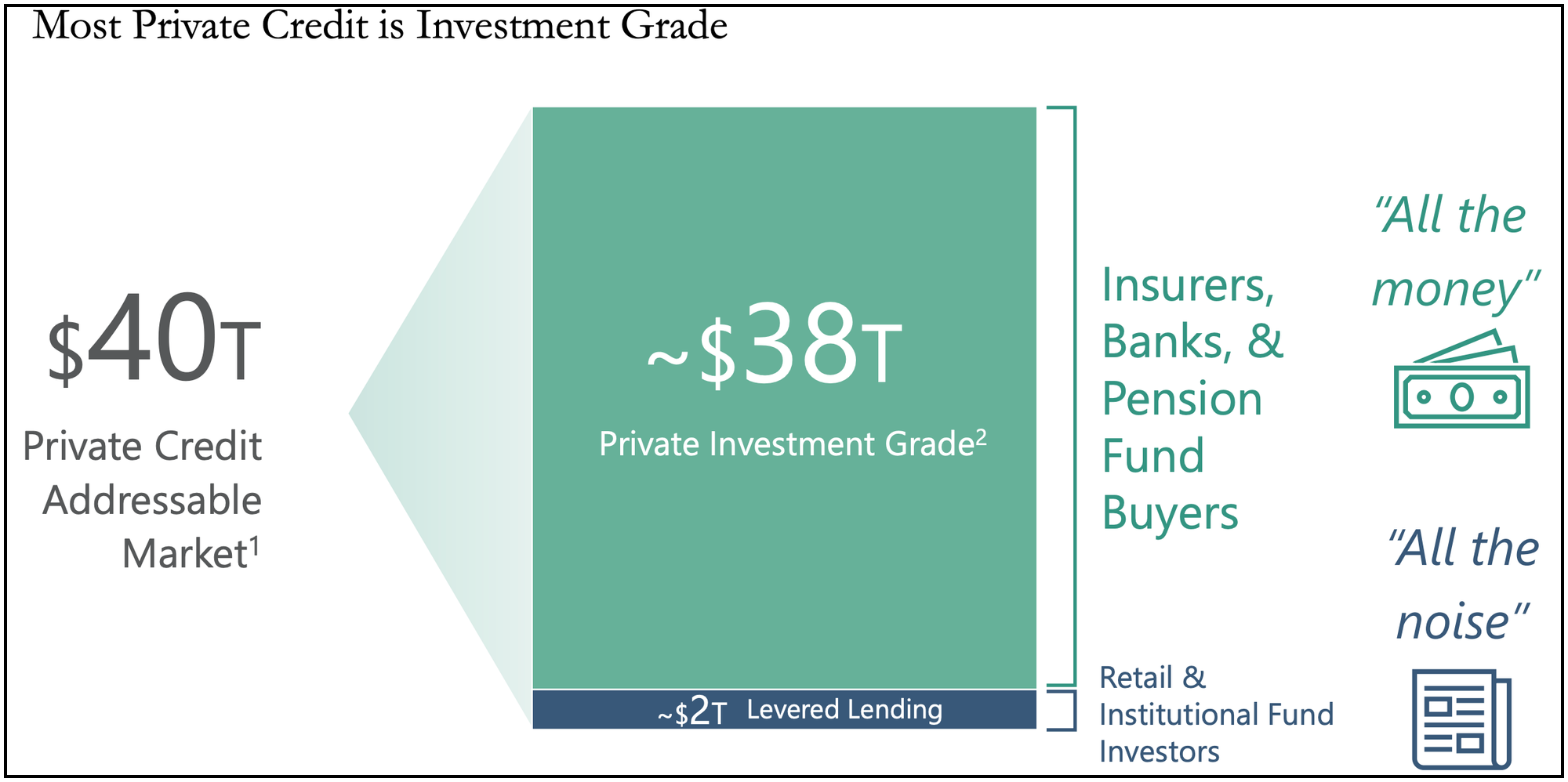
1. Anxiety about Private Credit
This has certainly been a big storyline in the industry over the past 12 months. A handful of high-profile bankruptcies, a couple of PR missteps, concerns about software exposure (see below), and redemption requests skyrocketing in the wealth channel (see below again) have all stained Private Credit's image in the media. But there are a few things to point out for further context.
One is that institutions are still allocating significantly to Private Credit, and there are plenty of anecdotes suggesting institutions see this as a time to allocate more. Secondly, performance has still held up reasonably well, especially compared to public indices (although here there is plenty of dispersion between the best and the laggards). And finally, the negative headlines have all been about one small corner of the Private Credit ecosystem (Direct Lending), while the rest is getting much less attention.
2. Concerns about the wealth channel
This is related to point #1, since a big storyline this year has been redemption requests for Private Credit funds in the wealth channel. But again there are some mitigating factors.
One is that redemption requests have started coming down, and of course not all redemption requests are being fulfilled either, helping to sustain AUM levels and keep the funds operating properly. Meanwhile other asset classes (such as Private Equity and Private Infrastructure) continue to raise significant dollars from retail investors.
If the managers are going to emerge from this turmoil unscathed, then the funds will need to deliver strong investment performance. But in the meantime, it looks like the managers have some breathing room.
3. Private Equity monetizations aren't happening
This is a very legitimate concern among the investment community, especially for Private Equity assets that were purchased during the 2020-2021 timeframe. This was a time when interest rates were at zero, valuations were peaking, and the private equity industry was raising substantial capital. Some firms were quite undisciplined, deploying aggressively, overpaying for assets, and relying on very low-cost (floating rate) financing. This was especially true for buyouts in the software space.
Then came skyrocketing interest rates, bringing valuation levels down for many companies. In Private Equity, heavy use of floating rate debt added to the trouble. Bid-ask spreads gapped out, as sellers were often unwilling to fully accept this new reality. Transaction activity slowed down dramatically. There was a healthy recovery in 2025, although not to 2021 levels, and there are concerns that volatile markets could lead to subdued exit activity again.
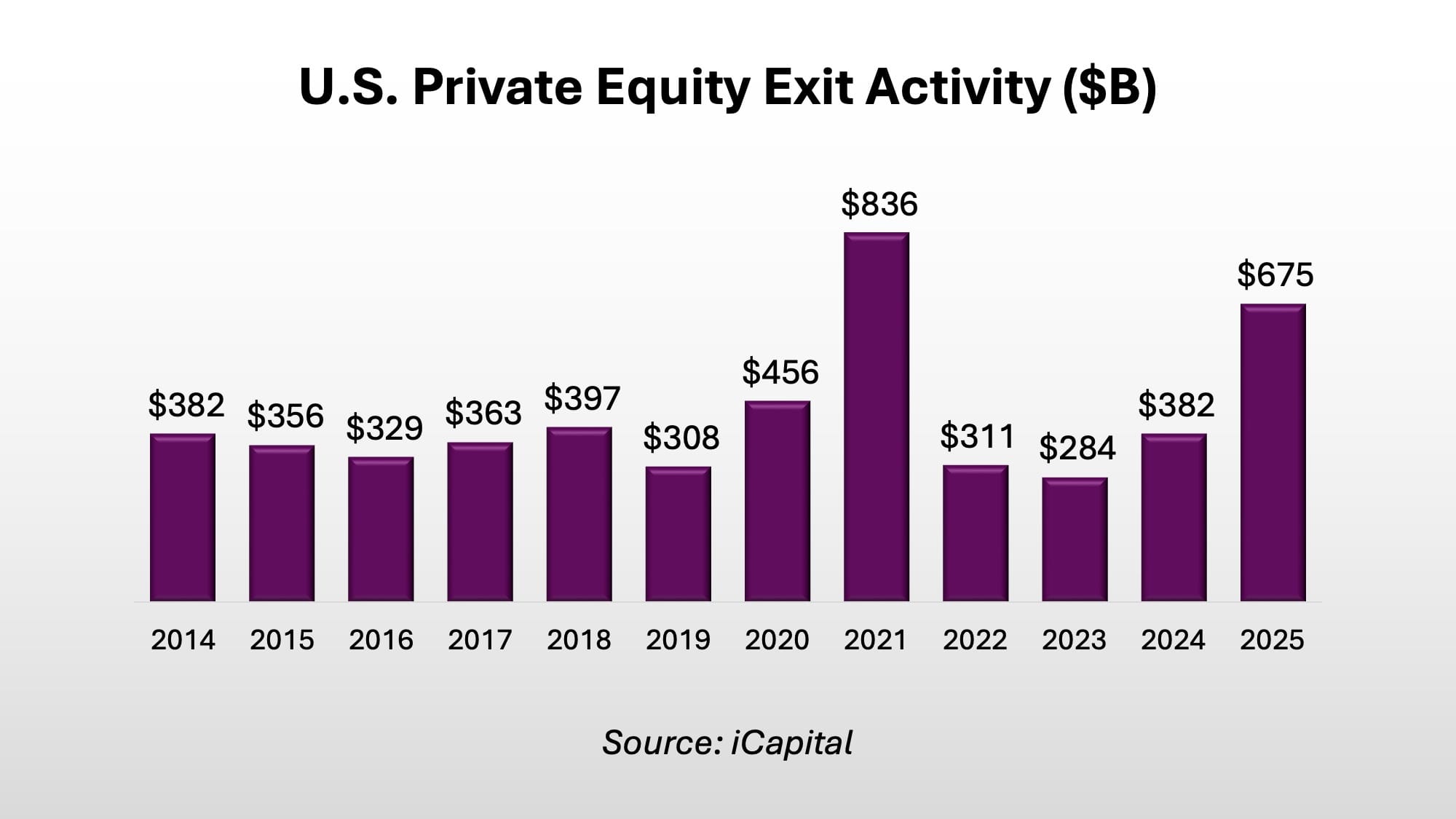
Once again, there is plenty of dispersion between the leaders and the laggards. KKR has been very vocal about not over-deploying at the peak, which is now helping them as they look to monetize assets. Apollo has also been very vocal about their valuation discipline and their skew away from high-growth companies. At the other end of the spectrum, many Private Equity companies are dealing with a severe hangover from the 2020-2021 time period (Venture Capital investors even more-so) and the consequences have yet to fully be felt.
4. Concerns about software
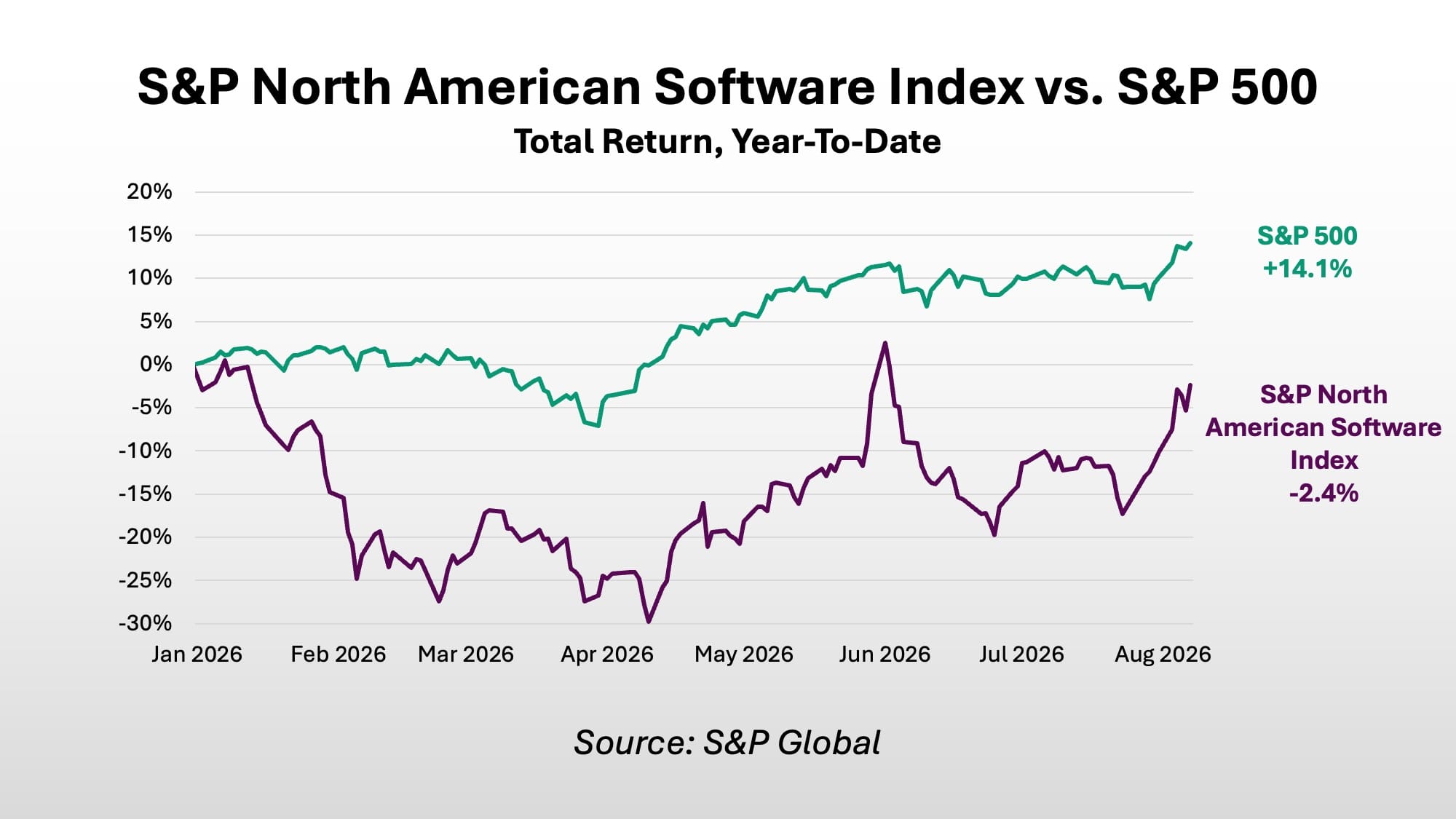
The so-called "SaaSpocalypse" became a major headline in February, prompted by Anthropic launching a legal plugin for Claude Cowork. By April, the S&P North American Software Index was down nearly 30% year-to-date, at a time when the S&P 500 was roughly flat. Although software equities have recovered significantly over the past four months, concerns remain about disruption risk in the software space. Software is also a major part of Private Equity and Private Credit portfolios, so these concerns have reflected negatively on the alternative asset managers as well.
This is something I wrote about a couple of times in February. Certain companies will be very-much affected, especially those that don't have proprietary data, aren't deeply embedded into customer workflows, and don't serve heavily-regulated industries. Labour-intensive professional services firms also face a big risk. And cracks are already starting to show, as outlined in a recent Apollo slide deck:
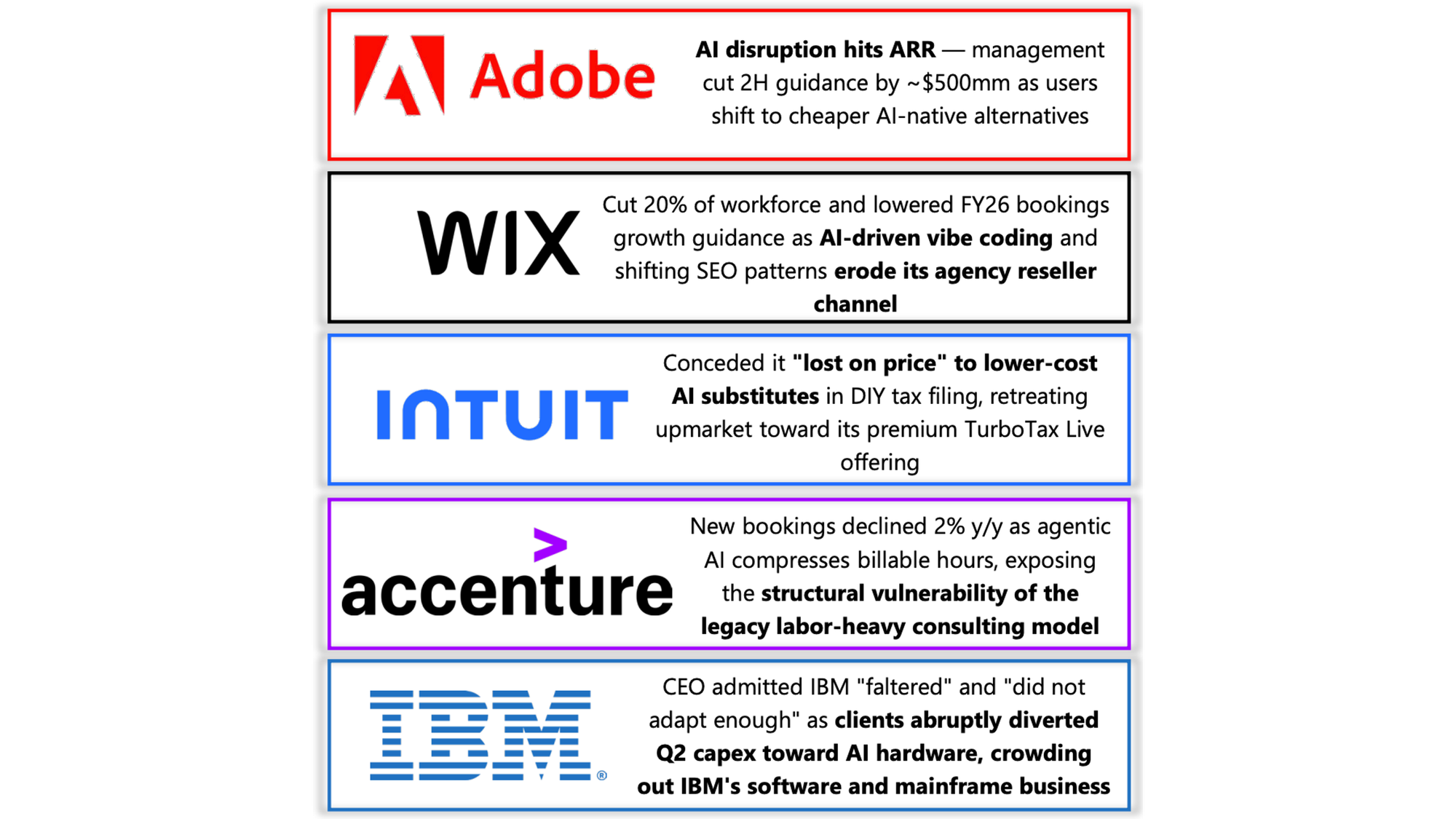
That being the case, AI is also a tremendous opportunity for other software providers to increase revenue while decreasing cost. And one could argue that Private Equity-owned companies will adapt more quickly to AI (or any other industry shift) than publicly-traded companies. Much like the other items in this list, there will be wide dispersion between the winners and losers.
5. A slowdown in fundraising
This issue is really the culmination of the other four. Anxiety about software and Private Credit, particularly in the wealth channel, along with minimal Private Equity monetizations, has been a headwind for fundraising. Once again there is fairly wide dispersion, with larger managers gradually taking share from smaller ones. Also not coincidentally, the managers better-able to monetize their investments and return capital to investors are also better-able to raise fresh capital.
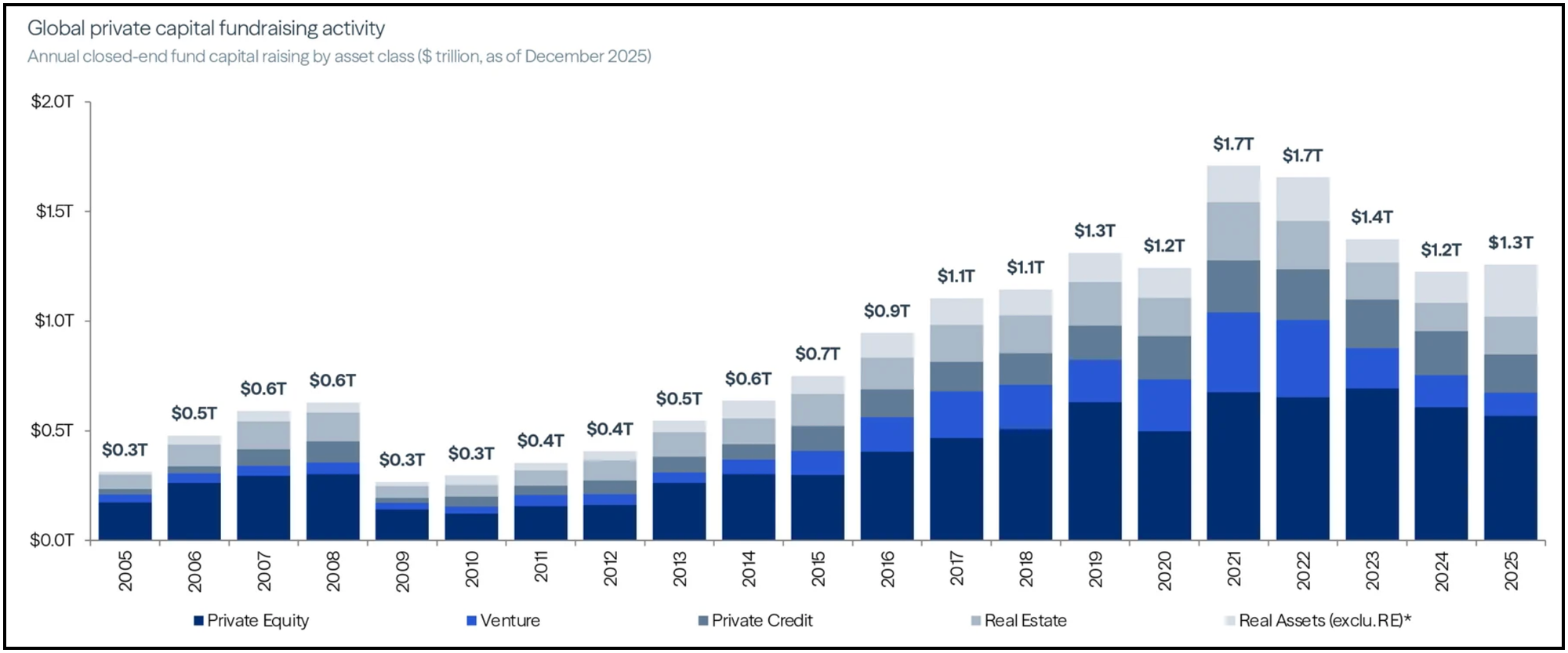
For the Private Markets industry as a whole, fundraising actually peaked in 2021, unsurprisingly at a time when markets were generally on fire. And unfortunately there will likely be many managers who never get back to the fundraising levels they saw five years ago.
Conclusion: The haves and the have-nots
There's a common theme for all 5 of the reasons investors are pessimistic about the industry: a widening gap between those that are thriving and those that are struggling. And that's largely why KKR's co-CEO was so eager to talk about these issues; he believes the company is one of the thriving ones, and he has plenty of evidence to back up his claim. For instance, KKR didn't over-invest during the boom times, they are succeeding in the wealth channel, and they are due for a record fundraising year in 2026.
But even KKR is facing an industry much more challenging than 5-10 years ago, one that is much more competitive, and one in which outsized investment performance is not so easy to come by. While I continue to believe public market investors are overly pessimistic towards this industry, I can certainly admit they have a point.
Want to find out more?
Private markets are not for everyone, and come with a number of risks, such as higher illiquidity and less transparency.
However, many of the world’s leading institutions and wealthiest families put a big emphasis on private markets, and recently these strategies have become more available to individuals too. Drawing on my background as an analyst specializing in private markets, I help investors cut through the complexity and understand how to build portfolios incorporating these strategies.
To explore whether these strategies are suitable for you, please schedule a 30-minute virtual meeting below:

Email
|

Phone
|

LinkedIn
|

Apple
|

Spotify
|
Disclaimer
Benjamin Sinclair is a representative of Designed Securities Ltd. Designed Securities Ltd. is regulated by the Canadian Investment Regulatory Organization (ciro.ca) and is a Member of the Canadian Investor Protection Fund (cipf.ca). Investment products are provided by Designed Securities Ltd. and include, but are not limited to, mutual funds, stocks, and bonds. Benjamin Sinclair is registered to provide advice and solutions to clients residing in the province of Ontario. For more information, please see www.beyondtheexchange.ca/disclaimer/

|

|
|