BTE Newsletter #41: It's Amazing What You Can Get For $500 Billion

Good morning everyone, and Happy Tuesday. We're already into the middle of August, so the summer season is almost over.
The only personal update I have is regarding my 5-year old son, who is due to get his walking boot off today (fingers crossed). This would mark the end of a 12-week ordeal, which started in late May when he fell off his scooter and broke his tibia. I should have known right away when he said "it hurts a million billion trillion."
But despite slowness of the summer season, there's still plenty going on in Private Markets. On Monday morning last week, I woke to the following headline: "Wall Street giants partner with Nvidia on $500bn AI financing deal." Financing the AI buildout is something I've written about before, and with such a massive dollar figure it's time to write about it again. So I hope you enjoy it.
Ben
Why NVIDIA Is Teaming Up With 6 Wall Street Giants For Up to $500 Billion of Financing
The alternative asset managers have not been shy about their role in the AI buildout. Perhaps the most creative messaging on this theme came from Blackstone, when they made a video portraying themselves as financing the "Picks and Shovels" of AI. For those of you who can't see the YouTube embed below, here is a link.
When it comes to the amount of financing required, there's no denying it's a massive undertaking, although numbers vary on the exact cost (generally the more recent the report, the higher the estimate). In April, Goldman Sachs estimated the cost at $7.6 trillion from 2026 to 2031 across compute, data centres, and power.
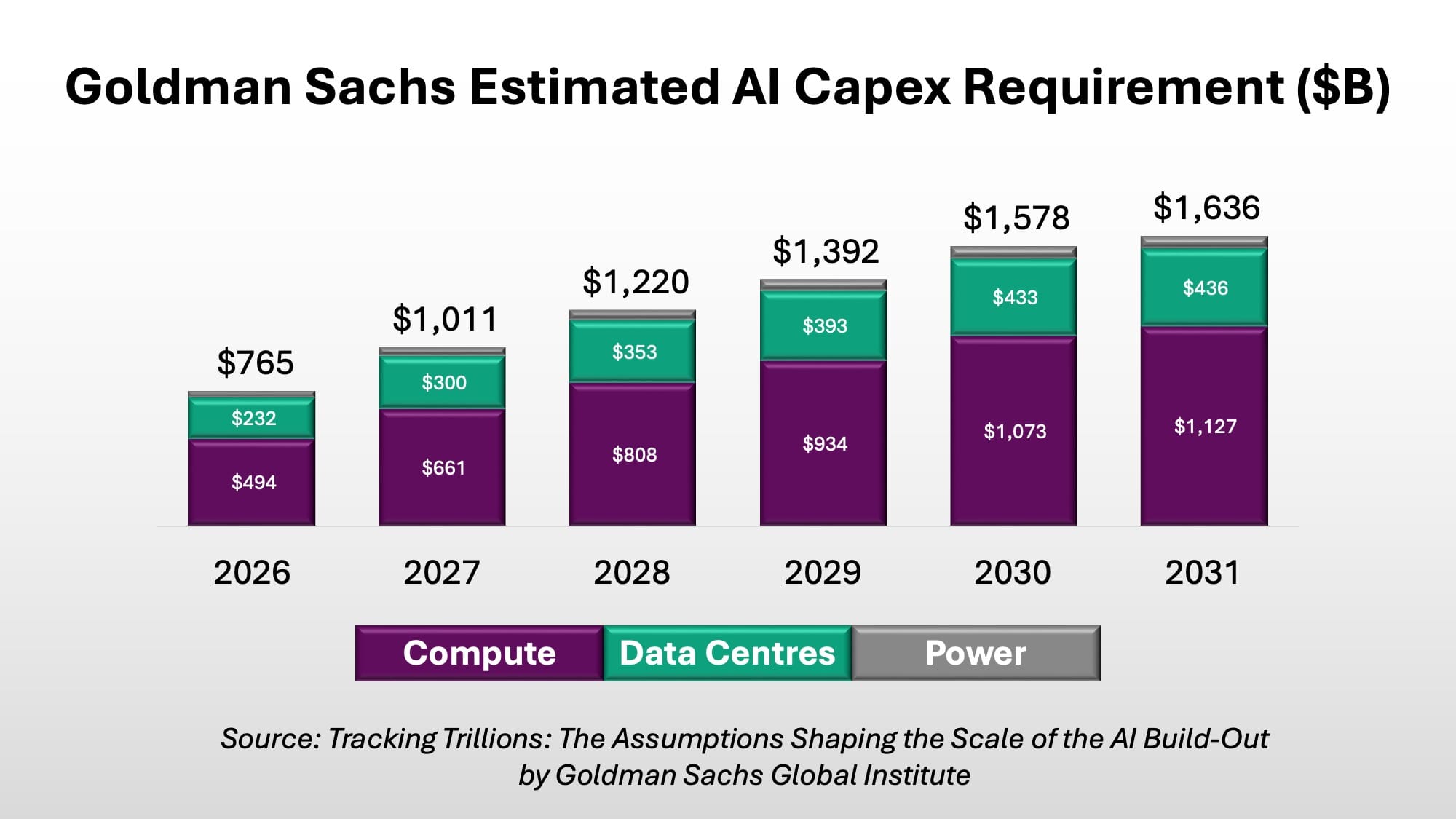
It's also become clear that other sources of financing are not sufficient on their own. Much of the capital expenditures thus far have come from the hyperscalers' balance sheets, but these companies' investors are understandably pushing them away from that. Meanwhile the investment grade bond market can only absorb so much new issuance, and the hyperscalers are already in the process of testing those limits. Other financing sources (such as high-yield bonds) are only large enough to meet a small fraction of the overall need.
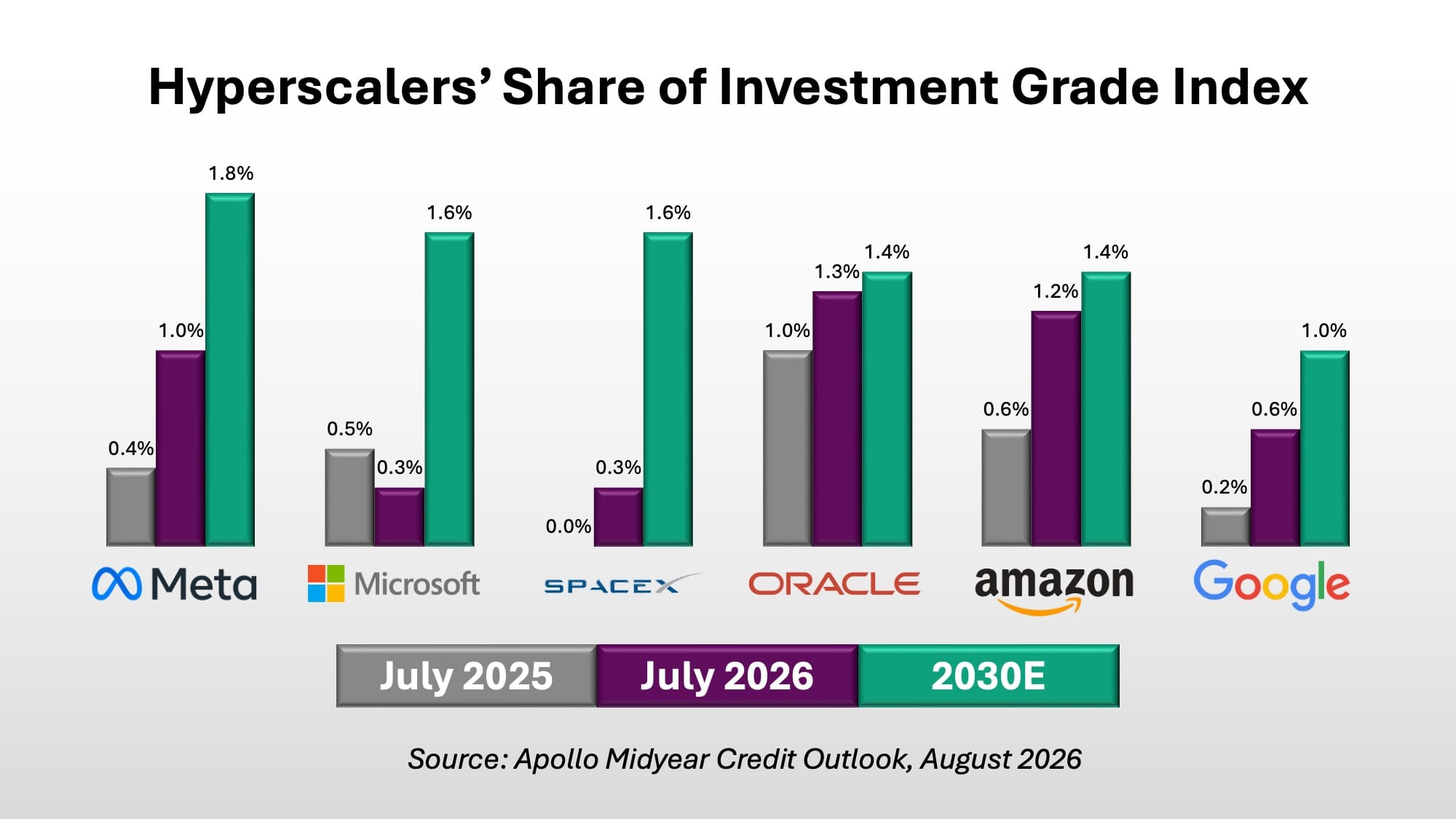
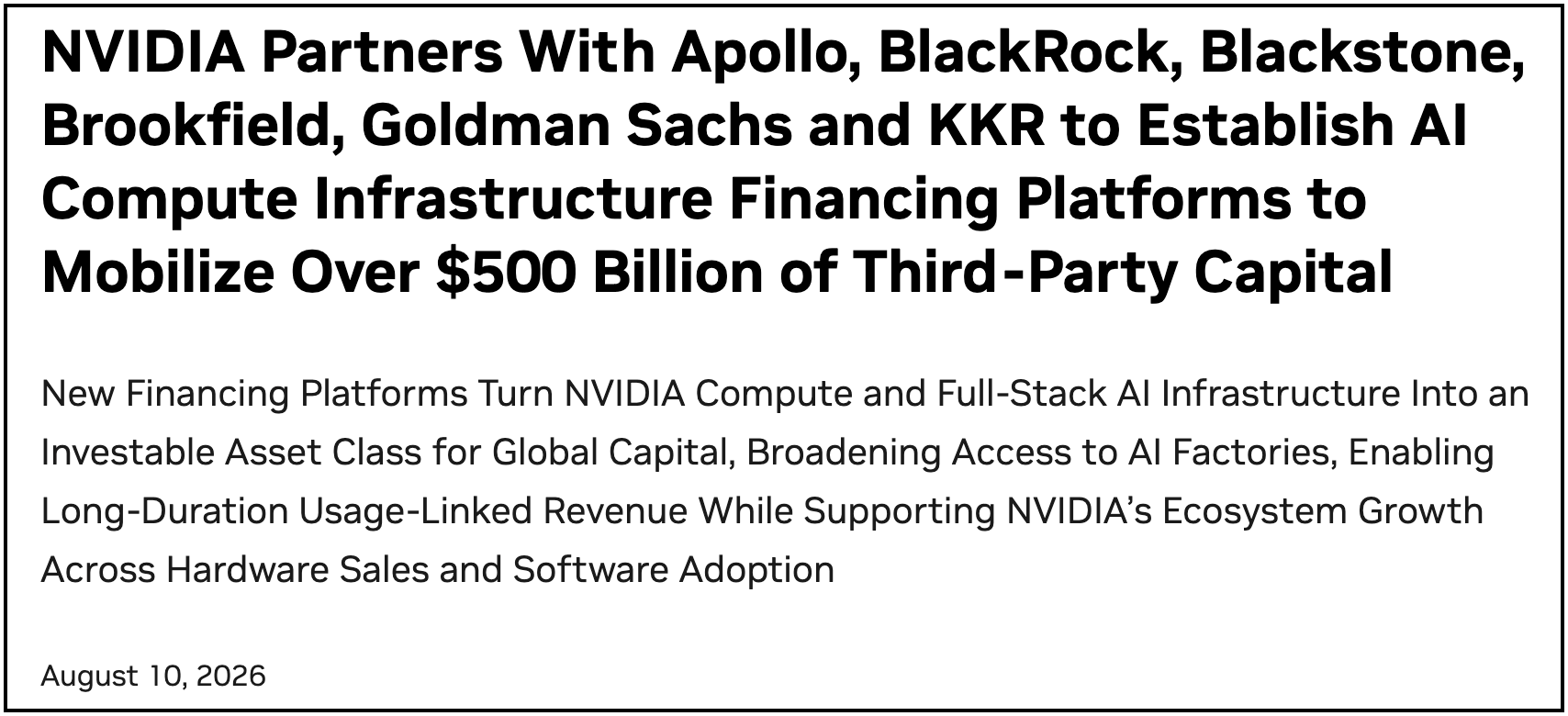
So it's little wonder Private Markets have already played a large role in the AI buildout. Then came the announcement on Monday last week:
The Logic Behind the Agreements
At a high level, the mechanics of these six arrangements are quite simple: the asset managers will provide vendor financing for NVIDIA's customers as they look to buy chips.
And the idea makes a lot of sense. For the same reason one wouldn't finance a car purchase with a credit card, it's quite impractical for an AI startup (or even a larger AI company) to purchase compute with its balance sheet, since that form of financing has a very high cost of capital. This is why NVIDIA CEO Jensen Huang initiated the conversation with these asset managers; having vendor financing arrangements in place allows the company to sell more chips to the right customers.
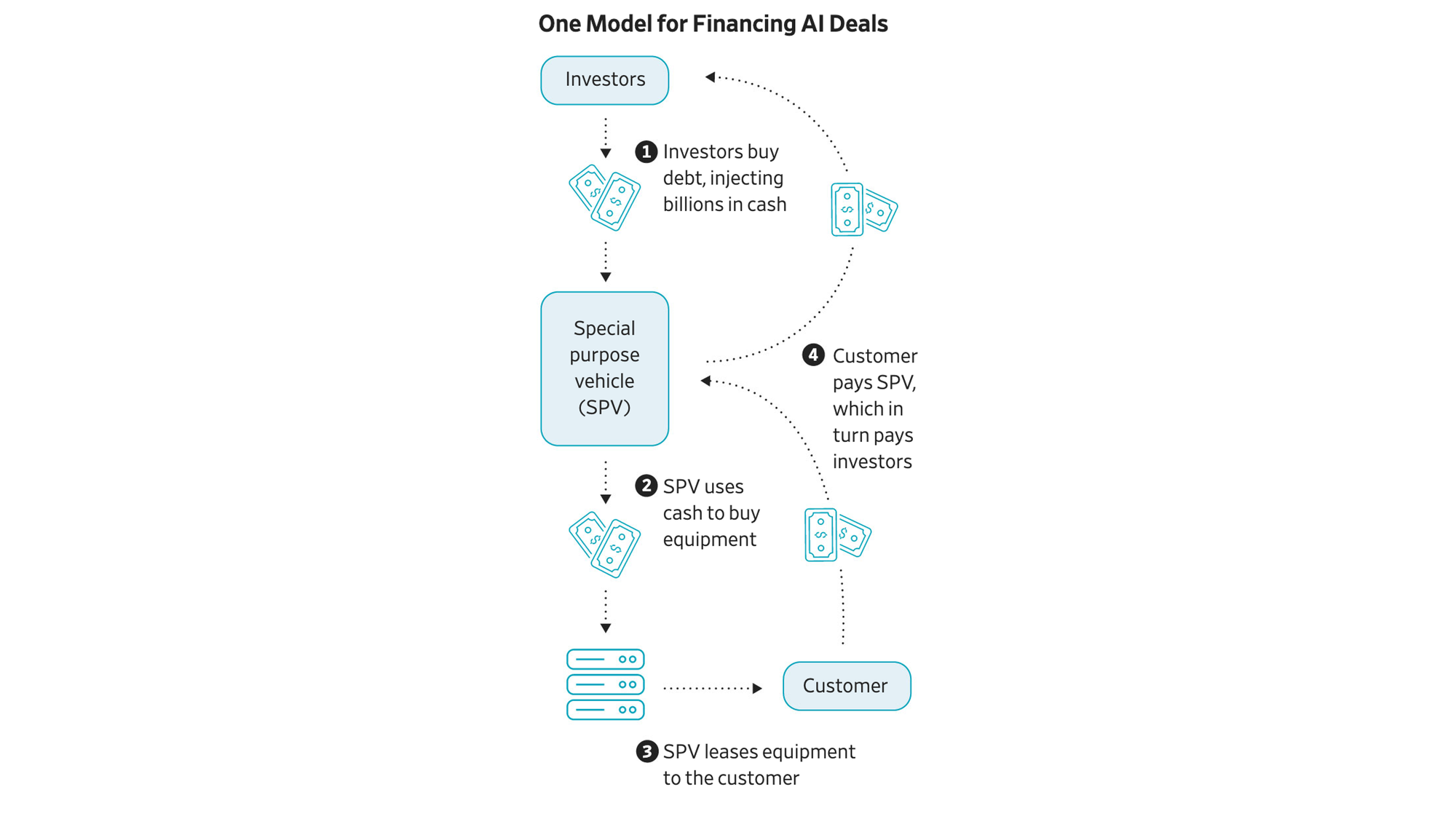
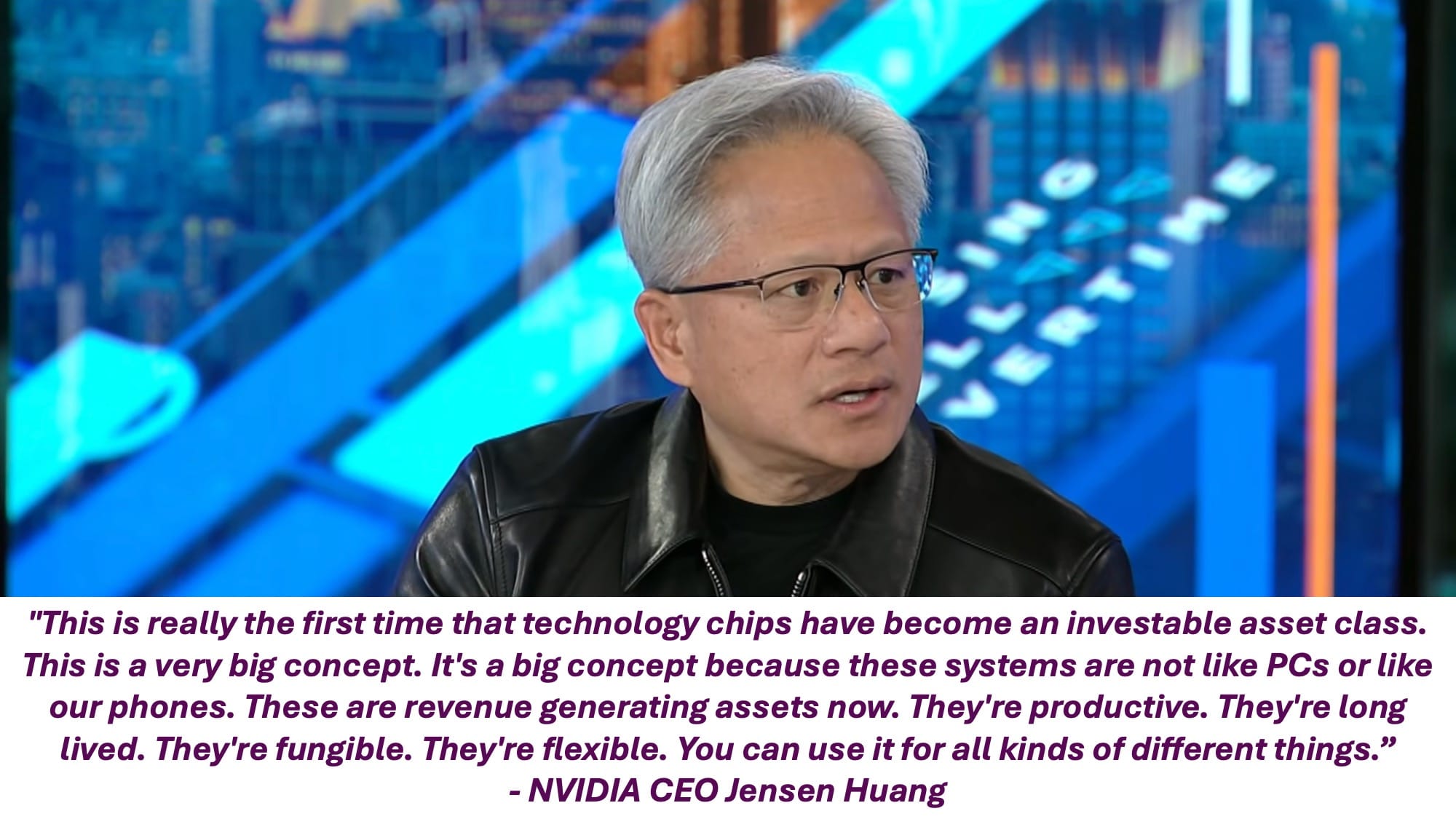
The key assumption here is that NVIDIA's chips themselves are an investable asset, and therefore if a borrower defaults, a new owner could be found for those chips. It's no different than a home or car being repossessed and resold when a loan goes delinquent. This allows the Private Markets firms to underwrite both the borrower and the asset when providing financing.
There are few details beyond that, partly because the alternative asset managers still have money to raise for this agreement. Thus the precise terms will be at least partly dictated by the end investors. But there's no shortage of demand, and the managers don't seem concerned about their ability to raise the money.
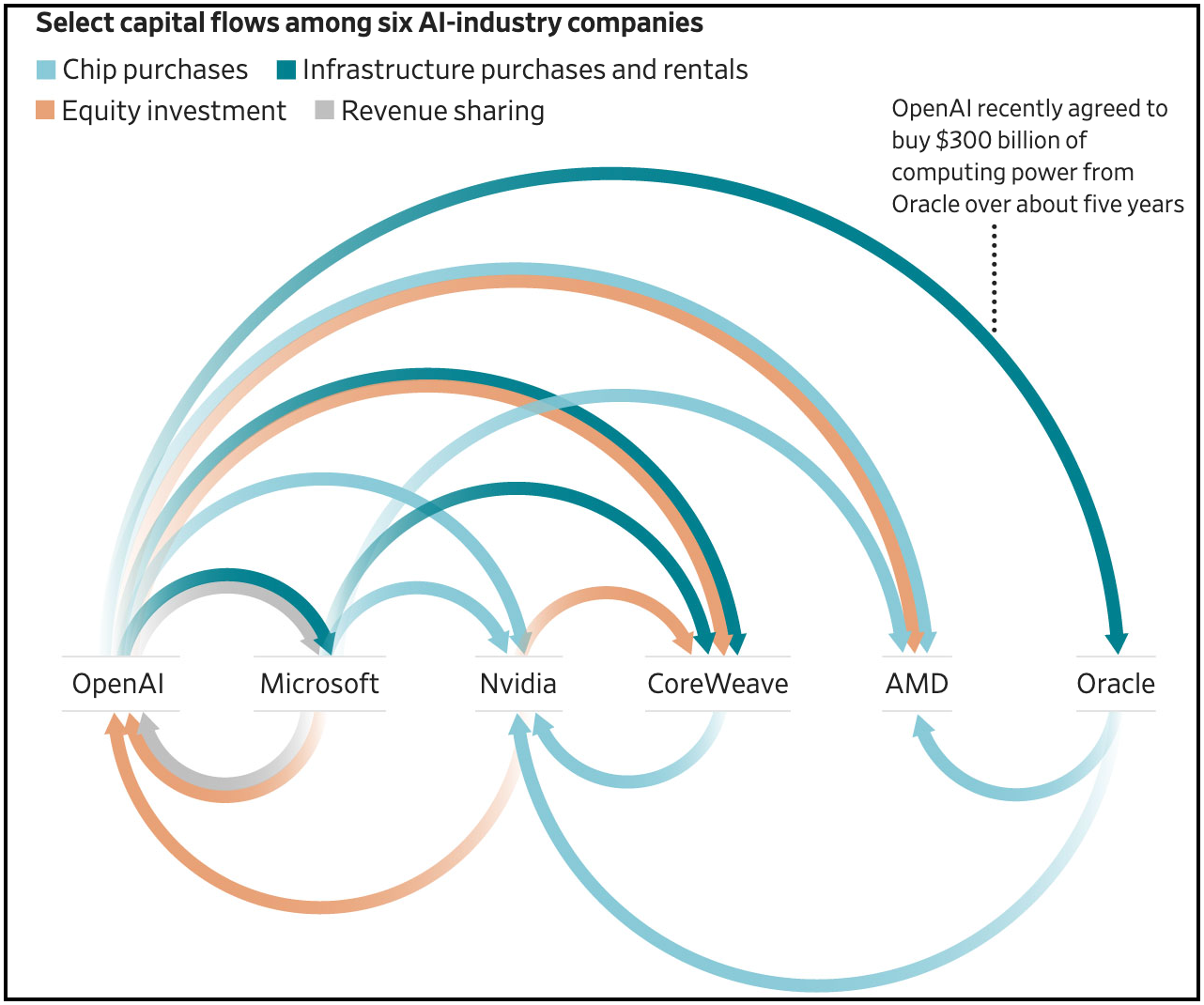
Up to this point, NVIDIA has often been helping customers finance chip purchases, sometimes by making equity investments in these customers. According to Pitchbook, NVIDIA is the largest corporate venture investor in AI by deal value. These types of practices are not uncommon throughout the industry, but it's resulted in a web of interrelated parties, and it's little wonder NVIDIA is looking to bring in so much outside capital.
Where This Could Go Wrong
While the alternative asset managers are clearly addressing a need in the AI buildout, these arrangements have no shortage of risks, and history offers plenty of case studies for what could go wrong:
- There is the risk of oversupply. If too many data centres get built, or more precisely too many Nvidia GPUs get sold, then that would erode the collateral underpinning these financing agreements. This scenario brings back (nightmarish) memories of the technology bubble, when companies such as Lucent Technologies and Nortel Networks financed their customers' purchases of telecom equipment. In those cases the two companies provided financing to customers who were never realistically going to repay their debts, and there was also a major overbuild, contributing to both companies' downfalls. The same thing could be said for the Great Financial Crisis of 2008, which was partly caused by an overbuilding of homes.
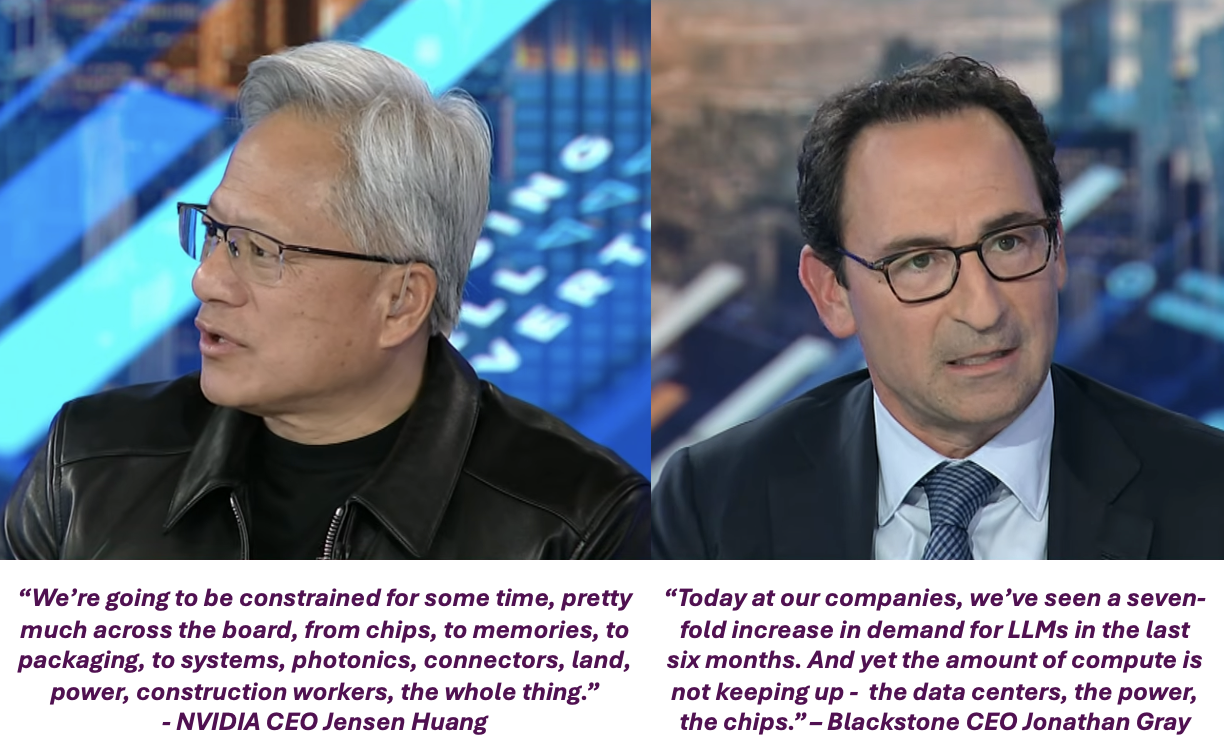
In this case, neither Mr. Huang nor the asset managers see oversupply as a legitimate possibility. Not only has the growth in AI demand been astronomical, but there are serious bottlenecks emerging on the supply side.
- There is the risk of sloppy underwriting. Again this was a big issue during both the technology bubble and the Great Financial Crisis. But in both those situations there was a severe misalignment of incentives, with companies such as Lucent and Nortel looking to juice revenue figures during the tech bubble, and with banks looking to generate transaction fees in the years leading up to the financial crisis.
This time the underwriting is being done by sophisticated parties who are managing assets for the long term. Much of their fee revenue will be based on long-term performance. And some of the managers (Brookfield, Apollo and KKR in particular) will likely be allocating significant balance sheet capital to these efforts. There will certainly be mistakes, but in this case the incentives are aligned and the key players have deep domain expertise. - There is a risk of obsolescence, which like before could impair collateral values. This industry is known to create products with a short shelf life, as newer products consistently leapfrog older models. But in this case, demand for AI compute has been so robust that even NVIDIA's older GPUs have very strong utilization.
The alternative asset managers can also account for this risk through its financing terms, for instance by reducing loan-to-value ratios, shortening amortization schedules, and/or tightening covenants.
What This Means For Investors
To be clear, these are not going to be venture capital investments. Nor will they be the same AI bet that is found throughout the S&P 500. They will instead be credit investments, meaning their appeal will be based on diversification, downside protection, income, and incremental return for the risks taken. One should expect most of the financing to have an investment grade risk profile.
So if anyone is expecting home runs from this investing strategy, they'll likely be very disappointed. But as the world looks to finance the AI revolution, this form of flexible capital will be paramount, and whatever people think of the alternative asset managers, there's no denying their importance in this endeavour.
Want to find out more?
Private markets are not for everyone, and come with a number of risks, such as higher illiquidity and less transparency.
However, many of the world’s leading institutions and wealthiest families put a big emphasis on private markets, and recently these strategies have become more available to individuals too. Drawing on my background as an analyst specializing in private markets, I help investors cut through the complexity and understand how to build portfolios incorporating these strategies.
To explore whether these strategies are suitable for you, please schedule a 30-minute virtual meeting below:

Email
|

Phone
|

LinkedIn
|

Apple
|

Spotify
|
Disclaimer
Benjamin Sinclair is a representative of Designed Securities Ltd. Designed Securities Ltd. is regulated by the Canadian Investment Regulatory Organization (ciro.ca) and is a Member of the Canadian Investor Protection Fund (cipf.ca). Investment products are provided by Designed Securities Ltd. and include, but are not limited to, mutual funds, stocks, and bonds. Benjamin Sinclair is registered to provide advice and solutions to clients residing in the province of Ontario. For more information, please see www.beyondtheexchange.ca/disclaimer/

|

|

|