BTE Newsletter #39: The Rise of Direct Indexing, and Other Innovations in Public Markets

Good morning everyone, and Happy Tuesday Wednesday. I hope you all enjoyed the long weekend.
For the first time in a few weeks, there is a new episode of the Beyond The Exchange podcast, featuring Abigail Rayner of HarbourVest Partners.
Late last year, Abby co-wrote a thought piece titled "The Seven Sins of Evergreen Investing", and I thought it would make for a great podcast episode too. Unfortunately there have been (quite) a few instances of fund companies committing these sins, and while we don't call out any of these managers by name, it's important at a time like now to recognize the pitfalls that come with evergreen funds.
Anyone interested can listen to the episode here:

|

|
As for this week's newsletter, it's time for me to devote some time towards public markets. While I realize this newsletter is mainly focused on the Private Markets space, public investments are still an integral part of practically every investor's portfolio. Furthermore, an investor's Private Markets allocation can (and should) dictate how an investor approaches stocks and bonds. There are also some very interesting innovations coming to public markets, which I believe are worth highlighting.
Besides, there are still lots of people who believe all I offer are Private Markets. This is understandable, given the name and focus of this website/newsletter, as well as the podcast. But this belief is not true. So with that said, below are some approaches and new innovations I am most focused on in public markets.
Ben
Disclaimer: To be clear, nothing in this writeup should be interpreted as tax advice. Please consult a tax professional before making any tax-related decisions.
Approaches and Innovations In Public Markets
When I build investment portfolios for clients, and I talk about public markets, my approach can typically be summed up by one word: Vanguard.
This doesn't mean all dollars go towards Vanguard funds (although a lot do). Instead it reflects more of a mindset, one in which costs are minimized and the focus is on getting the right exposures rather than beating the market. It's based on the idea that most active managers fail to beat their benchmarks, and research shows that even betting on star performers does not result in favourable odds on a go-forward basis. With this kind of thinking I end up focusing way more on Private Markets.
This kind of thinking is not controversial, and has driven a share shift from active to passive management for decades (although the U.S. is further along in this shift than Canada).
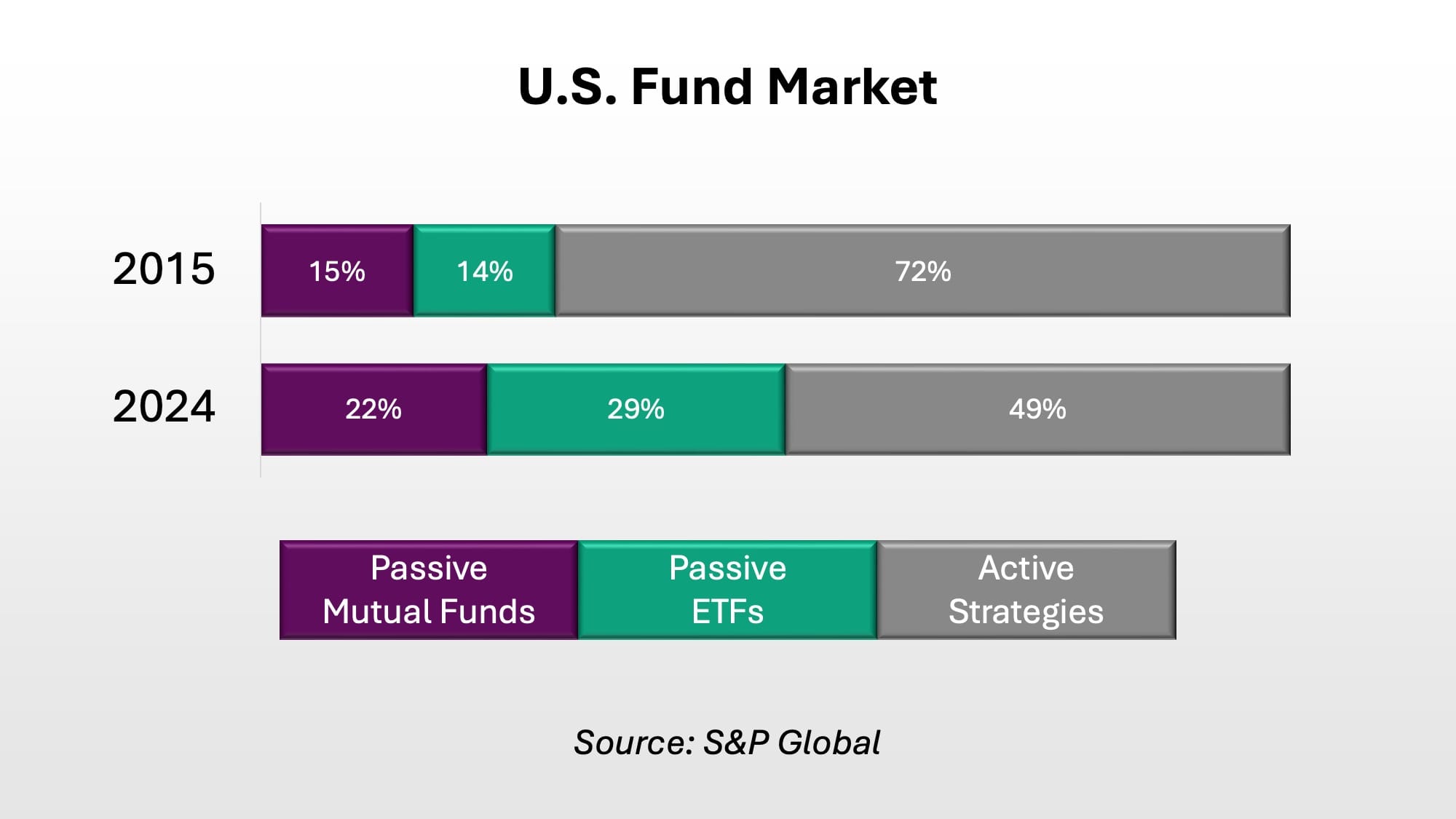
That being the case, there are limitations to this strategy. One is diversification, as the S&P 500 is increasingly concentrated in large technology companies that are leading the charge on AI. This can be partially mitigated through broader allocations, such as investing in other countries (for example it helps that Canada's stock market has relatively little tech exposure), or other indices besides the S&P 500. It can also be mitigated by including Private Markets in a portfolio.
But there's more to the picture, especially now. Certain strategies have emerged that help save on tax, in particular Direct Indexing. Fees continue coming down. There have also been new strategies emerging on the fixed income side (although that is a topic for another newsletter issue). The result is a different landscape in public markets than even five years ago.
Direct Indexing
Imagine a scenario where instead of buying an S&P 500 ETF, one instead purchases all the stocks within the S&P 500 individually, with the intention of mirroring the index. This comes with one important advantage: tax loss harvesting.
For example, suppose the price of Coca-Cola stock fell precipitously. A direct indexer could sell those shares, claim a tax loss, and then buy Pepsi to maintain similar exposures overall.
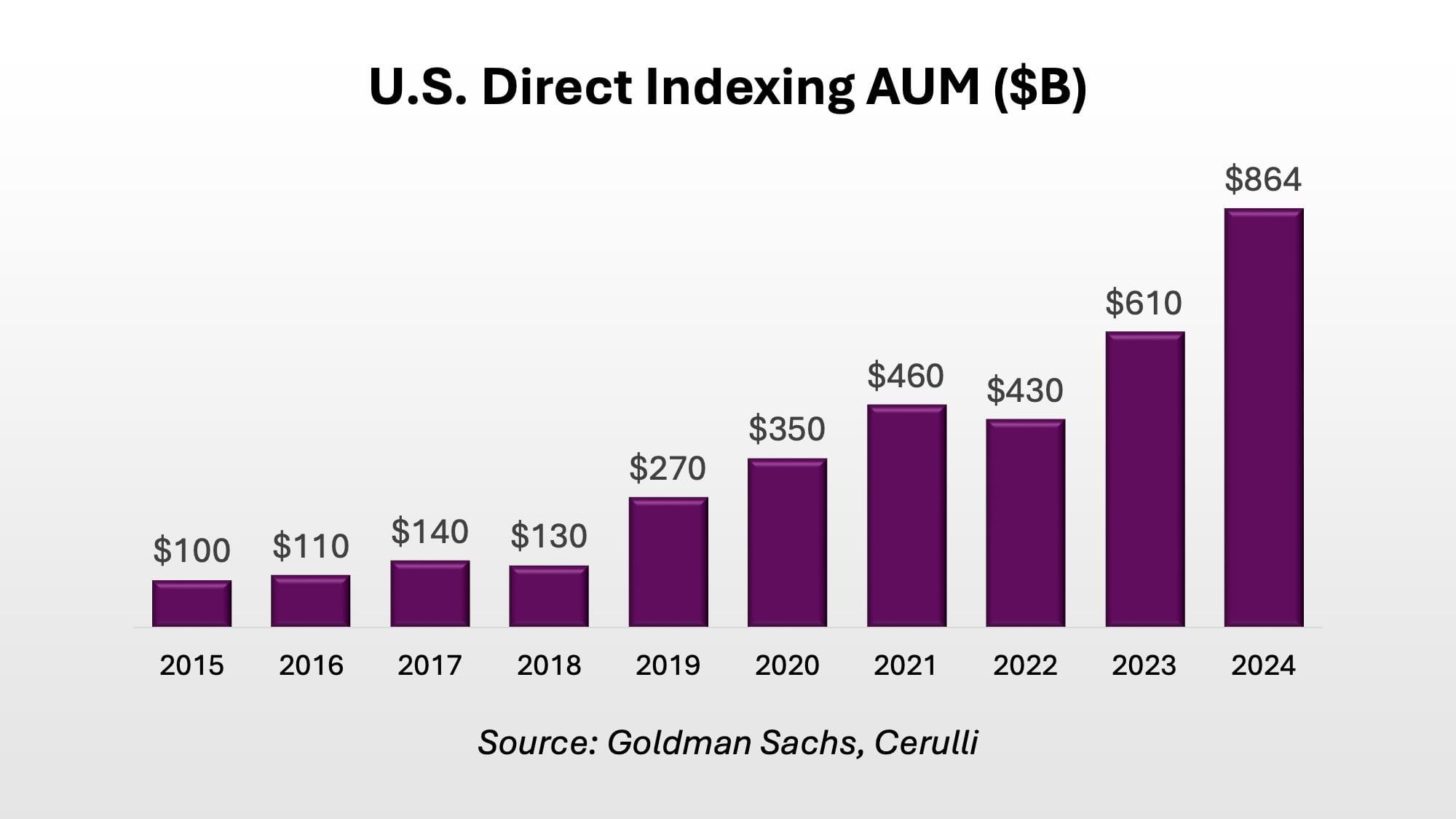
To do this manually would be very expensive and time consuming. But technology has come far enough to streamline the process, and some providers have made it easier for smaller investors to participate through fractional share ownership. In the United States, Direct Indexing has become especially mainstream, reaching US$864 billion in AUM by year-end 2024.
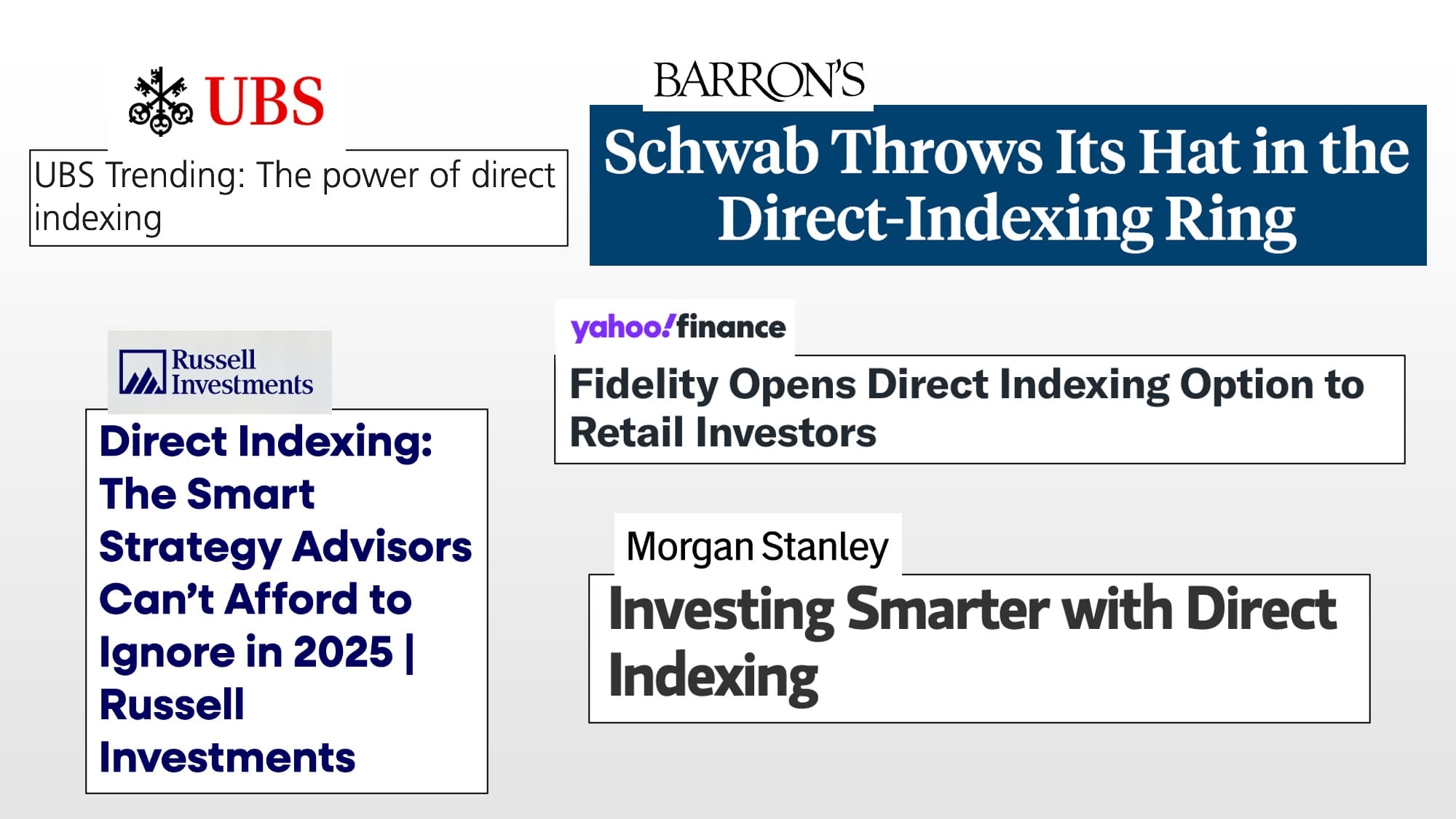
Direct Indexing is especially valuable for individuals facing a big capital gains tax liability, and this can come about in a number of ways. Perhaps someone is selling a business or an investment property. Or perhaps someone has a concentrated stock position, and is looking to diversify (more on that below). Another scenario emerged two years ago, when Justin Trudeau announced a change to the capital gains inclusion rate. Many Canadians rushed to realize gains before the implementation date, which of course never came. But that resulted in a big tax hit for these people, although it's still not too late to do something about that, since capital losses can be carried back up to three years.
Along the same lines, since losses can be carried forward indefinitely, it's common for people to employ a Direct Indexing strategy ahead of a capital gains tax hit (e.g. selling a business or an investment property) to build up losses in advance.
The strategy is not as penetrated in Canada, but some providers have stepped up. Wealthsimple has an offering. Last year Envestnet came up with an innovative Direct Indexing product. Neuberger Berman has put Direct Indexing into a fund form, making it even easier to access the strategy, and this is the offering I personally use. And I look forward to the day when more companies follow suit.
Another Tax Strategy: Deferral
A common situation for many investors is a very large position in one stock, with that stock having significant embedded capital gains. This could be the result of a large bet gone right, or owning a large chunk of stock from a previous employer (or both). Either way it's not a bad problem to have, but it does present a dilemma: either diversify now and take a big tax hit, or continue taking the risk that comes with a concentrated position.
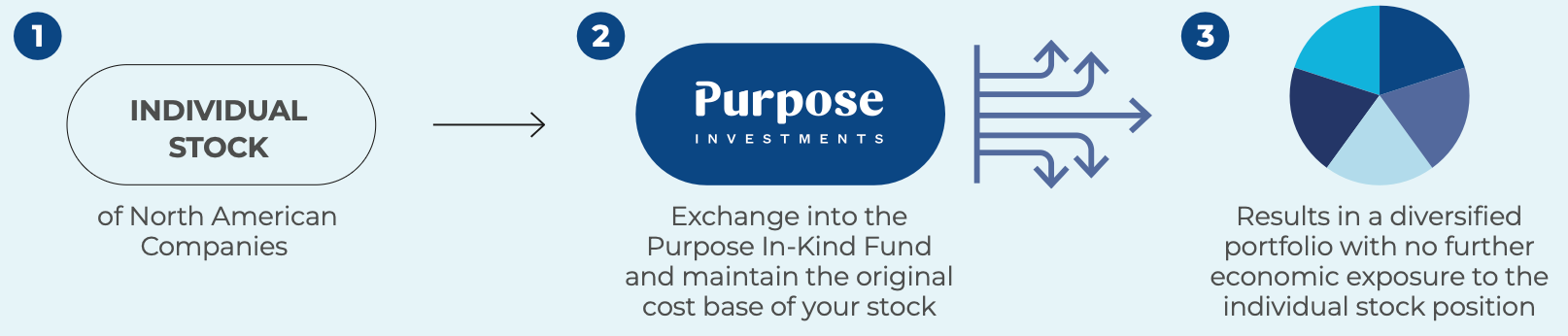
Well there is one option, called a Section 85 Rollover, in which the investor would exchange their shares into a corporate class mutual fund and defer the capital gains. To my knowledge, Purpose Investments is the one firm that facilitates these transactions. Anyone reading this who knows of others, please let me know.
New Low-Cost Products
Providers such as Vanguard and iShares may be known for low-cost investing, but they do not have sole ownership of that idea. Costs have come down for all product categories, as other providers accept the reality that lower pricing is required to compete. And there are a couple examples in particular worth highlighting.
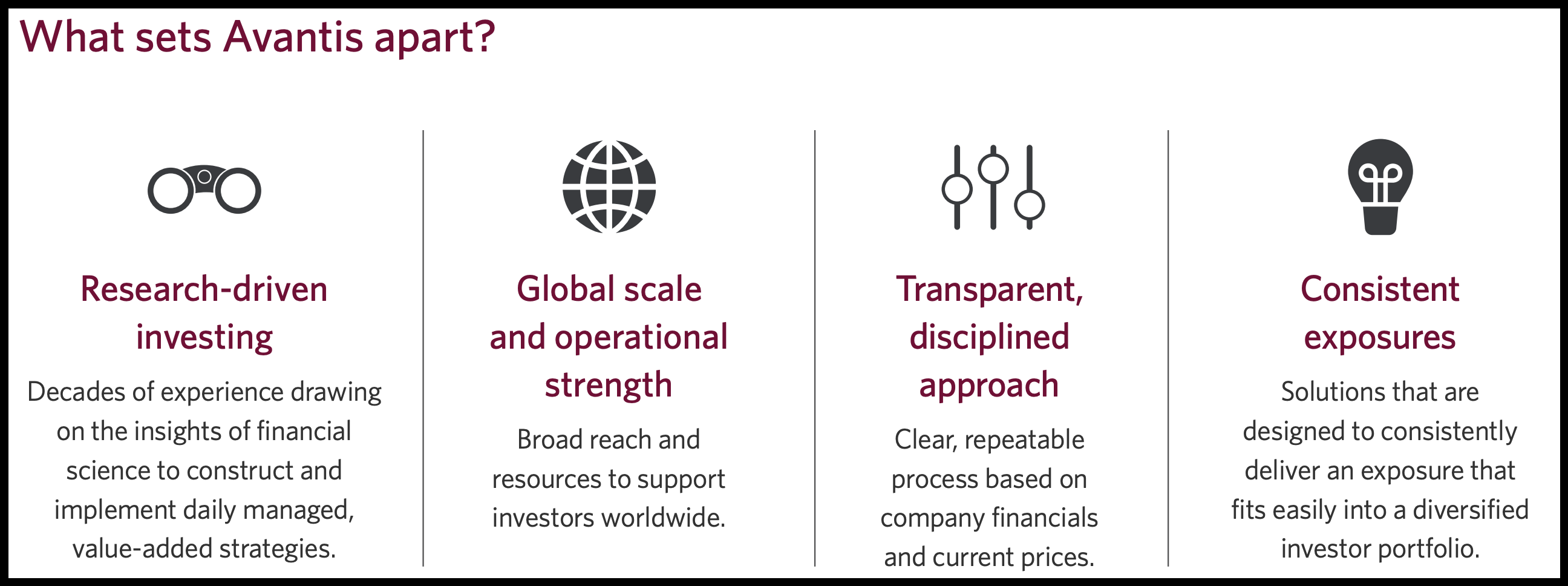
CIBC Asset Management has partnered with Avantis Investors to bring a suite of factor-based ETFs to Canadians. The securities in these funds are "elected using factors that consider value and profitability characteristics", so there is a clear effort in beating their respective benchmarks, but the management fee is as low as 0.19% for the Canadian Equity strategy. At the very least, they are worth considering as a way to avoid being overly concentrated in the industries that dominate certain indices.
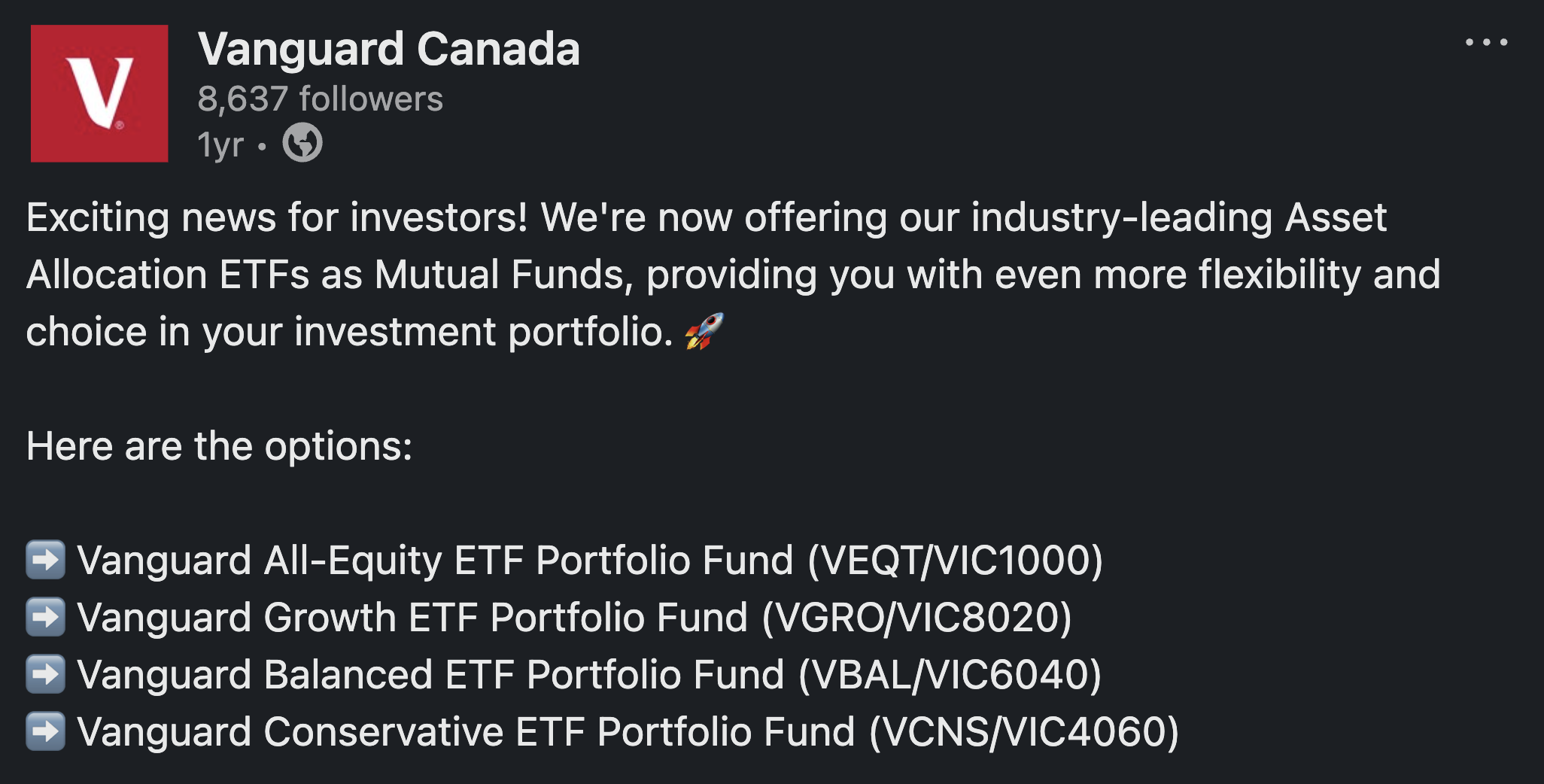
There have also been efforts to lower costs in the mutual fund world, specifically passive mutual funds. This can be quite useful, because in many cases it's more practical to buy a fund in mutual fund form, even if one is seeking a low-cost passive approach. Vanguard made a big announcement on this front in February 2025, putting their low-cost ETFs inside mutual funds.
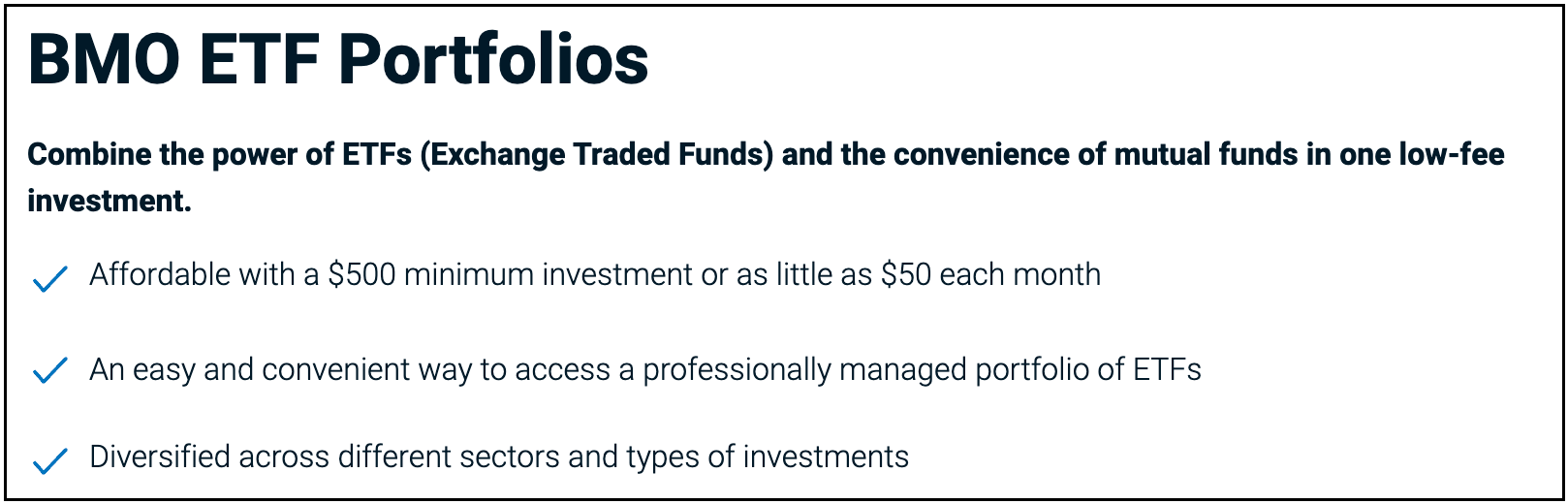
BMO also has an extensive lineup of low-cost ETFs inside a mutual fund wrapper, having just expanded that lineup last week to include all of its asset allocation ETFs.
Conclusion: Lots can still be done
To be clear, paying up for stock picking is not usually a winning bet (a difficult reality I had to face in my former profession). But that doesn't mean finding the lowest cost avenue is sufficient either. There are lots of evolutions taking place in public investing, leaving Canadian individuals with more legitimate options than ever before, not to mention what is now available in Private Markets. And I look forward to all of these strategies becoming even more mainstream in the years ahead.
Want to find out more?
Private markets are not for everyone, and come with a number of risks, such as higher illiquidity and less transparency.
However, many of the world’s leading institutions and wealthiest families put a big emphasis on private markets, and recently these strategies have become more available to individuals too. Drawing on my background as an analyst specializing in private markets, I help investors cut through the complexity and understand how to build portfolios incorporating these strategies.
To explore whether these strategies are suitable for you, please schedule a 30-minute virtual meeting below:

Email
|

Phone
|

LinkedIn
|

Apple
|

Spotify
|
Disclaimer
Benjamin Sinclair is a representative of Designed Securities Ltd. Designed Securities Ltd. is regulated by the Canadian Investment Regulatory Organization (ciro.ca) and is a Member of the Canadian Investor Protection Fund (cipf.ca). Investment products are provided by Designed Securities Ltd. and include, but are not limited to, mutual funds, stocks, and bonds. Benjamin Sinclair is registered to provide advice and solutions to clients residing in the province of Ontario. For more information, please see www.beyondtheexchange.ca/disclaimer/

|

|
|