BTE Newsletter #37: Sports! (Part 2)

Good morning everyone, and Happy Tuesday once again!
I hope you're all enjoying the summer, even those of you who (like me) live near the Greater Toronto Area and have had to deal with some intense smog... and then a tornado warning. Also I hope all the soccer fans enjoyed the World Cup, even though the Canadian team somehow didn't make the final.
Speaking of sports, I wrote a newsletter issues on Private Markets in the sports world earlier this year, and there have been plenty of developments since then. Most recently, there was a sale agreement for the Seattle Seahawks, fresh off the team's victory in Super Bowl LX. So I thought it was time for a Part 2 article on the subject, specifically looking at whether the strategy makes sense for retail investors.
In other news, I have now recorded episode 15 of the podcast, so there's now three in the queue. I should have all of them released in the coming weeks. In the meantime, you can listen to any past episodes (or subscribe) here:

|

|
And finally, last week I announced that my 5-year old son broke his leg at the end of May. A few of you reached out in response, so thank you. The good news is he's doing a lot better, currently in a walking cast, and he should get a walking boot next week. We're hopeful his leg will be completely healed by mid-August, giving him a couple weeks to rehab before school starts.
Ben
Will Individual Investors Be Able to Invest In a Sports Fund?
For those of you who missed my earlier post on sports, and are looking for the Cole's Notes version, I made the following arguments back in a post back in January:
- The business of sports has evolved significantly, but the ownership structure only started evolving in 2019, when Major League Baseball became the first major sports league in North America to allow Private Equity ownership.
- The business of sports is very resistant to disruption and to economic cycles, due to the devotion of fans to their favourite teams. This is especially attractive to Private Equity buyers.
- The sports industry has seen substantial growth from growing media rights contracts, international expansion, and other factors.
- The increasing value of sports teams has made it increasingly difficult to buy/sell teams without Private Equity involvement.
- In many ways sports leagues and teams have not modernized as much as other industries have. This gives Private Equity companies another avenue to drive earnings growth, simply by implementing best practices.
At a high level, sports teams have seen incredibly fast growth in their valuation, which is necessitating an increasing role for Private Equity:
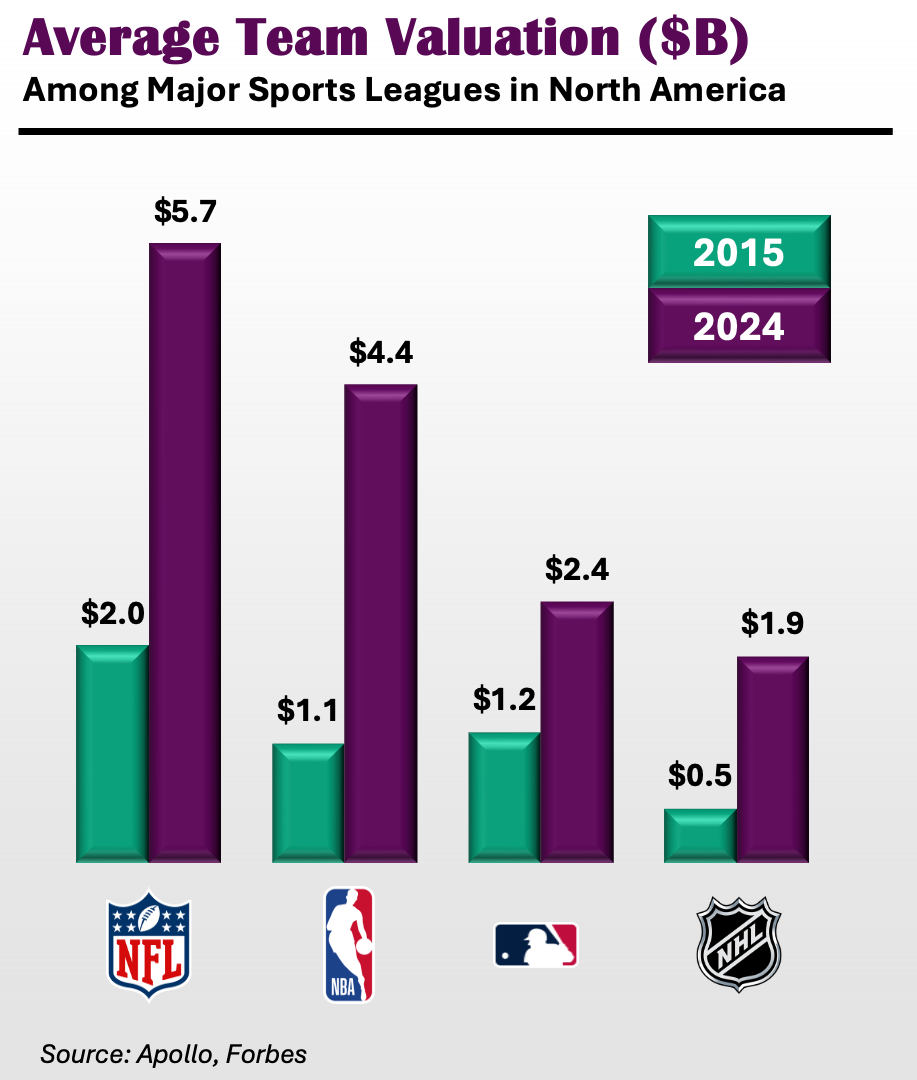
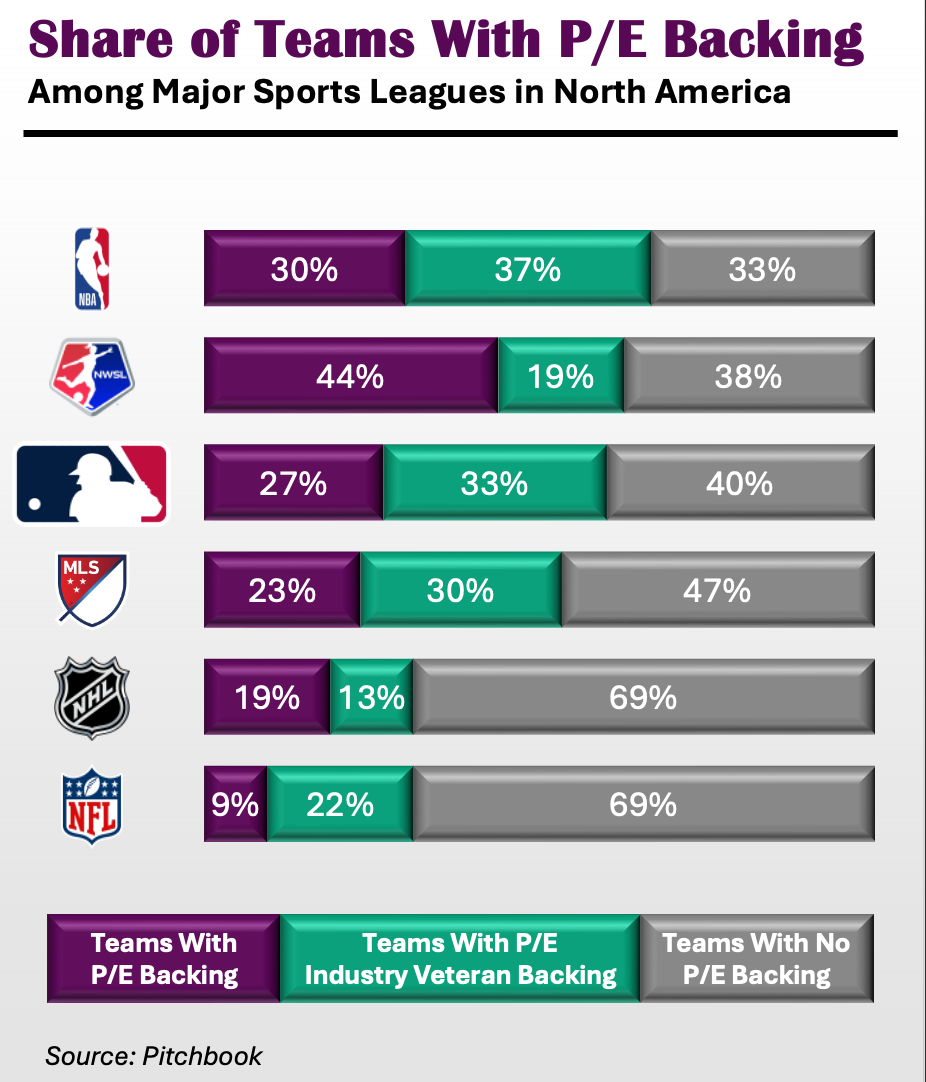
That being the case, there are also downsides to Private Equity investments in sports. For starters, PE investors face multiple restrictions from the leagues. Most PE sports investments are minority stakes with no voting rights, and most leagues have a limit on the number of teams any one PE firm can invest in. Of course there are also limits on M&A activity; the New England Patriots cannot acquire the New York Jets, no matter how one-sided that rivalry gets. And league rules can prevent a PE team from implementing its traditional playbook; a manufacturer can cut production to save costs, but sports teams can't choose to sit out a few games.
Worse still, some deals require the PE firm to share some of the profits with the league.
Contrast this with Private Equity investment in other industries, where majority control, operational improvement plans, and roll-up strategies can lead to big gains when investments work out well. And all of these gains can flow to the PE fund, without a league ever taking a cut.
The other problem is a lack of available investments, with only a select number of popular leagues worldwide and a limited number of franchises in each league. Without a sufficiently large addressable market, an influx of capital can (in theory) lead to bidding wars that nullify the upside of any investment.
Then as it relates to Evergreen funds and individual investors, the lack of liquidity presents another problem.
Can Sports Investing Work in a Retail Setting?
I've written at length about Evergreen Funds, and how they are ideal for individuals looking to access Private Markets, but also some of the pitfalls such as gating. The fact is, the Evergreen format is not ideal for all Private Markets strategies or firms. The key is whether there's enough deal flow. For instance if a Private Equity firm is only doing a couple deals per year, then it will be very difficult to put money to work on a regular basis, which is critical for Evergreen funds. Likewise, limited deal flow also makes it difficult to handle redemptions. And in sports, there are not many teams being bought and sold on a regular basis.
But last year, Ares launched a Sports, Media and Entertainment Evergreen fund, and this year the company is bringing that same strategy to Europe. Apollo also may soon jump in. So how is this possible?
Well the answer is in the name of the fund. Ares is expanding the strategy to other industries in the broader sports ecosystem, such as equipment, ticketing platforms, broadcast networks, and data analytics. The company claims this expands the addressable market from $500 billion to over $2 trillion, which (depending on whose numbers one uses) would bring the TAM more in line with Private Credit.
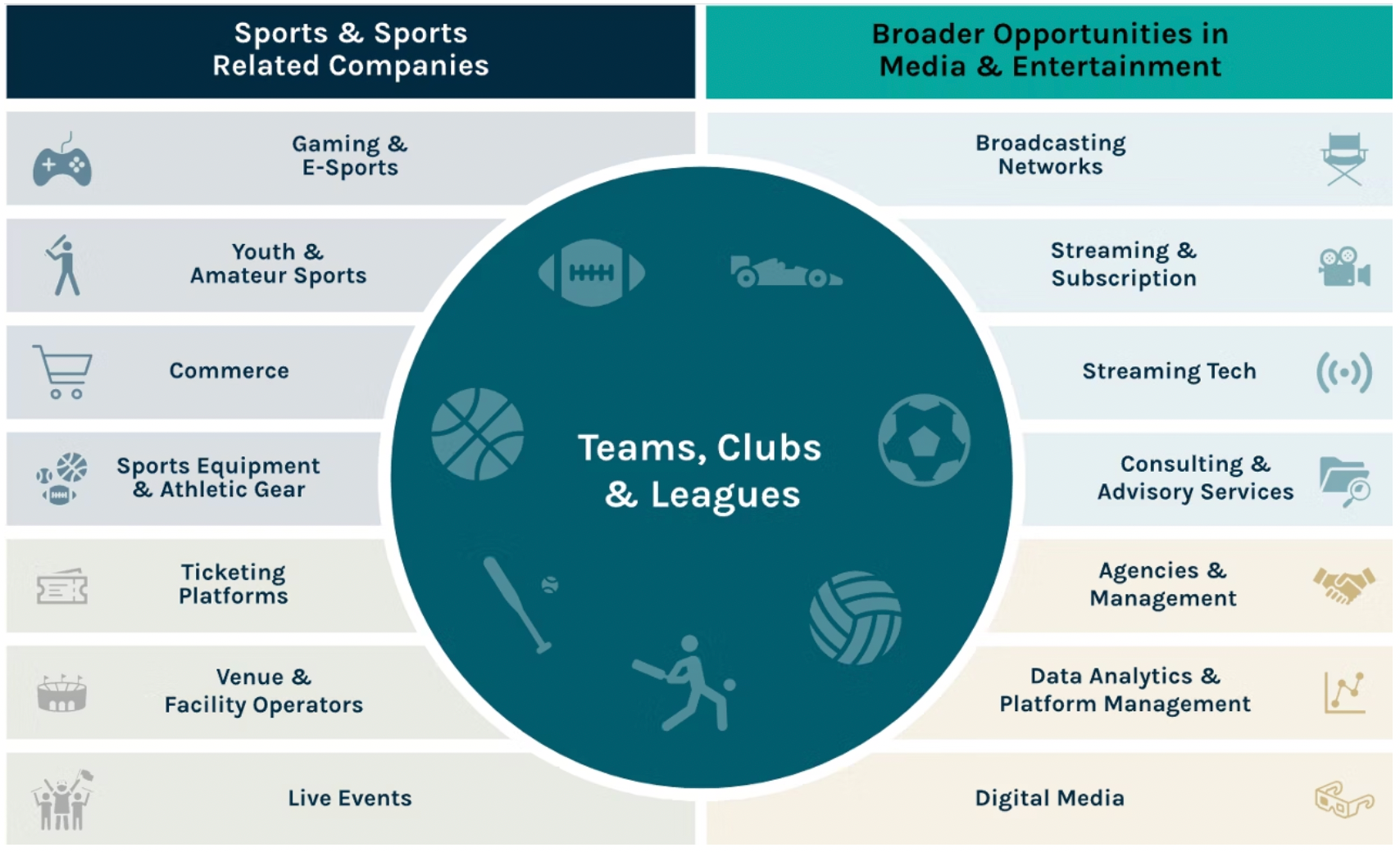
Also of note, ownership stakes only account for about half of the portfolio. The other half consists of debt instruments and other investments further up the capital structure. Sports teams use very little leverage (especially given their resilient nature) so as they modernize their capital structure, this could be another opportunity for firms like Ares.
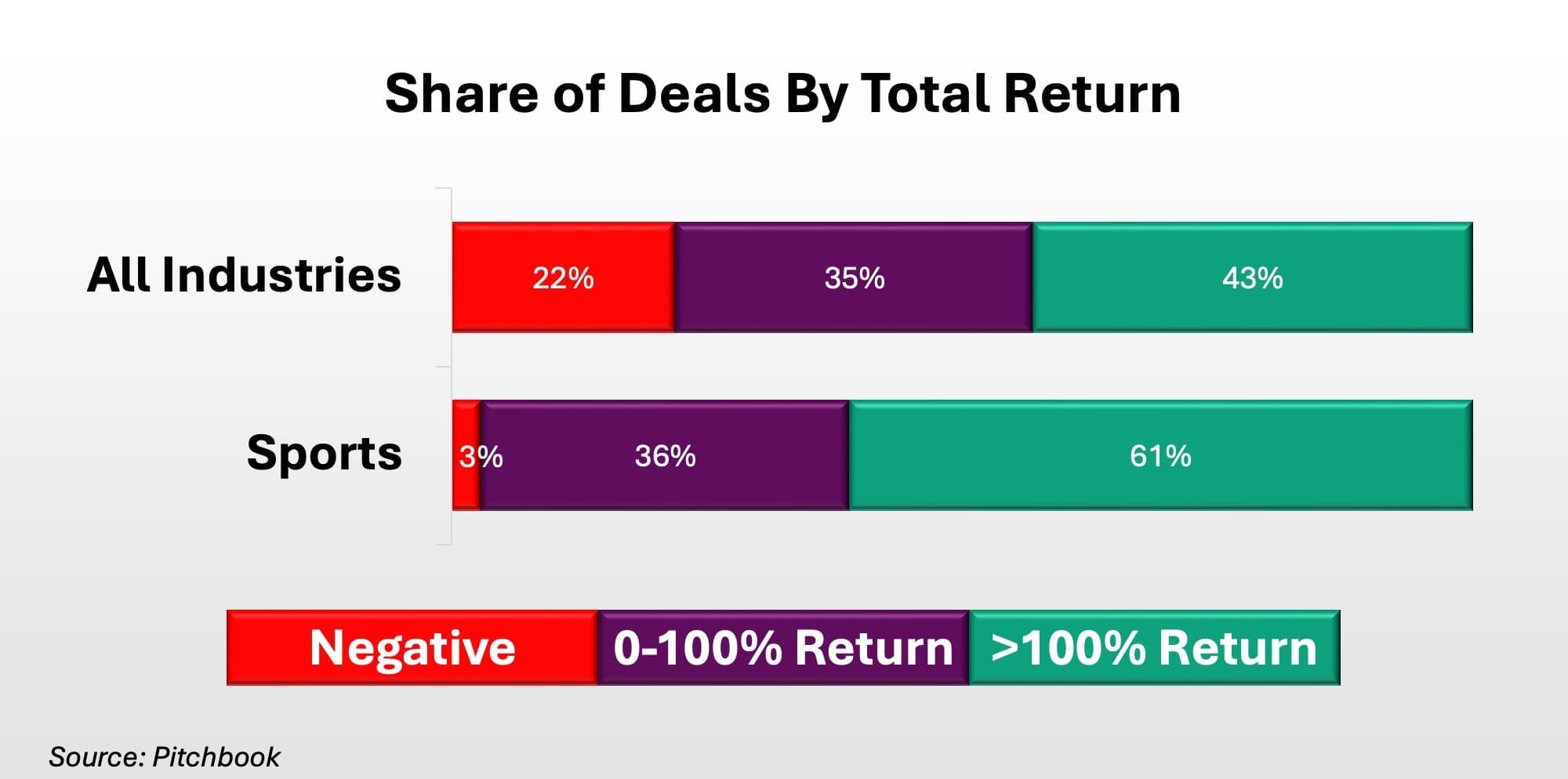
And for the record, this fund is not (yet) available in Canada, although one should expect the strategy to eventually make its way north of the border. There should be plenty of demand, not just due to many peoples' fascination with sports, but also due to the resilient nature of sports. This means the strategy could make for an excellent diversifier in a portfolio ... as long as these funds perform better than Argentina did on Sunday.
Want to find out more?
Private markets are not for everyone, and come with a number of risks, such as higher illiquidity and less transparency.
However, many of the world’s leading institutions and wealthiest families put a big emphasis on private markets, and recently these strategies have become more available to individuals too. Drawing on my background as an analyst specializing in private markets, I help investors cut through the complexity and understand how to build portfolios incorporating these strategies.
To explore whether these strategies are suitable for you, please schedule a 30-minute virtual meeting below:

Email
|

Phone
|

LinkedIn
|

Apple
|

Spotify
|
Disclaimer
Benjamin Sinclair is a representative of Designed Securities Ltd. Designed Securities Ltd. is regulated by the Canadian Investment Regulatory Organization (ciro.ca) and is a Member of the Canadian Investor Protection Fund (cipf.ca). Investment products are provided by Designed Securities Ltd. and include, but are not limited to, mutual funds, stocks, and bonds. Benjamin Sinclair is registered to provide advice and solutions to clients residing in the province of Ontario. For more information, please see www.beyondtheexchange.ca/disclaimer/