

Good morning everyone, and Happy Tuesday.
A couple of quick updates. One, I recorded episode #17 of the podcast yesterday, so that makes two in the queue. Episode 18 is also scheduled, and that will mark the end of Season 1. I look forward to recording Season 2 in the new year.
Secondly, conference season is still in full swing. I attended a great event hosted by Partners Group last week, and tomorrow I’ll be attending the Alts X Alts conference at the Fairmont Royal York. If any of you are going, I’ll see you there.
In the meantime, there are tonnes of topics to discuss, from central bank actions, to an (albeit slight) unwinding of the AI trade, to today’s U.S. midterm elections. But with Anthropic going public, I could argue now’s my last chance to talk about the company in a Private Markets focused newsletter. And there were some fascinating numbers from the S-1 filing last week.
Ben
Five Charts From Anthropic’s S-1 Filing
In preparation for its IPO, Anthropic released its S-1 on Monday last week, and it contained some dizzying numbers, especially for a company founded only 5 years ago.
With that said, below are the five charts that sum up the company’s financials:
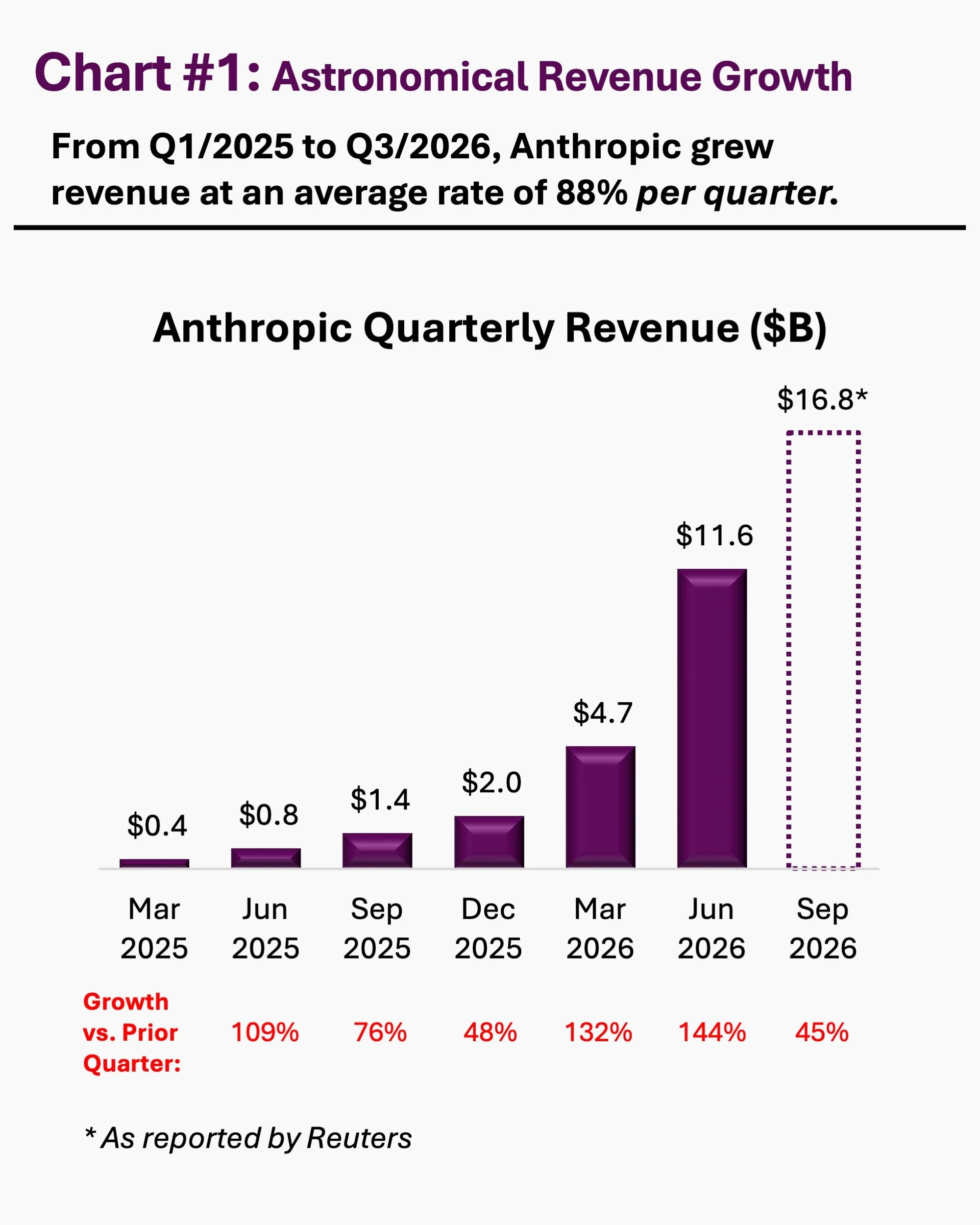
Given how widely Claude has spread this year, Anthropic’s breakneck growth is hardly surprising. But the scale of it is still remarkable. For context, Google first surpassed $16.8 billion in quarterly revenue in 2013, more than 15 years after its founding, and with some help from acquisitions. Anthropic reached that milestone in just over five years.
Perhaps more striking is that this growth came as the cost of intelligence fell sharply. But falling costs may have helped fuel the surge. That’s the idea behind Jevon’s paradox: as a resource becomes cheaper to use, demand can rise enough to more than offset the savings. And that’s certainly been the case in AI.
That being the case, Anthropic may have set the bar too high for itself. When it was reported that revenue “only” grew 45% quarter-over-quarter in Q3, it led to some tempered outlooks on Anthropic’s valuation.
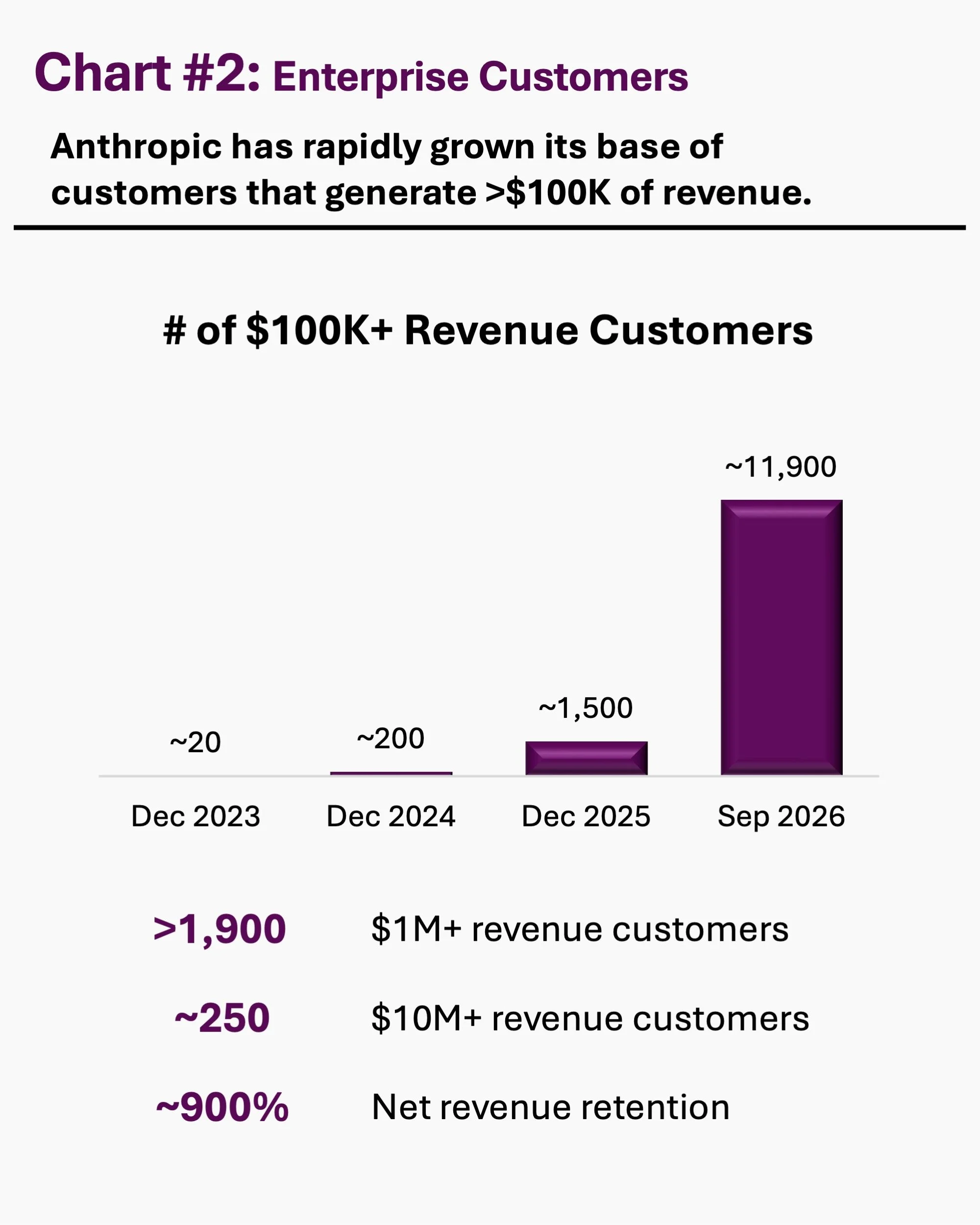
The key figure in the chart above is Anthropic’s 900% net revenue retention. That means the same group of existing customers generated roughly nine times as much revenue in Q3 2026 as they did a year earlier.
That statistic is consistent with a powerful “land and expand” dynamic, in which a business starts with a limited deployment, then increases usage and introduces Claude to more teams and workflows. That certainly helps explain why the number of enterprises spending at least $100,000 annually rose to nearly 12,000 from 20 at the end of 2023.
One side note: it would be interesting to find out how many of those customers spending $100K+ actually budgeted for that amount.
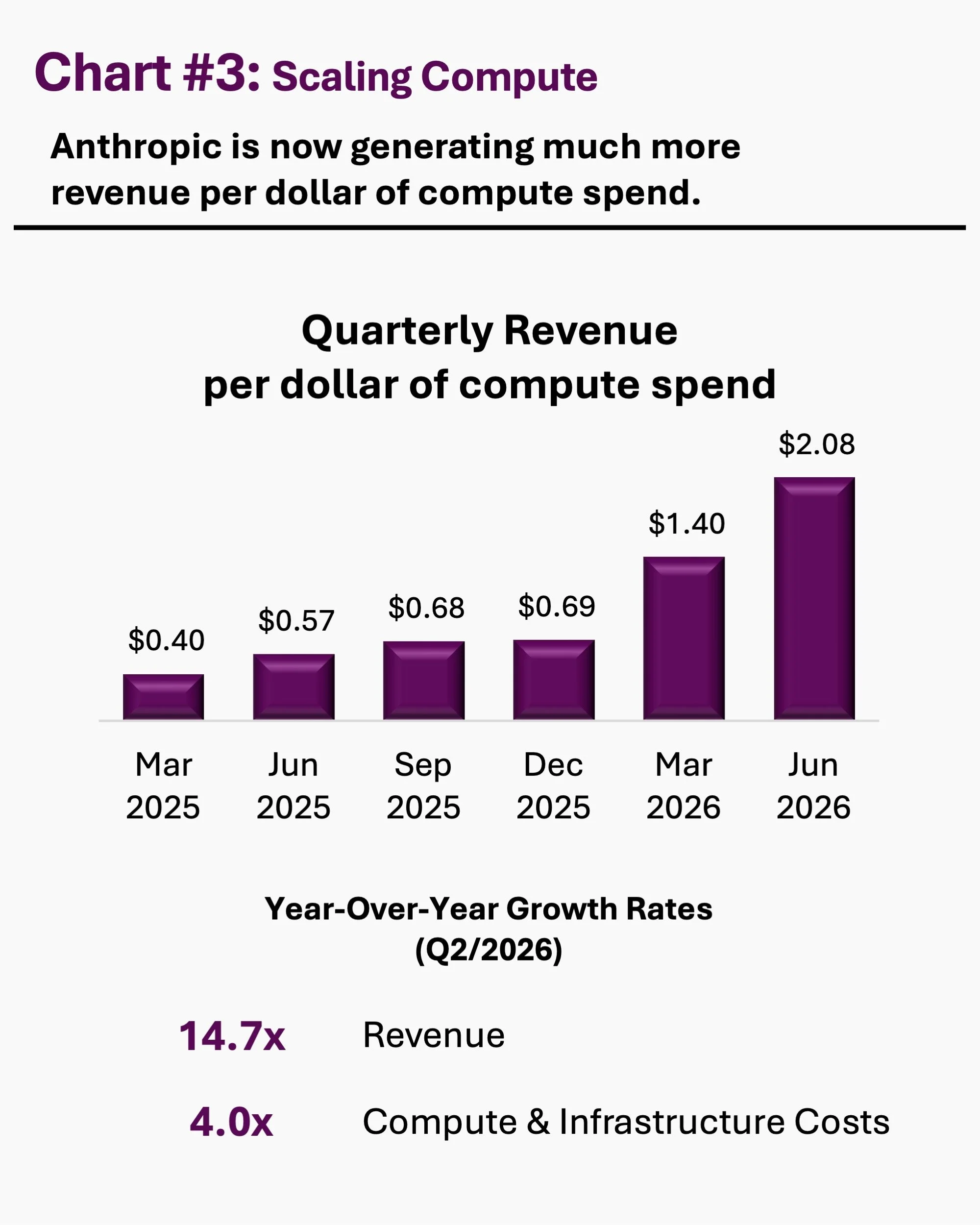
Compute and infrastructure is by far Anthropic’s largest operating cost line item, so the “revenue per dollar spent on compute” figure may end up being the most important determinant of the company’s profitability. Fortunately for Anthropic, this number has grown significantly, eclipsing $2 in Q2/2026, up from $0.40 in Q1/2025.
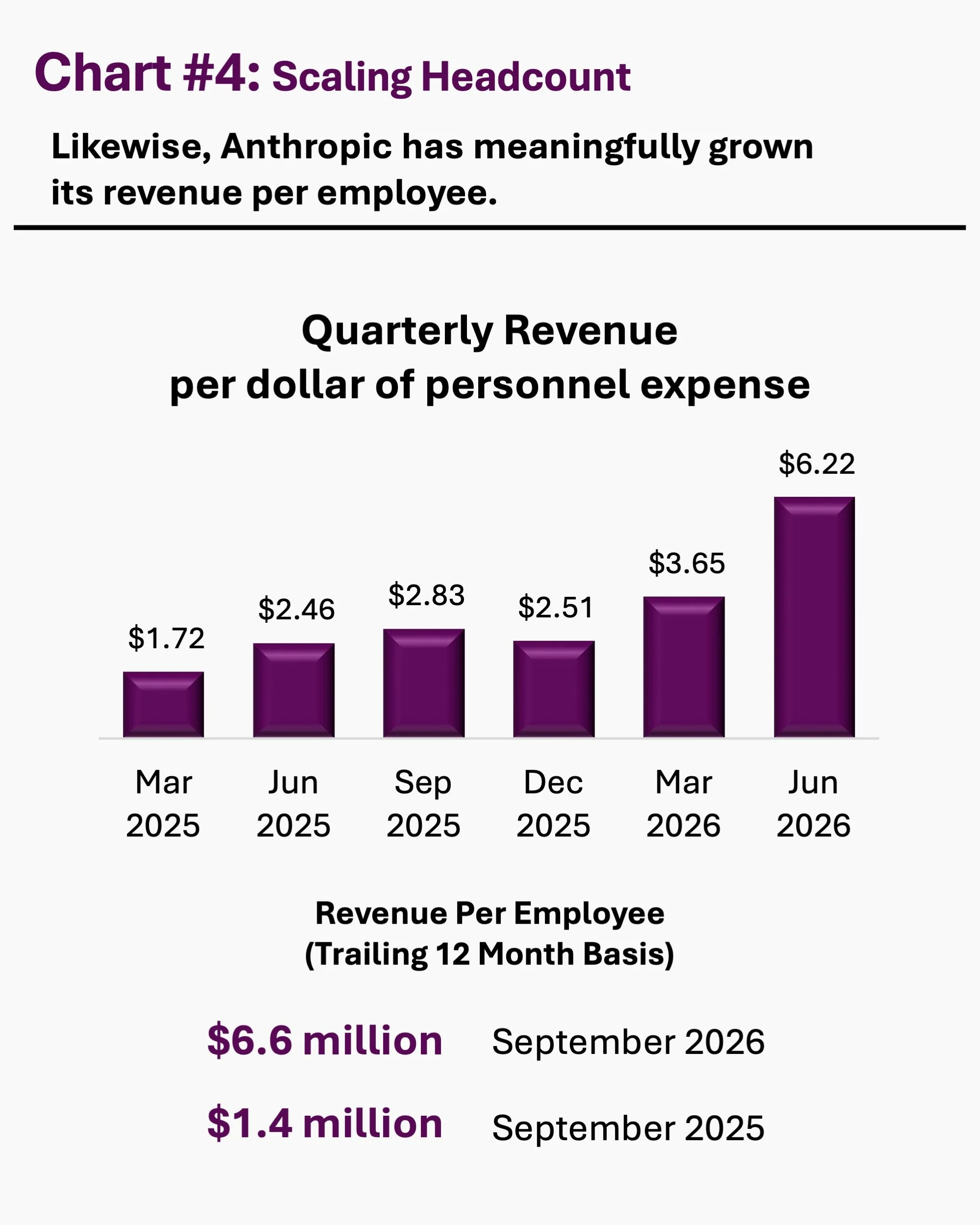
Although slightly ironic, it should surprise no one that Anthropic has increasingly used Claude in its own processes. For instance, over 90% of the contributions to Anthropic’s codebase in September 2026 was written by Claude. This has made each Anthropic engineer far more productive, with the average daily code contribution per engineer increasing 45-fold from FY2024 to Q3/2026.
Consequently, headcount only increased by 170% from September 2025 to September 2026, meaning that even after any increases in average compensation, personnel expense grew at a far lower rate than revenue.
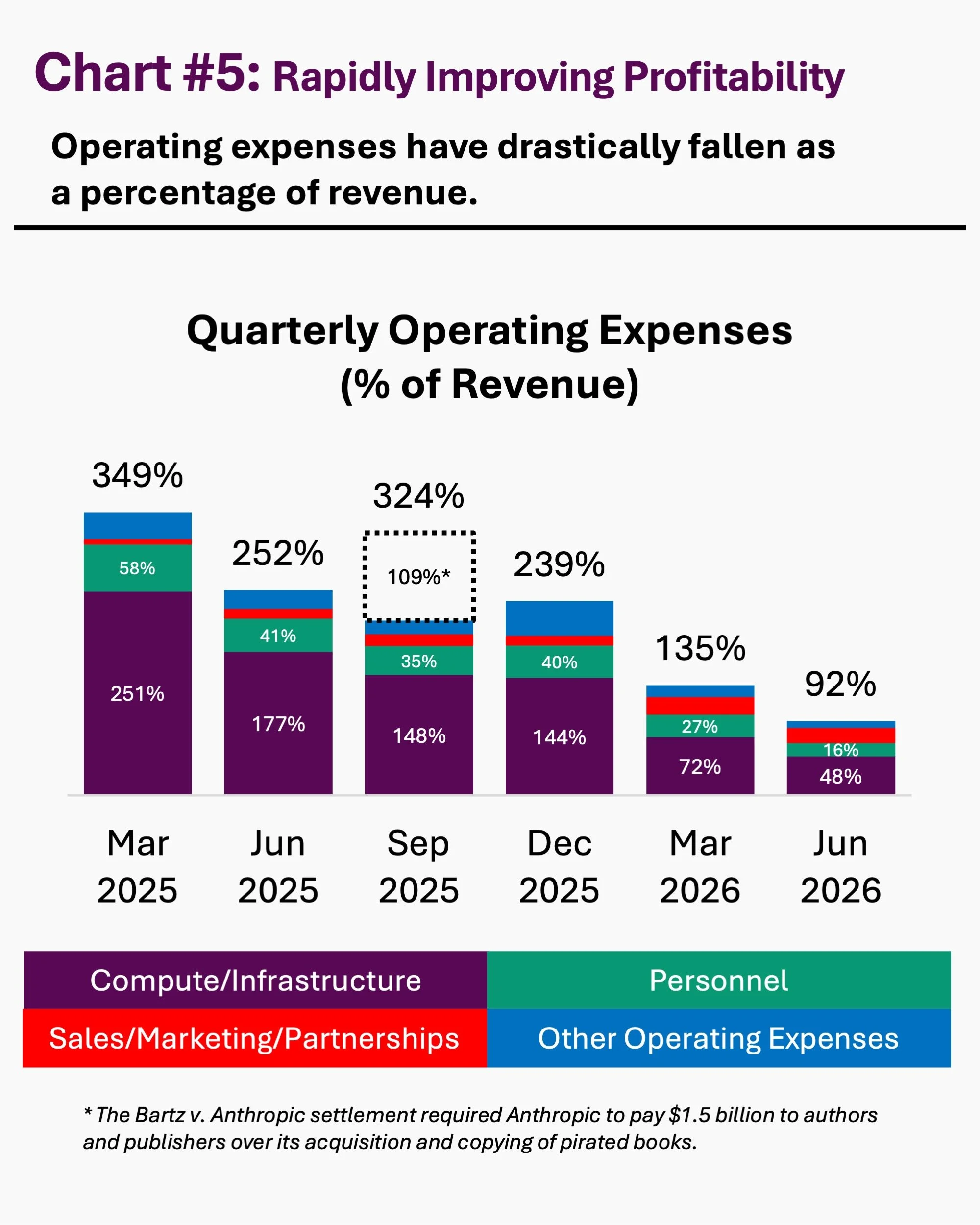
Anthropic’s rapid revenue growth and improving efficiency delivered a milestone in Q2/2026: its first quarterly operating profit. Broad distribution partnerships have also helped the company scale without building an equally large sales and marketing operation.
That progress will not necessarily follow a straight line. Anthropic cautions that margins will come under pressure when “substantial incremental compute is delivered to us and we incur the associated expenses.” In other words, the cost of new capacity may arrive before the revenue it supports. Even so, the efficiency gains to date offer an encouraging sign that Anthropic can translate extraordinary revenue growth into an increasingly profitable business.
Some Unanswered Questions
While there were some very impressive numbers in the S-1, that does not mean Anthropic will make for a good investment at the IPO price, especially since the IPO price is still yet to be determined. And there are other questions that remain unanswered:
What was the cause of the revenue slowdown in the third quarter?
Alphabet and OpenAI were listed as the main competitors, but Meta is also investing heavily to get on that list. What effect will that have on future growth rates?
The corporate governance model has a single class F share with 50.1% of the vote. How will investors respond to this?
What kind of lockups will be in place for current shareholders?
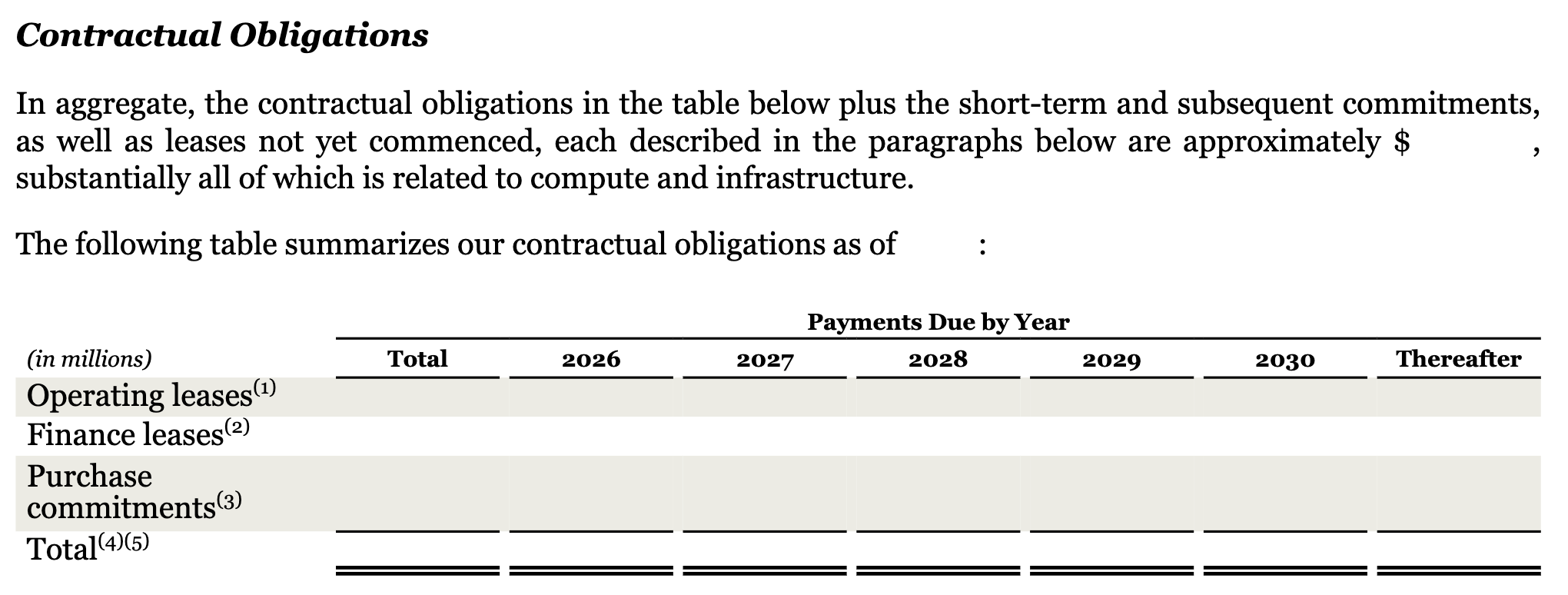
The big question: what are Anthropic’s spending commitments in the coming years? The company cited these commitments and gave some preliminary numbers, but the payment schedule was left blank:
Source: Anthropic S-1
Some of these questions will be answered prior to the IPO, while others will only be answered after trading starts. But one thing is certain in the meantime: the public equity landscape is about to become even more of an AI bet than it already is. And with other AI companies potentially going public in the near future (e.g. OpenAI), we shouldn’t expect that trend to stop.
Want to find out more?
Private markets are not for everyone, and come with a number of risks, such as higher illiquidity and less transparency.
However, many of the world’s leading institutions and wealthiest families put a big emphasis on private markets, and recently these strategies have become more available to individuals too. Drawing on my background as an analyst specializing in private markets, I help investors cut through the complexity and understand how to build portfolios incorporating these strategies.
To explore whether these strategies are suitable for you, please schedule a 30-minute virtual meeting below:
Disclaimer
Benjamin Sinclair is a representative of Designed Securities Ltd. Designed Securities Ltd. is regulated by the Canadian Investment Regulatory Organization (ciro.ca) and is a Member of the Canadian Investor Protection Fund (cipf.ca). Investment products are provided by Designed Securities Ltd. and include, but are not limited to, mutual funds, stocks, and bonds. Benjamin Sinclair is registered to provide advice and solutions to clients residing in the province of Ontario. For more information, please see www.beyondtheexchange.ca/disclaimer/