
BTE Newsletter #50: What Higher Rates Mean For Private Markets
Good morning everyone, and Happy Tuesday.
This is a milestone issue of the Beyond The Exchange newsletter. Not only is this number 50, but today is also the newsletter’s one-year anniversary! 🥳🥳🥳
To say it’s been a journey would be an understatement. But I’m already planning on writing the 100th issue this time next year.
To celebrate this milestone, it’s only fitting to discuss … rising interest rates.
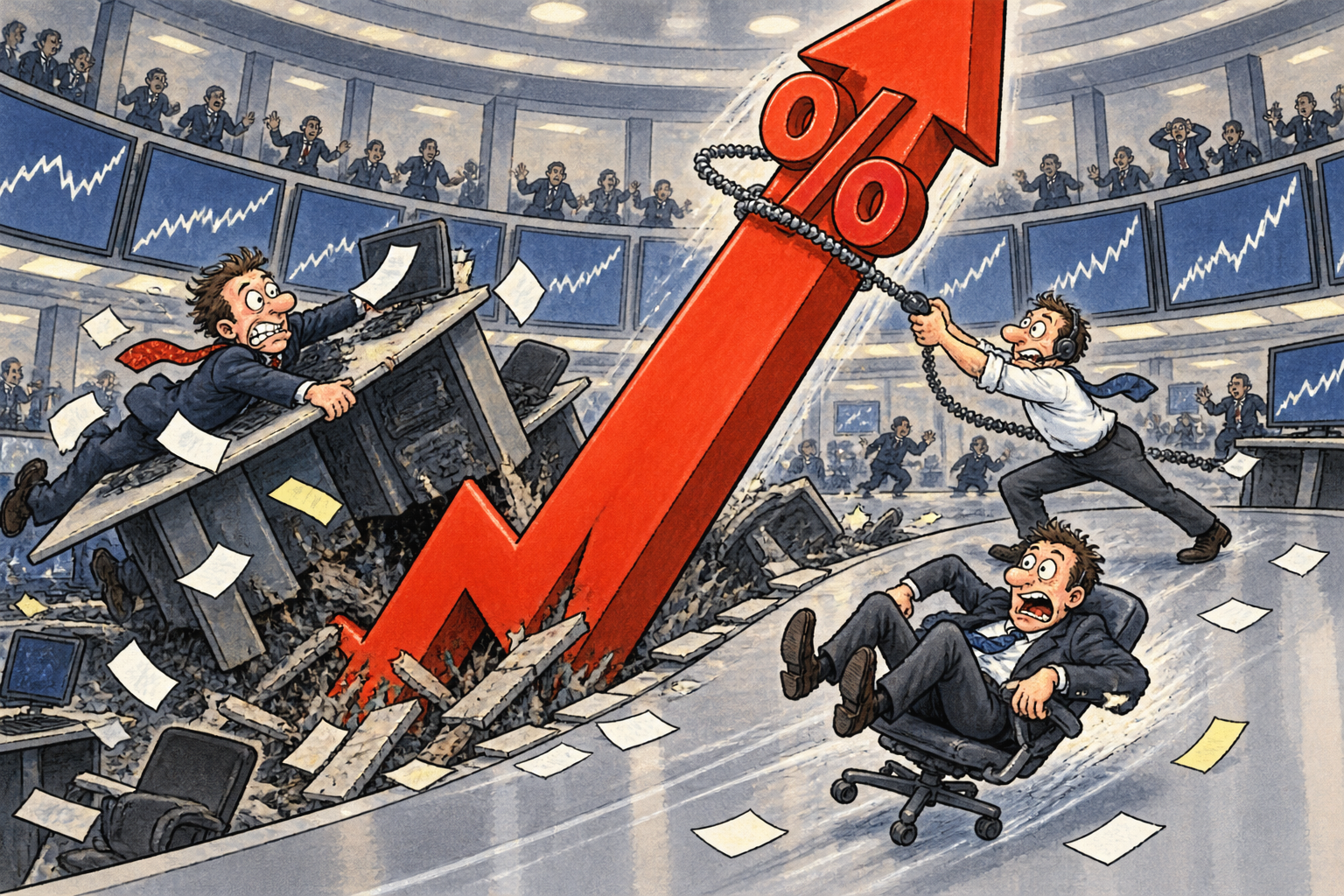
While this may seem like a downer, rising rates are quickly becoming a dominant theme in the markets, and it’s a major shift from 1-2 years ago, when the debate was how fast rates would come down.
So I hope you enjoy this post while I blow out some Beyond The Exchange birthday candles.
Ben
Rising Interest Rates and Private Markets
What a difference a year makes. Between September and December 2025, the Federal Reserve cut interest rates three times, bringing cumulative cuts since the end of its hiking cycle to 175 basis points. Inflation appeared to be back under control following the tariff announcements earlier that year. As recently as this February, the U.S. economy still appeared to be heading for a soft landing, and investors were expecting several more rate cuts.
But then, as Michael Scott from The Office put it, “well, well, well, how the turntables…”
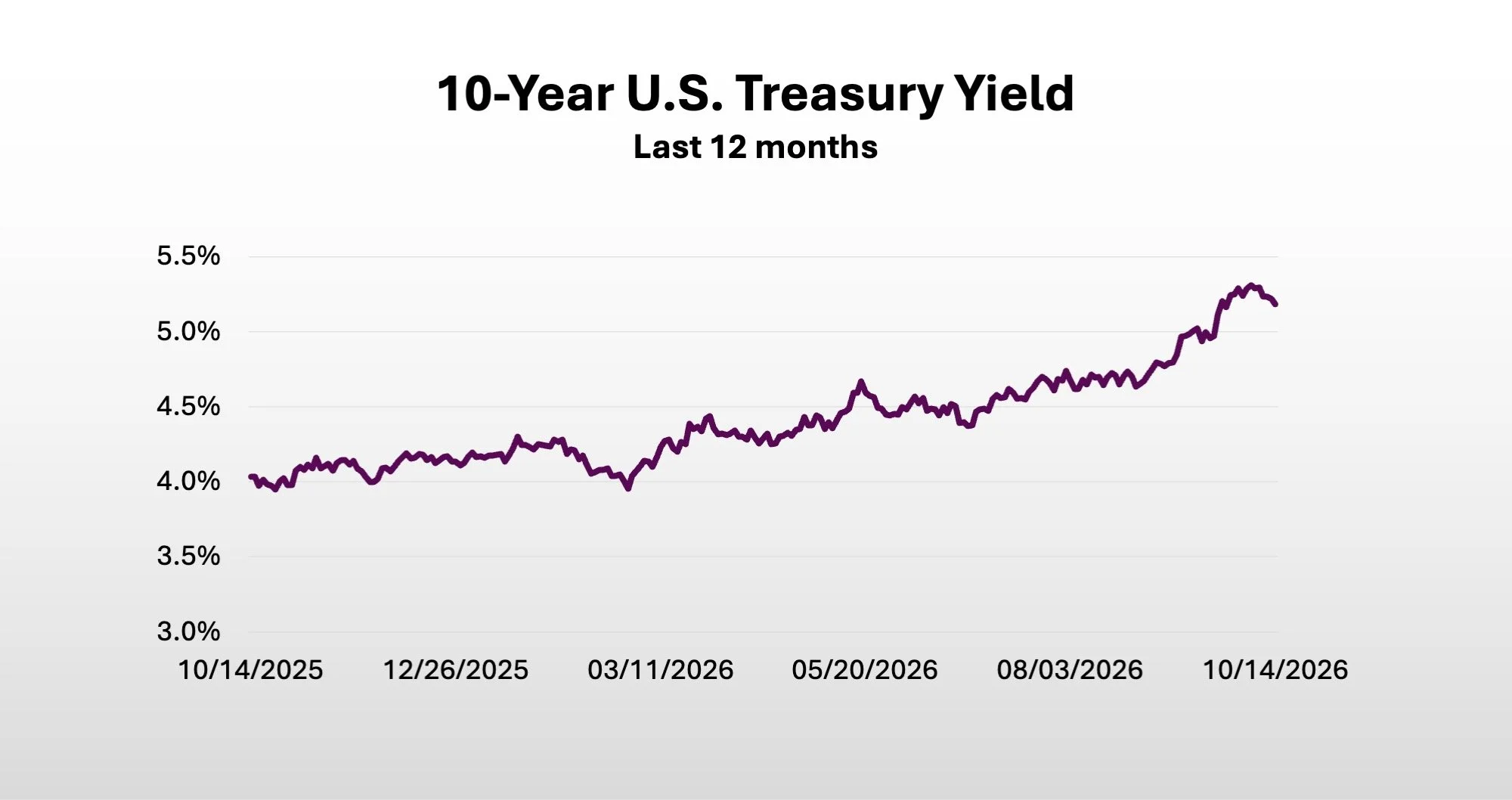
The outlook for both inflation and interest rates has completely flipped, with both on an upward trajectory. There are a few reasons for this:
The Iran War and the struggle over the Strait of Hormuz has put upward pressure on the prices of oil and refined products, in particular diesel.
The outlook for AI-related capital expenditures keeps rising significantly, and this trend so far seems immune to the effect of rising rates.
Likewise, significant U.S. fiscal deficits have led to increases in Treasure issuance.
The impact of tariffs has only grown, especially with the escalating trade war between the U.S. and Canada.
Consumer spending has been resilient, driven in large part by higher income earners.
Source: Marketwatch
There are several signs that Federal Reserve interest rates and inflation may keep climbing. For starters, higher interest rates are showing no signs of slowing down AI-related capex. Likewise, higher oil prices are largely out of the Fed’s control. A similar statement could be made about fiscal deficits. So if the Fed’s rate hikes are less effective than they once were, rates may need to rise even further to achieve the same result.
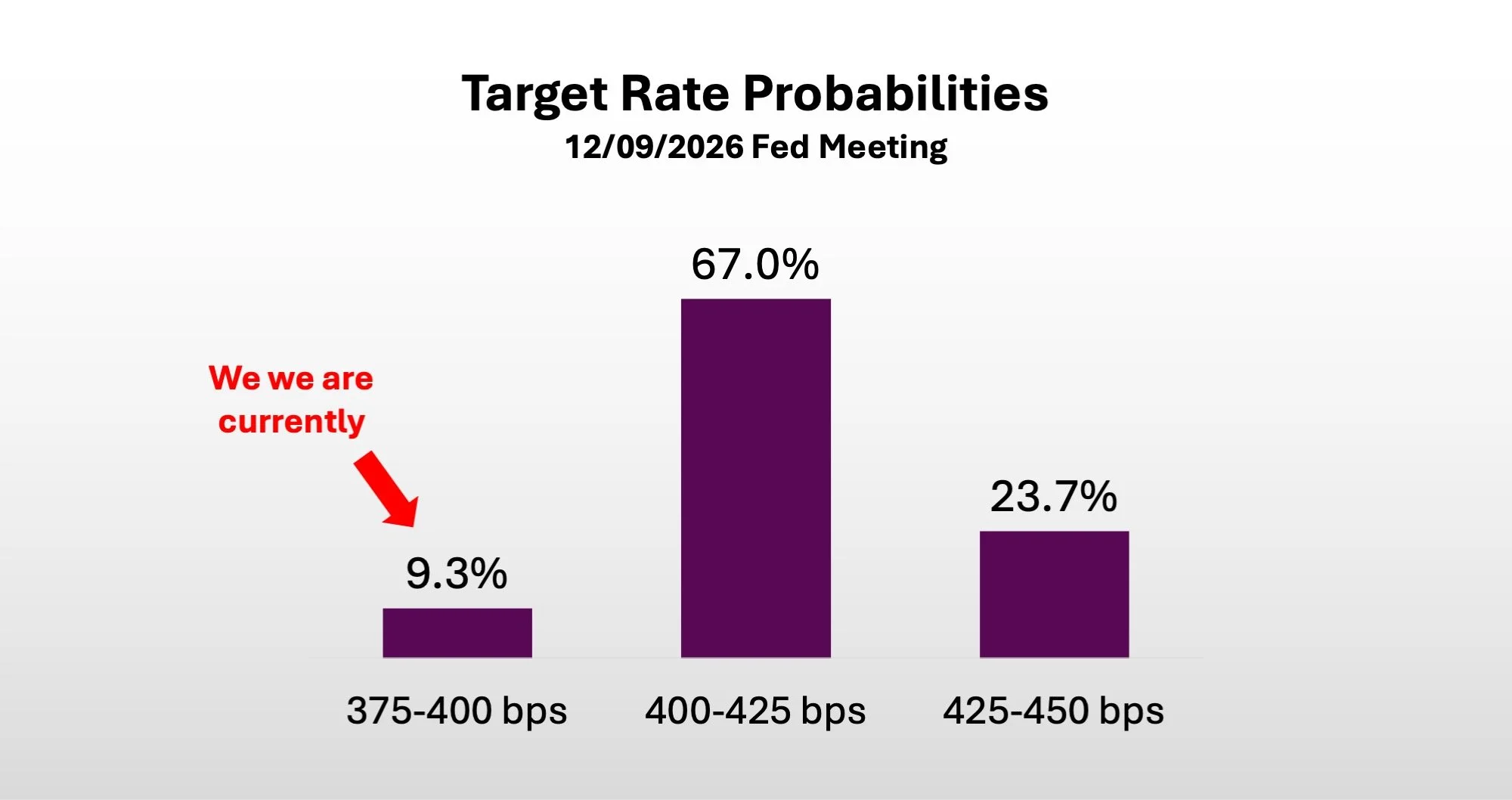
As of this writing, the market sees less than 10% chance of Fed rates staying at their current level.
Source: CME FedWatch Tool
Public equities have continued to perform well in this environment, as AI spending has boosted corporate profits. But in Private Markets, the picture is more nuanced, and different asset classes are affected differently. The good news is we just went through a big rate hiking cycle, which can give some strong clues about what to expect at this point.
So below I take a look at the impact of higher rates on each strategy within Private Markets, starting with the more negative, and ending on a higher note.
Private Equity
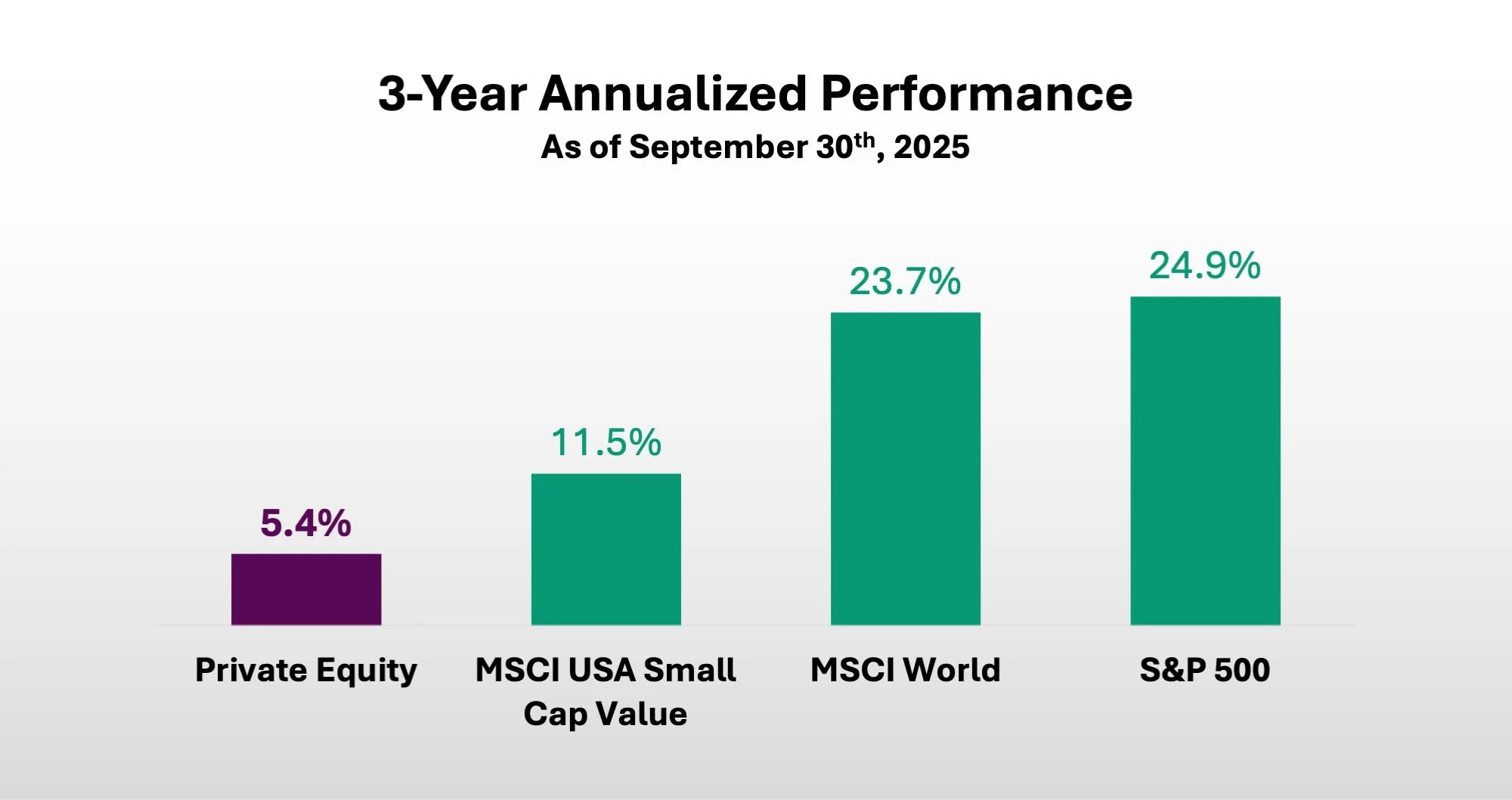
If one looks at Private Equity over the past three years, a big theme has been underperformance relative to public markets, and there are a few reasons worth pointing at:
Too many deals in the 2020-2021 timeframe at elevated valuations.
The strong performance of public markets, driven by the tech sector.
The prevalence of floating rate debt in Private Equity-backed companies, which hurt during the rate hiking cycle.
Source: Hamilton Lane
This doesn’t necessarily mean Private Equity is headed for a fresh wave of underperformance. The current rate hiking cycle will (should) be much less severe than in 2022-2023. Furthermore, the industry was plagued by a period of over-exuberance leading up to the last hiking cycle, and there’s less evidence of that this time.
And of course, one should not count on the boom in AI-related stocks repeating. If it doesn’t, then Private Equity’s relative performance wouldn’t face the same headwinds.
Nevertheless, Private Equity investors are certainly not praying for higher rates, nor should they be.
Private Real Estate
While the 2022-2023 rate hiking cycle was bad for Private Equity relative performance, the same cycle was bad for Real Estate of all types. Whether one bought a public REIT, a private REIT, or a rental property, higher rates were a significant drag on returns. Liquidity also became a problem for many investors, as some saw their private REITs turn off redemptions, and others were have been unable to sell their property.
One can plainly see Real Estate’s underperformance by doing a comparison of public indices:
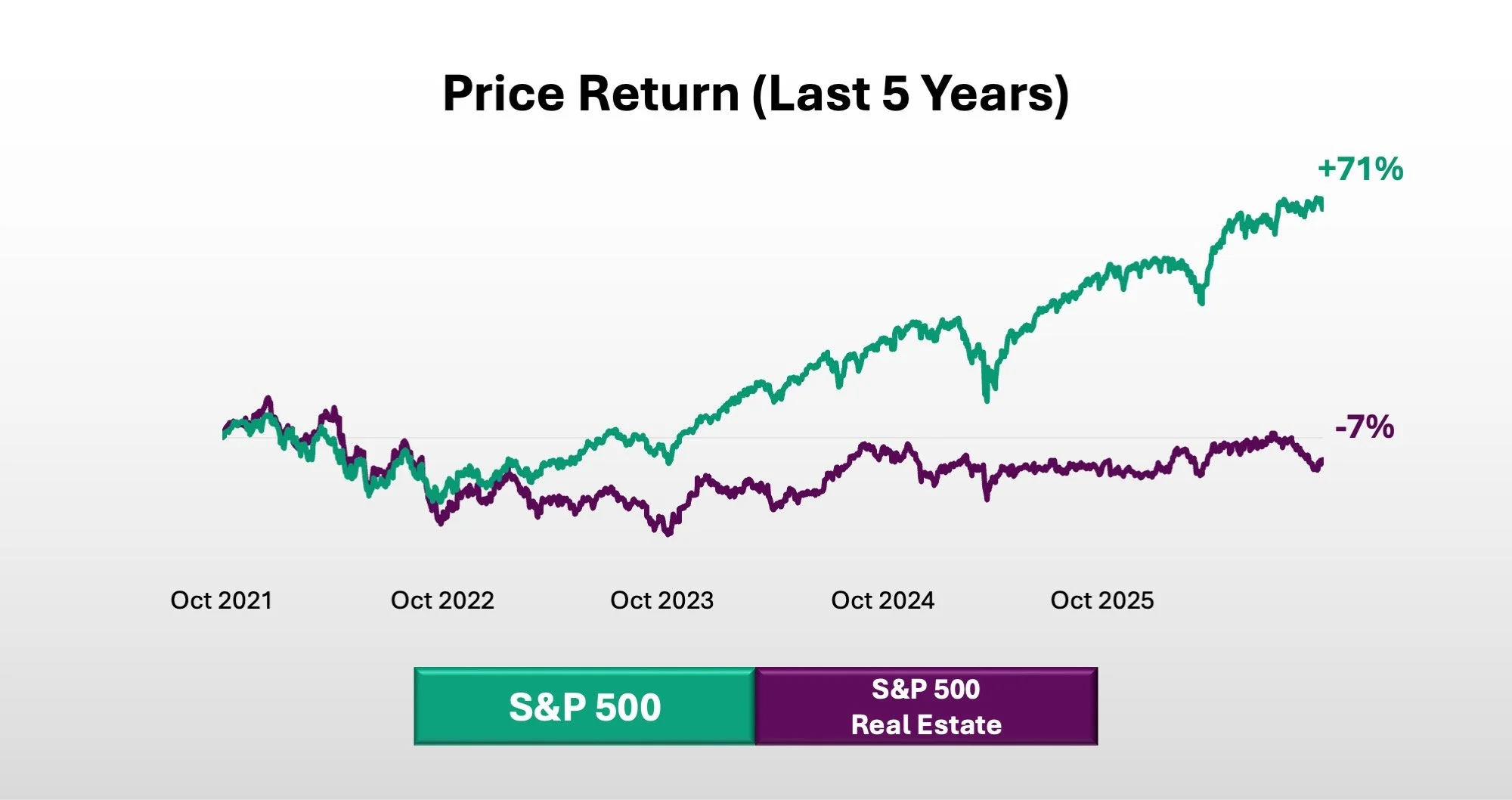
Source: S&P Global
But much like in Private Equity, the previous rate-hiking cycle had some elements that won’t necessarily repeat this time around. For starters, Real Estate had emerged from a period of sky high prices and overbuilding, especially in multifamily.
Worse still, Real Estate dealt with multiple secular headwinds. The most prominent example was in Office, which was hit by work-from-home trends. Certain parts of the Retail sector (enclosed malls in particular) were scarred by the pandemic.
Those same trends are not in place today. The Real Estate market has reset after the sky-high valuations of 2020-2021. Construction starts are way down in categories such as Office and Multifamily. And as mentioned, this rate hiking cycle is unlikely to be nearly as severe as the last one.
Private Infrastructure
In many ways, the pitch for Private Infrastructure is quite similar as it is for Real Estate: a diversifier from public equities, a reasonable amount of downside protection, and reliable long-term income. But there are some big differences:
Infrastructure was not overbuilt during the COVID era.
Data centres are primarily considered an infrastructure asset, helping to sustain performance over the past 5 years.
Infrastructure’s revenues are usually linked to inflation, which helped significantly during the last rate hiking cycle.
This last point is a significant selling point for Infrastructure, and it was certainly put to the test when inflation and interest rates skyrocketed. Fortunately for investors, the asset class passed that test, with EBITDA growth across infrastructure categories easily outpacing inflation, translating into strong returns:
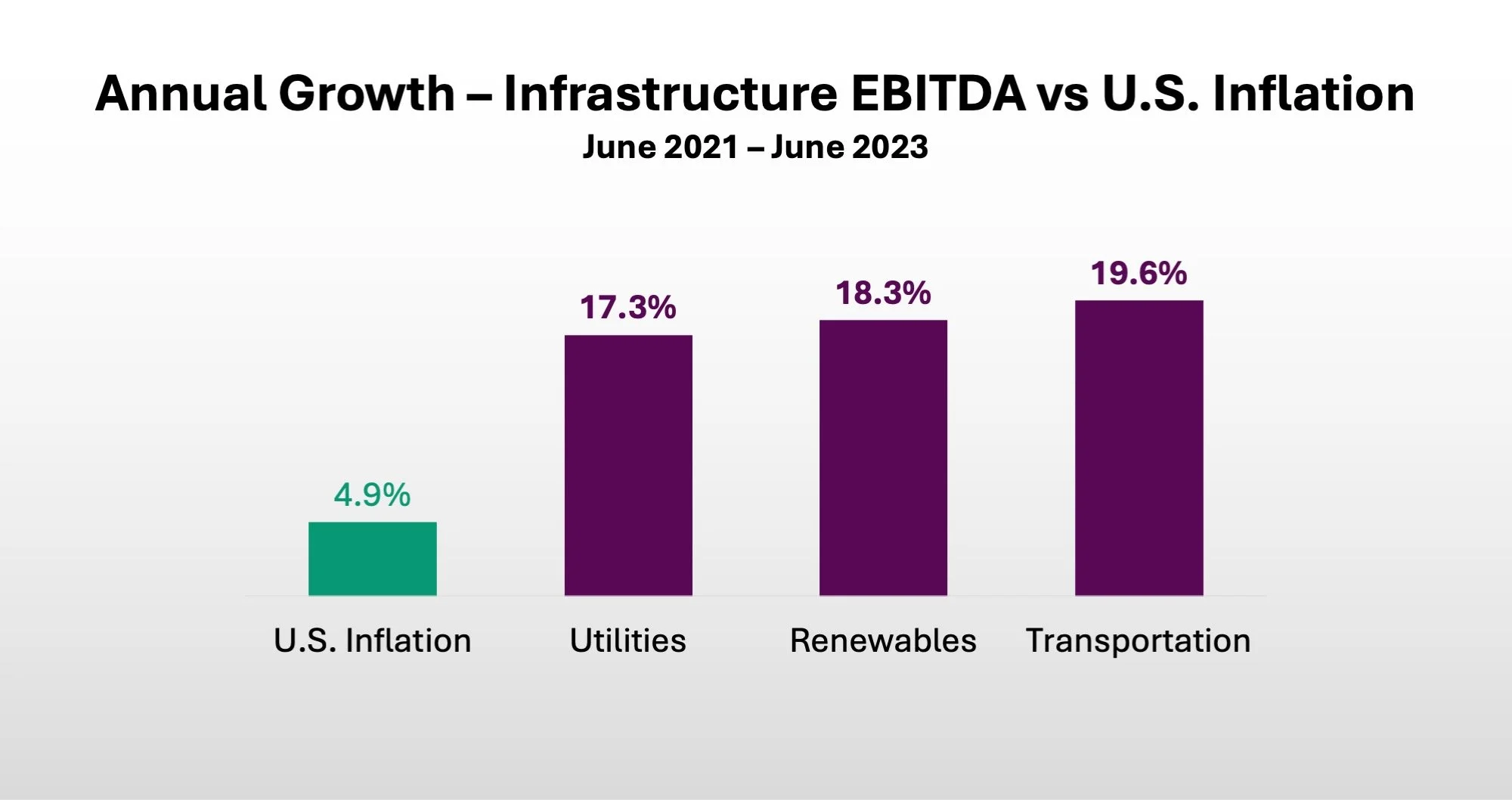
Source: Stepstone
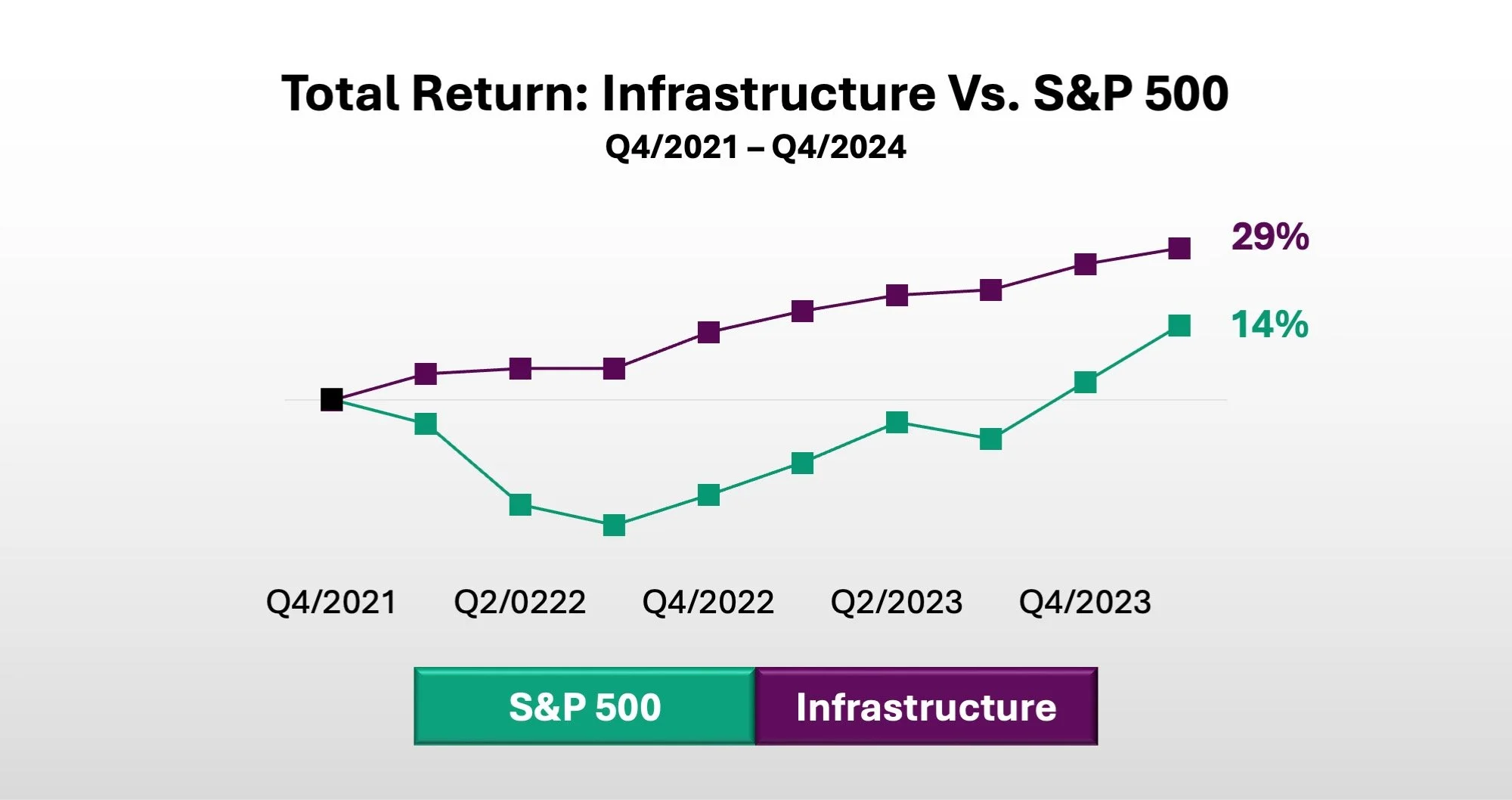
Source: Stepstone
Looking ahead, the fundamentals seem to be intact: infrastructure generally remains under-built, in particular for AI-related categories such as data centres. Inflation-linked revenues also remain. So even if there’s another round of higher inflation and continuous rate hikes, infrastructure is well-positioned to withstand such a scenario.
Private Credit
Of all the Private Markets categories during the big rate hiking cycle, arguably Private Credit was the one that thrived the most, particularly when looking at performance relative to its public counterpart. Consider the following:
Private Credit is typically floating rate, while bond indices are longer-duration and fixed rate.
Private Credit returns benefit from higher yields than investment grade bonds, high-yield bonds, and leveraged loans.
Most Private Credit assets are senior in the capital structure with strong covenant protections, helping to contain credit losses as higher yields put pressure on borrowers.
During the rate hiking cycle, the banks pulled back from the loan market, tilting the scales even more in Private Credit’s favour. Consequently, this era was knwon as the “Golden Age of Private Credit.”
These factors showed up in Private Credit’s relative performance during the rate hiking cycle. Over the three years from 2021-2023, the Cliffwater Direct Lending Index (arguably the most widely-cited Private Credit Index) easily outperformed the high-yield and aggregate bond indices from Bloomberg:
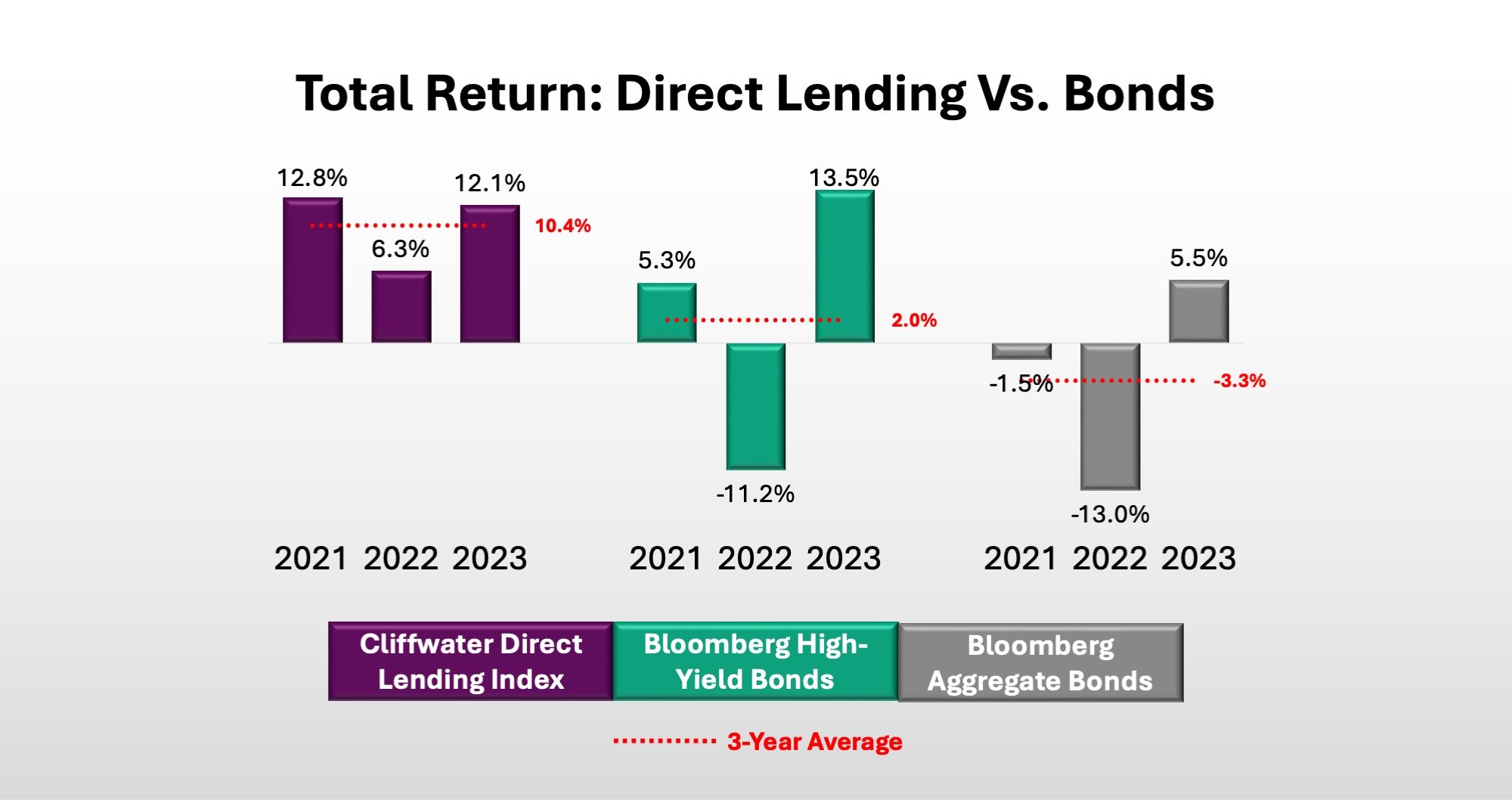
Source: Ares
Fast forward to the current environment, and the outlook is promising for credit of all types. Financing needs have increased significantly, largely due to the AI buildout, but also due to government deficits, the energy transition, and re-shoring trends. For investors who provide this financing, there should be plenty of opportunity.
Conclusion: A Mixed Bag
The effect of the last rate hiking cycle differed significantly by asset class. Private Equity performed poorly relative to public stocks. Real Estate of all types was hit hard. Private Infrastructure was much more resilient. And Private Credit enjoyed a “golden era”.
Of course the next rate hiking cycle will be its own story, and no one is predicting the same level of rate hikes as last time. But given the current environment, it doesn’t hurt to look to the past for clues.
Want to find out more?
Private markets are not for everyone, and come with a number of risks, such as higher illiquidity and less transparency.
However, many of the world’s leading institutions and wealthiest families put a big emphasis on private markets, and recently these strategies have become more available to individuals too. Drawing on my background as an analyst specializing in private markets, I help investors cut through the complexity and understand how to build portfolios incorporating these strategies.
To explore whether these strategies are suitable for you, please schedule a 30-minute virtual meeting below:
Disclaimer
Benjamin Sinclair is a representative of Designed Securities Ltd. Designed Securities Ltd. is regulated by the Canadian Investment Regulatory Organization (ciro.ca) and is a Member of the Canadian Investor Protection Fund (cipf.ca). Investment products are provided by Designed Securities Ltd. and include, but are not limited to, mutual funds, stocks, and bonds. Benjamin Sinclair is registered to provide advice and solutions to clients residing in the province of Ontario. For more information, please see www.beyondtheexchange.ca/disclaimer/