
BTE Newsletter #48: Betting the Farm
Good morning everyone, Happy Tuesday once again. Happy to report the Ravens are now 3-1 … and I should probably warn all non-NFL fans, it’s probably best to skip the first paragraph of this newsletter every week until (hopefully) late February.
A couple of other news items in the meantime. First, I appeared with John Teskey of Private Pension Partners to talk about some of the main things to consider when investing in Private Markets. You can see the whole episode here (<15 minutes):
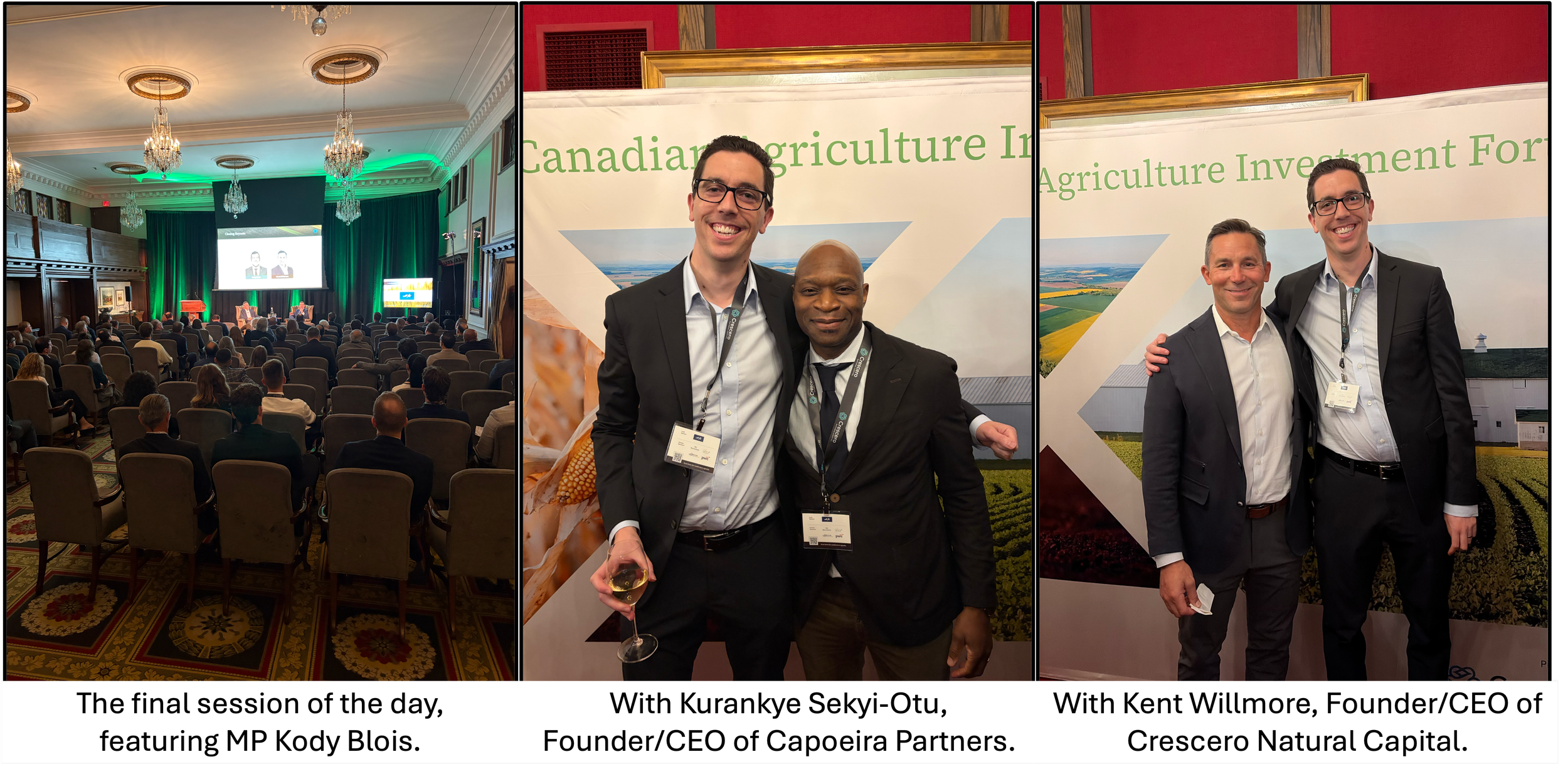
More recently, I attended the inaugural Canadian Agriculture Investment Forum, hosted by Crescero Natural Capital. It was a great event devoted to farmland investing, a strategy that is still widely overlooked and misunderstood.
So with that said, the time has come for a post about farmland investing. And for anyone interested in the subject, I also interviewed Bonnefield President Andrea Gruza for the BTE podcast (transcript can be seen here).
Ben
The Top Takeaways From the Canadian Agriculture Investment Forum
On Thursday afternoon last week, a wide range of asset managers, operators, not-for-profit fundraisers, and end investors gathered at the National Club in Toronto for the first ever Canadian Agriculture Investment Forum, which included some very interesting panel discussions about an asset class that many people overlook. Perhaps the highlight was the last interview, which featured MP Kody Blois, representing the Kings—Hants riding in Nova Scotia (more on that below).
While there were many valuable lessons from the event, below are the four main takeaways:
Takeaway #1: There is a lot of appeal to farmland as an asset class.
Farmland is not the kind of asset class investors should expect to hit home runs with. The appeal is more about diversification and downside protection, especially for portfolios with significant public-equity exposure. A few characteristics make farmland particularly well suited to play that role:
Steady, structural demand growth: Population growth and changing diets are long term forces that are largely insulated from short term economic cycles. The Food and Agriculture Organization estimates that global food production will need to increase by roughly 70% by 2050 relative to the mid-2000s, to meet projected demand.
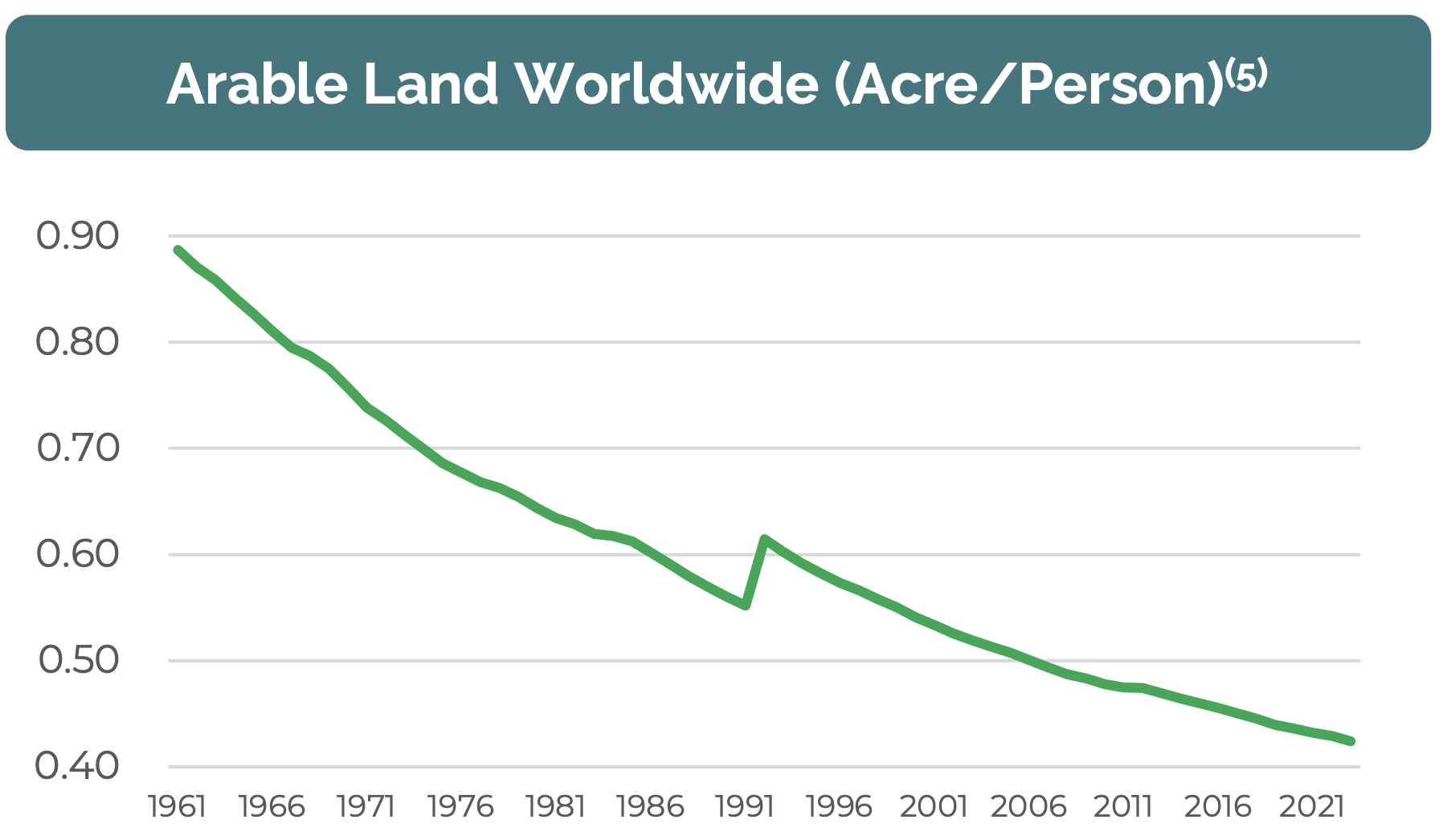
Shrinking supply: Over the past 60 years, arable land per person has been cut in half, and this trend is set to continue due to climate change, water shortage, and geopolitical conflict.
Source: Farmland Partners Inc.
Low risk of obsolescence: This is a stark contrast with Real Estate categories such as Office and Retail, which have faced challenges due to the rise of work-from-home trends and online shopping, respectively.
Relatively low capital expenditure burden: Again this is a contrast with Office and Retail in particular, which often have to spend significant dollars to stay relevant.
Relatively little vacancy rates or missed rent payments: Steady demand, limited supply, low turnover, and limited debt use make for very predictable rent collection from farmers.
Flexible supply: This is especially the case for row crops such as wheat, where farmers are able to adapt to fluctuations in demand. This stands in stark contrast to other industries, including in Real Estate, where supply is more fixed and pricing may collapse in response to softening demand.
But there is a significant downside to farmland investing: the assets are very illiquid, even compared to other private strategies. During the conference, one speaker made the point that even a traditional drawdown structure, the standard for other private asset classes such as Private Equity, is not necessarily a great fit for farmland.
For this reason, when farmland funds are marketed to individual investors, they often come with especially onerous terms, such as higher minimum investments and longer lockup periods.
Takeaway #2: Farmland is very under-penetrated by investor capital, and is thus misunderstood.
Farmland is often referred to as “the world’s oldest asset class”, and it’s easy to see why; the concept of buying and selling farms dates back millennia.
But farms are still primarily owned by owner-operators, with very little institutional capital. This stands in stark contrast to other asset classes, in both public and private markets, where the case is often made there’s too much capital chasing too few deals.
This dynamic can create compelling opportunities for farmland investors. Transactions are often negotiated directly rather than sold through an auction. Even when auctions take place, winning doesn’t necessarily require the highest bid. For many farm families, choosing an investor is more about getting a long-term partner than getting the best price, and managers able to offer that partnership can get excellent deals as a result.
However, the same characteristics that create opportunity also make the asset class harder to scale. Farmland investments are assembled deal by deal, often one family or property at a time, so building a sizeable and diversified portfolio can take years rather than quarters. Provincial rules may also limit foreign ownership of farmland, creating an added constraint for certain investors.
Fundraising can be equally challenging. Farmland sits somewhat awkwardly within many investors’ traditional asset allocation frameworks. That lack of a natural allocation bucket can limit investor demand and make raising capital a slow process. A speaker at the conference remarked that most large pension plans don’t have anyone responsible for evaluating farmland, making it challenging to know who to pitch to.
But of course that can also help preserve the opportunity.
Takeaway #3: Canada is in an especially strong position when it comes to farming.
Canada has long been well positioned as an agricultural producer, thanks to its abundant land, its access to freshwater, and its stable economic/political environment. And those advantages are only set to grow:
Climate change can help Canadian farmers while others are more negatively impacted: Climate change presents both opportunities and challenges for Canadian farmers. On the negative side, shifting precipitation patterns and more frequent extreme events will be challenges. But warmer temperatures and longer growing seasons could allow for increased productivity and a shift towards higher-value warm weather crops. In warmer countries, the effect is more decisively negative, with more frequent/extreme weather events, increasing vulnerability to disease, and harmed yields.
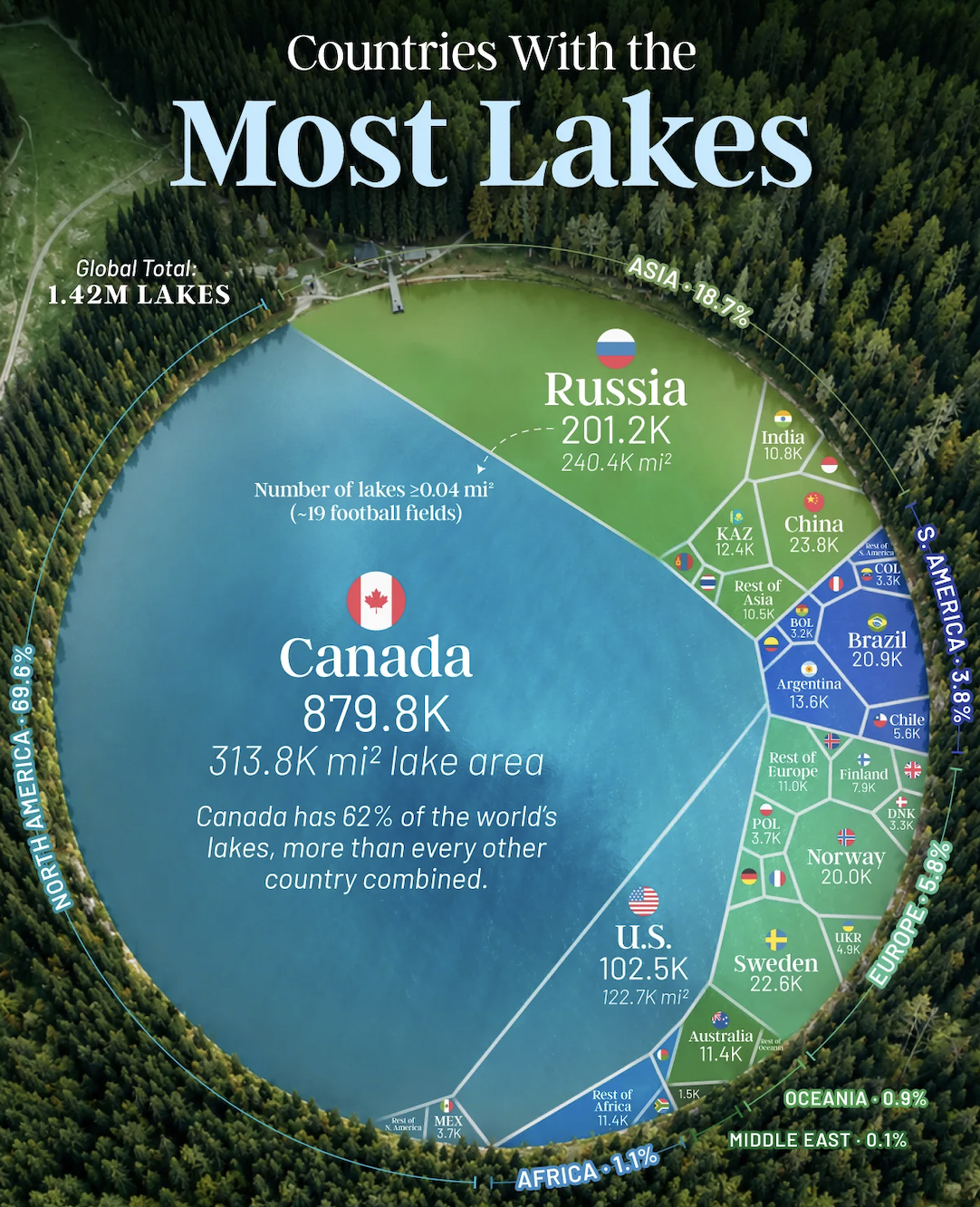
As access to freshwater becomes increasingly difficult, Canada’s advantage will grow: A fun fact about Canada is that the country has more lakes than the rest of the world combined. And as climate change impacts access to freshwater supply around the world, that fact is becoming much less trivial, and a greater advantage for Canadian farming.
Source: Visual Capitalist
Geopolitical conflict has also been a relative boost for Canadian farmers: What stands out here is Russia’s invasion of Ukraine, with both countries being very significant players in agriculture. With no end in sight to the war, this creates a hole that countries such as Canada must fill, and underscores the geopolitical advantage that benefits our farmers.
Takeaway #4: Developing the agribusiness sector is a priority for the Federal government.
The highlight of the Farmland Investment Forum was MP Kody Blois discussing how much of a priority agribusiness investment is for the Liberal government, and the steps his party has taken to drive that investment.
The main steps relate to efforts to drive business investment more broadly, such as the “Productivity Mega Deduction” proposal in September, which expands the range of capital equipment eligible for 100% immediate deduction for tax purposes. The government has also been very ambitious in brining in more Private Equity and Venture Capital investment in general.
Most importantly, there is a clear recognition from Ottawa that Canadian agriculture needs more long-term capital to support farm succession and to help strong operators scale up. Government support for the sector has historically been durable (as it is in most other countries) and clearly there’s no sign of this commitment fading. This is a constructive backdrop for farmland investors, helping to reduce (but not eliminate) investment in the sector.
Want to find out more?
Private markets are not for everyone, and come with a number of risks, such as higher illiquidity and less transparency.
However, many of the world’s leading institutions and wealthiest families put a big emphasis on private markets, and recently these strategies have become more available to individuals too. Drawing on my background as an analyst specializing in private markets, I help investors cut through the complexity and understand how to build portfolios incorporating these strategies.
To explore whether these strategies are suitable for you, please schedule a 30-minute virtual meeting below:
Disclaimer
Benjamin Sinclair is a representative of Designed Securities Ltd. Designed Securities Ltd. is regulated by the Canadian Investment Regulatory Organization (ciro.ca) and is a Member of the Canadian Investor Protection Fund (cipf.ca). Investment products are provided by Designed Securities Ltd. and include, but are not limited to, mutual funds, stocks, and bonds. Benjamin Sinclair is registered to provide advice and solutions to clients residing in the province of Ontario. For more information, please see www.beyondtheexchange.ca/disclaimer/