BTE Newsletter #12: Andrea Gruza Preview
Hello again everyone,
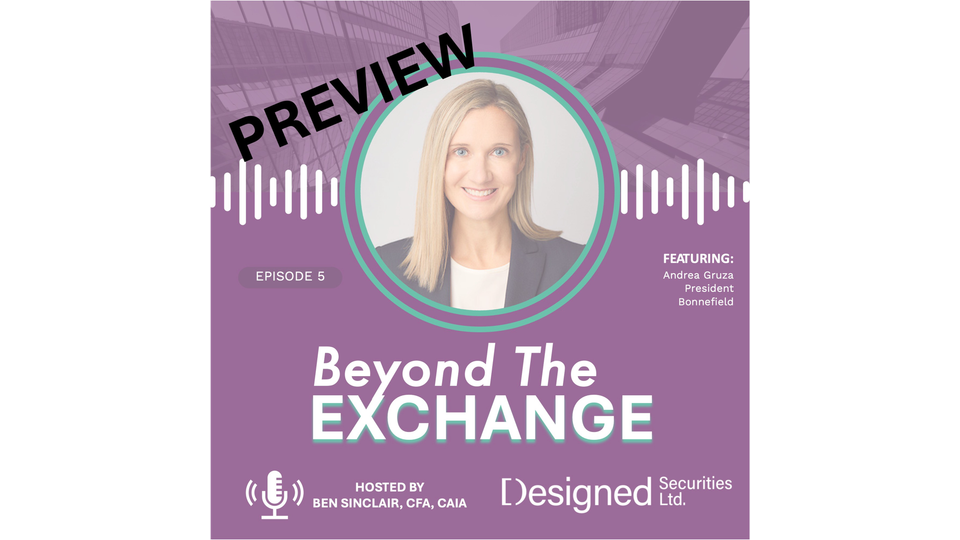
The BTE podcast is officially in full swing. Episode #5 with Andrea Gruza of Bonnefield is set to be released this weekend, episode #6 was recorded on Friday (see below), and episode #7 is scheduled for recording at the end of January. As I've said before, I'm very pleased with the caliber of guest, and I expect that to continue as more episodes are released. And if you (or someone you know) would make a great guest, don't hesitate to reach out.
On that note, you can subscribe to the podcast here:

|

|
With the new year underway, I’ve also noticed more fund managers reaching out, which has been great to see. If you’ve contacted me about your fund and I haven’t yet replied, my apologies. I’ve made an effort to respond to everyone but the inbox has been overflowing lately.
The upside is that all this activity has led to plenty of exciting events on the calendar. While I’m usually based in Burlington, Ontario, I’ll be in Toronto on January 27th, February 2nd, February 10th, and February 18th. If you’ll be in the city around then and would like to connect, feel free to reach out.
Ben
BTE Podcast Episode 5 (Preview): Andrea Gruza
Ben Sinclair
My guest today is Andrea Gruza, President and Managing Partner at Bonnefield, a leading provider of land lease financing for Canadian farmers. Andrea oversees Bonnefield activities across all business units while having direct responsibility for driving fundraising, investor relations, and ESG activities. Additionally, Andrea has responsibility for new product development and is a key driver of the firm's long-term strategy. Andrea is also a former investment banker with experience in industries such as agriculture, mining, and financial institutions.
Andrea, thank you for joining me.
Andrea Gruza
Thanks so much Ben, and Happy New Year!
Ben Sinclair
Happy New Year to you too, Andrea. We're recording at the beginning of January here. So maybe if I could just start off going back to your education, you studied public affairs, policy management, and international political economy at Carleton and the London School of Economics. How does someone go from that to investing in farmland?
Andrea Gruza
That's a long story, I'm not sure we have enough time for that Ben. You're right, my background was public policy, political economy. I was a politics junkie and studied that, and following my Masters degree at the LSE, I actually stayed in London and worked for a company that modeled catastrophe risk for the insurance industry. And my interest there was really political risk.
But through that role, I worked with a lot of reinsurers, insurance companies, and I started to identify much more of an analytical lean to what I wanted to do. I went on to pursue an MBA at the University of Chicago, and through that process, I actually found my way into investment banking and did that for a number of years. And following a bit of a life decision - I had two young kids and maybe didn't want to be an M&A banker anymore - I found my way to Bonnefield.
And Bonnefield at the time was a firm that had been around for over 10 years. The firm was seeing a lot of increased interest in agriculture as an asset class.
I didn't understand wealth management and I didn't know much about agriculture (I grew up in Saskatchewan, I grew up in Saskatoon, but my family themselves didn't farm). However, I was in and around the industry.
And really what I saw at Bonnefield was an organization that had been founded by fantastic people, had built up effectively an industry in Canada that didn't previously exist. And we were seeing some really attractive tailwinds where individuals and institutions were starting to understand that agriculture is a really interesting industry, and they'd like to invest and have exposure to those dynamics. So, a bit of a winding path, but I’m very glad that I found my way here over six years ago.
Ben Sinclair
So tell me a little bit then about agriculture as an asset class because most people, at least individual investors, don't even consider it as something that you could invest in.
Andrea Gruza
Absolutely, and I mean I think that's the reason for being for Bonnefield. You know, first and foremost, when you're looking at agriculture as an asset class, you're really looking to invest against the macro demand and supply dynamics of the fact that we have an increasing population globally. That population has an increasing need for food and crop production, both for, as I say, direct food, but also livestock feed and alternative energy sources.
However, we're seeing declining arable land globally. And that's largely because of urbanization. But we're also seeing impacts of climate change that are making that farmland and that agricultural land that exists around the globe unable to continue to produce what it used to. But the demand is increasing.
So, if you look across the value chain in agriculture, I think a lot of groups or individuals, investors, are looking to say, “well where can I invest to benefit from the fact that we're seeing that increasing demand but maybe some scarcity?” That could be across the land, could be across certain producers. But I think those are the key drivers that are making people interested in agriculture.
Ben Sinclair
You mentioned climate change. Does that create an advantage for Canadian farmland and Canadian farmers, being as far north as we are?
Andrea Gruza
Ben, you've done your homework. You're right. Bonnefield focuses on Canada as an investment region. We're a Canadian manager. But really, we also see a lot of opportunity in Canada. One: from a lack of capital, but two: climate change and water availability really are different in Canada than many other leading agricultural regions.
We are a northerly geography. We've seen across our own portfolio and the farmers who we work with that over the last five, ten years, they've been able to introduce higher value crops into their rotation because they're seeing a few extra growing degree days. We do have fairly good water availability, certainly relative to other parts of the world, and that creates an optionality that is going to, in our view, continue to drive additional value in Canada.
There are other northerly regions where this is also happening. But money isn't flowing into Russia right now, and parts of Northern Europe have very limited ag land. So, Canada really stands out as a great region to benefit from this relative climate benefit. And so, our farmers have done quite well over the last number of years.
BTE Podcast Episode 6: David Gens
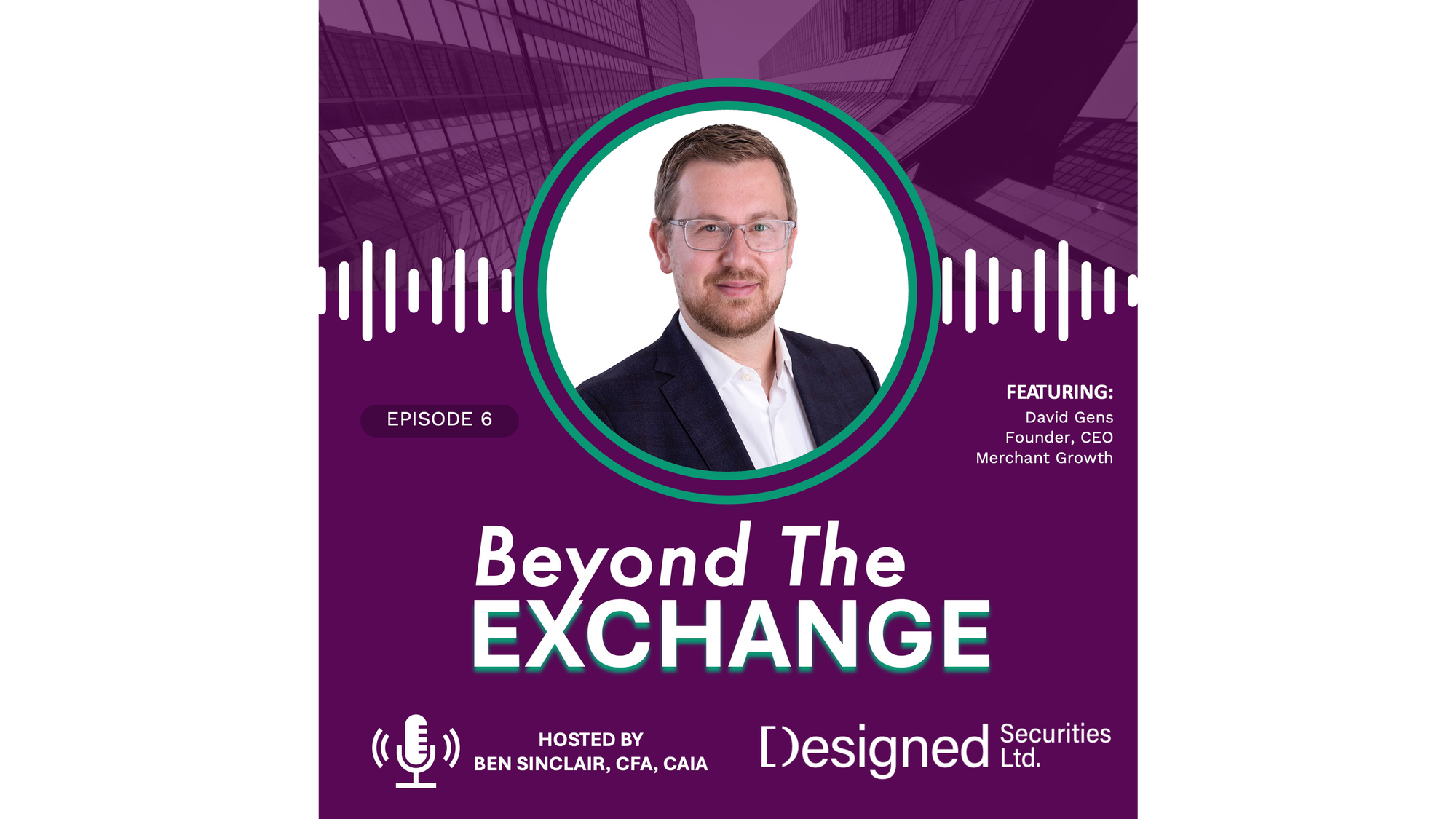
My guest for episode #6 was David Gens, CEO of Merchant Growth, an industry-leading financial technology company that provides financing to Canadian small businesses. David founded Merchant Growth in 2009 after recognizing the limited options available to Canadian small businesses outside the banking system.
David has also been named top 30 under 30 in BC Business Magazine, Top 40 under 40 in Business in Vancouver, and is a two-time finalist in EY’s Entrepreneur of the Year.
We spoke about Merchant Growth's founding and evolution, it's place in the Canadian financial ecosystem, the investment merits of the company's fund, along with how the current landscape is affecting the company's borrowers. As is customary for Beyond The Exchange, I'm planning on featuring a preview in next week's newsletter, followed by the episode release the following weekend.
One More Thing: Canadian Real Estate Funds
Last year I had a feature in each week's newsletter highlighting 3 stories worth watching. And while I no longer do that, there's one story in particular that caught my eye last week, from Bloomberg:
 Paula Sambo
This saga has been widely covered in the Canadian press, as many investors have been burned by domestic private real estate funds. But in this case the story has made its way to Bloomberg’s main section, thus bringing the Canadian experience to a much larger audience of American readers. So, congratulations to us ... we’ve officially gone international.
In all seriousness, this issue has become a central talking point for private market skeptics (and the occasional troll). I’ve previously written about the challenges with gating and liquidity in private real estate here and here. It’s a topic that isn’t going away anytime soon, and one I plan to keep exploring throughout 2026.
Want to find out more?
Private markets are not for everyone, and come with a number of risks, such as higher illiquidity and less transparency.
However, many of the world’s leading institutions and wealthiest families put a big emphasis on private markets, and recently these strategies have become more available to individuals too. Drawing on my background as an analyst specializing in private markets, I help investors cut through the complexity and understand how to build portfolios incorporating these strategies.
To explore whether these strategies are suitable for you, please schedule a 30-minute virtual meeting below:

Email
|

Phone
|

LinkedIn
|

Apple
|

Spotify
|
Disclaimer
Benjamin Sinclair is a representative of Designed Securities Ltd. Designed Securities Ltd. is regulated by the Canadian Investment Regulatory Organization (ciro.ca) and is a Member of the Canadian Investor Protection Fund (cipf.ca). Investment products are provided by Designed Securities Ltd. and include, but are not limited to, mutual funds, stocks, and bonds. Benjamin Sinclair is registered to provide advice and solutions to clients residing in the province of Ontario. For more information, please see www.beyondtheexchange.ca/disclaimer/